Trump says he is banning CNN, MS NOW, and Politico from the White House
Journalists from those news outlets were still working as usual on the White House grounds on Friday afternoon, and there were no immediate signs that they were being evicted.
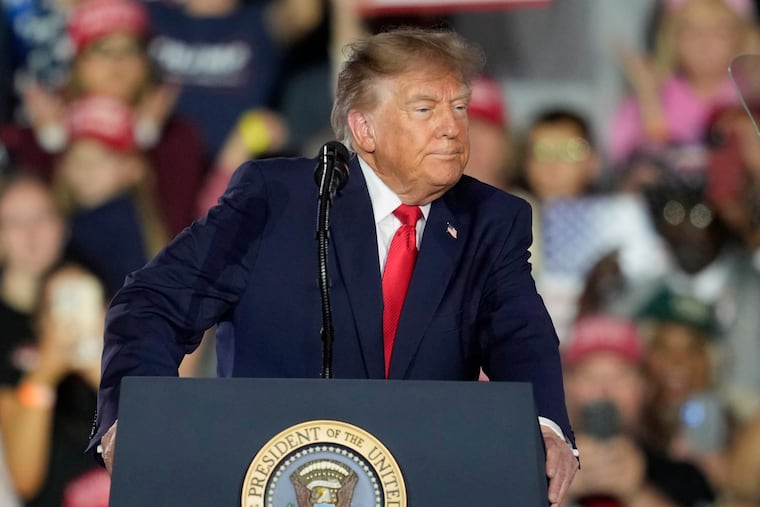
President Donald Trump said on Friday that he would ban CNN, MS NOW, and Politico from the White House, although it was unclear how such a prohibition would be enforced or legally defended.
The president’s abrupt proclamation, which he said was “effective immediately,” came in a post on Truth Social, the social media platform he owns.
Journalists from those news outlets were still working as usual on the White House grounds on Friday afternoon, and there were no immediate signs that they were being evicted.
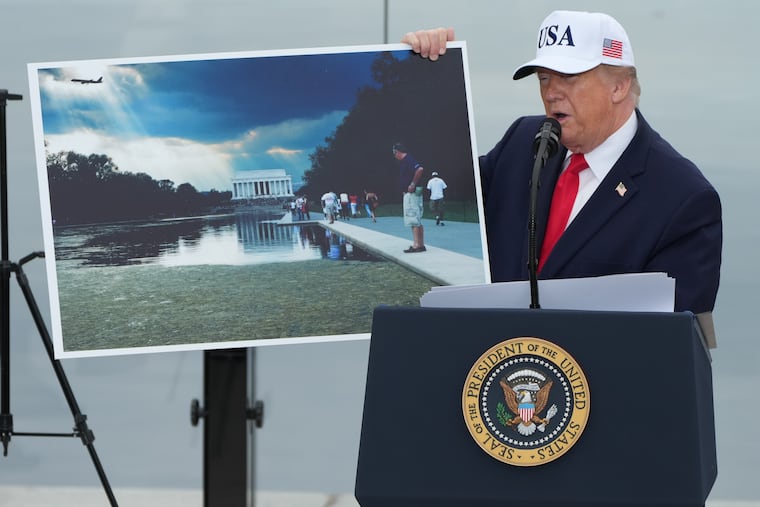
Speaking later with reporters in the Oval Office, Trump said he announced a ban “because they’re fake news. You get so tired of reading and seeing fake news.” He added, “You get sick of it.”
Asked exactly what he meant by a ban, the president replied: “A very simple ban. I don’t want them in my office. I don’t want them here. I would say the ban would go as far as you can. And if they could straighten themselves out, I’d love it.”
Asked if his ban could survive a court challenge, Trump replied, “I don’t think that a court should allow fake news to be written day after day after day.”
CNN said in a statement that Trump’s ban would be “an illegal assault” on a “fundamental and constitutionally-protected right.”
“We have a right under the U.S. Constitution to do that reporting without hindrance or interference from the government,” the network said.
A spokesperson for MS NOW declined to comment. A spokesperson for Politico did not immediately respond to a request for comment. An inquiry to the White House Correspondents’ Association was not immediately returned.
A prospective ban would open yet another front in Trump’s ever-expanding battles with the news media, whose output he has increasingly attempted to control using a variety of bureaucratic levers and intimidation tactics. The president has filed lawsuits and used government tools like subpoenas to target newspapers, late-night talk show hosts, corporate media conglomerates, and journalists whose reporting he dislikes.
In his social media post on Friday, Trump warned that he might add other organizations to his prospective ban, writing, “Other Fake News Media Outlets to follow.”
Trump expanded on his feelings at his Oval Office appearance, echoing the usual protestations about the media that he unspools at rallies, news conferences, and in interviews. “They purposely write negative news,” the president said. “And they do that because they want to try and diminish the Republicans and a Republican administration.”
Any prospective ban on journalists from specific news outlets would almost certainly prompt a legal challenge.
Trump has tried to bar some news organizations from parts of the White House in the past. During his first term, he revoked a White House pass for Jim Acosta, the former CNN journalist. CNN succeeded in restoring Acosta’s press credentials in court.
This term, Trump has attempted to bar Associated Press journalists from parts of the White House, including the Oval Office and Air Force One. The AP has sued to restore its access, but that case remains in litigation; in the meantime, AP photographers have had continued access to the Oval Office. Its print journalists have had more limited access.
His administration has also taken command of the daily White House press pool, a small, rotating group of reporters who relay the president’s daily activities to the public. Previously, the Correspondents’ Association chose which outlets participated; now, the administration handpicks the news outlets that are included.
Jameel Jaffer, the executive director of the Knight First Amendment Institute at Columbia University, said that the ban floated by Trump on Friday is clearly unconstitutional because it would punish news organizations for the content of their reporting.
“If President Trump means to expel these news organizations from the White House press pool, his action is doubly unconstitutional because the press pool is a ‘public forum’ under the First Amendment, which means the president can’t exclude journalists from it on the basis of their viewpoints,” Jaffer said.