Trump meets separately with Zelensky, Netanyahu at White House
Israeli Prime Minister Benjamin Netanyahu called the meeting "one of the best conversations I've had" with the U.S. president.
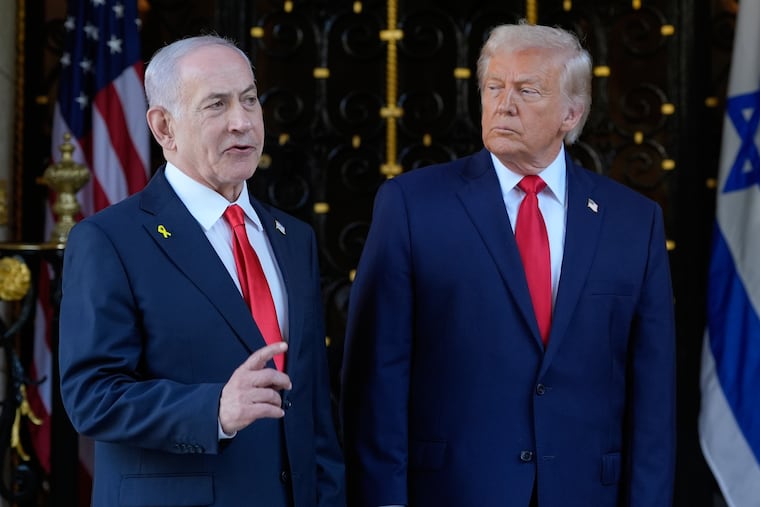
WASHINGTON — President Donald Trump held separate meetings Tuesday at the White House with Ukrainian President Volodymyr Zelensky and Israeli Prime Minister Benjamin Netanyahu. After each of the closed-door talks, the administration signaled a warming of the sometimes fraught U.S. relations with those nations.
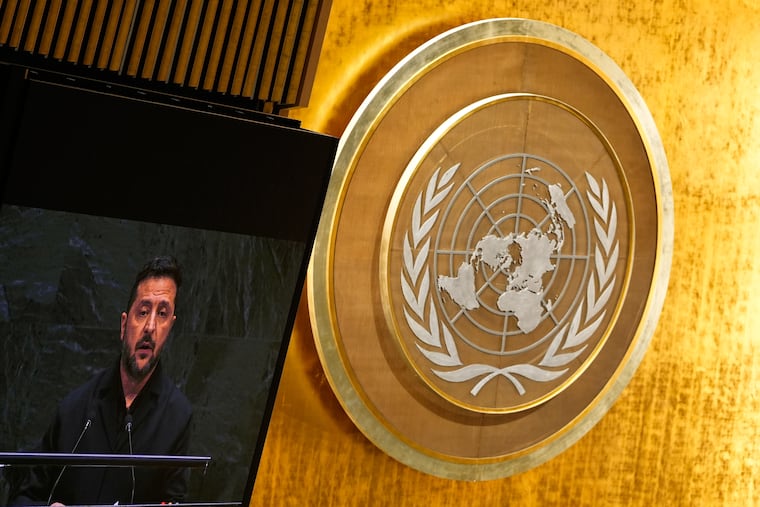
Trump and Zelensky met ahead of Sen. Lindsey Graham’s funeral, with the two leaders discussing ways for Ukraine to produce its own powerful weapons and “other ideas that could help” in its ongoing war against Russia.
The sit-down in the Oval Office, which was closed to the media, followed a consequential meeting at the NATO summit earlier this month in Ankara, Turkey, where Trump announced that the U.S. will give Ukraine a license to make Patriot defense systems — a long-running request from Kyiv to counter Russian missile attacks.
Taken together, those meetings underscore how much the U.S. president, once a major skeptic of continued assistance to Kyiv, has warmed to Zelensky as Ukraine continues to withstand the Russian barrage more than four years after Moscow’s invasion in 2022. The Ukrainian leader, whose relationship with Trump in his second term was marked early on by a raucous White House visit in which he was denigrated for being ungracious, has worked to court the Republican administration while relying on both likely and unlikely allies in Trump’s orbit to exert their influence with the president.
The ongoing conflict in the Middle East, which has consumed much of the Trump administration’s focus this year, has also become gradually entwined with Ukraine, with Ukraine firing on at least one Iranian vessel in the Caspian Sea over the weekend while Zelensky asserts that Russia has been offering satellite imagery of U.S. bases in the Persian Gulf to Iran.
In a post on social media after the meeting, Zelensky thanked Trump for the “good meeting” and the Republican administration’s efforts to aid Kyiv in the long-running war.
“The President and I discussed licenses for Patriot interceptor production and several other ideas that could help,” said Zelenskyy, who also noted that he offered condolences to Trump for the death of Graham, a close ally of Ukraine. “We also spoke about diplomacy — it’s important that the diplomatic process be reinvigorated.”
White House press secretary Karoline Leavitt said both the Zelensky meeting and a separate, later sit-down with Netanyahu were “positive and productive.”
First meeting of U.S., Israel leaders since start of Iran war
Netanyahu and Trump met at the White House on Tuesday for the first time since they launched a joint war against Iran, offering a chance for Netanyahu to smooth out strains in their relationship.
The closed-door meeting lasted nearly an hour and a half. The White House did not immediately offer more details.
Despite signs of tension between the two ahead of the sitdown, Netanyahu was effusive afterward and called it “excellent” in a post on his Instagram profile.
“When I say excellent, I don’t mean it in a superficial way,” Netanyahu said in Hebrew. “A conversation with full partnership, with mutual support, with an understanding of the common goal of ensuring that Iran does not have nuclear weapons, and other goals as well. One of the best conversations I’ve had with the President of the United States, our friend Donald Trump.”
The meeting comes as both leaders face growing pressures at home. Netanyahu is up for reelection and is embattled in part because of his deteriorating relationship with Trump. Trump is under pressure to end an unpopular war that has wreaked economic havoc and driven prices higher ahead of midterm elections this November.
Netanyahu, who wanted to continue the fighting in Iran and against its ally, Hezbollah, in Lebanon, has been sidelined as Trump sought a deal with Tehran. His visit to the White House this week comes as the disagreements with Trump and Vice President JD Vance have burst into the open over the war in Iran and more.
“The Americans are making it clear to the Israelis they are the ones who are running the war,” Israeli journalist and political analyst Amit Segal wrote Monday in the daily newspaper, Israel Hayom. “It is clear to everyone that Israel has been put in the back seat.”
Near the White House where the public was able to gather near fencing, a small group of protesters chanted, “Netanyahu, you’re a tyrant” and “Bibi, you’re not welcome here,” referencing the prime minister’s nickname.
The two leaders planned to discuss the framework agreement the U.S. and Israel signed with Lebanon over the Israel-Hezbollah war and the expansion of the Abraham Accords, according to a White House official, who spoke on condition of anonymity to preview the meeting.
“We have a little difference,” Trump said Monday when asked by reporters if he and Netanyahu were on the same page on Iran. “But pretty close, yeah.”
Meetings reflect Graham’s influence
In a Fox News Channel interview Tuesday, Trump recalled Graham’s hawkishness and said the Republican South Carolina senator’s support for Ukraine never wavered. Trump said Graham had suggested it was time to make a deal with Iran but had no similar suggestion for the Russia-Ukraine war.
“Ukraine, he’s very militant about,” Trump said on Fox & Friends. “I mean, Lindsey liked war, to be honest with you.”
Ahead of the meeting, Zelensky warned that Russia has been aiding Iran as the war persists by capturing satellite imagery of U.S. bases in the Gulf region that later appear in Iran. The Ukrainian president also asserted that there was a “clear correlation” between Russia’s images and subsequent Iranian strikes.
Iran is a key ally of Russia in its war against Ukraine and has helped Moscow build up its drone expertise.
But on Monday, Trump downplayed any impact of potential Russian assistance for Iran, even as he said he would raise the matter with Russian President Vladimir Putin.
“I don’t think they’ve been doing it, certainly not at a high level,” Trump told reporters on Air Force One as he traveled to Michigan. “And if they have, it has been very un-impactful.”
On the Caspian Sea attack, the foreign ministers of Iran and Ukraine spoke about the matter, according to statements posted on social media Tuesday. Ukrainian Foreign Minister Andrii Sybiha called the conversation “frank” and said Ukraine’s focus is “solely at defending our country from Russian aggression and never intended to target civilian vessels or people.”
Iran has said at least one sailor was killed in the attack. For his part, Iranian Foreign Minister Abbas Araghchi said Iran is also not seeking escalation but “made clear any attack on our citizens or interests is unacceptable” and “there must be restitution for losses.”
Republican leadership is hoping to advance Graham’s sanctions legislation this week, although the Senate is juggling several other priorities before lawmakers leave Washington for their August recess.
The bill has dozens of backers from both major political parties and is seen as the main policy tribute to Graham, who died unexpectedly this month from a tear in his aorta. It imposes tariffs on goods from the world’s top five purchasers of Russia oil or natural gas, including China and India.