Tupac Shakur murder conviction lands man 40 years to life in prison
The murder of one of hip-hop’s most celebrated artists went unresolved for nearly 30 years until this past summer, when a jury found Duane Keith Davis guilty of arranging for the killing.
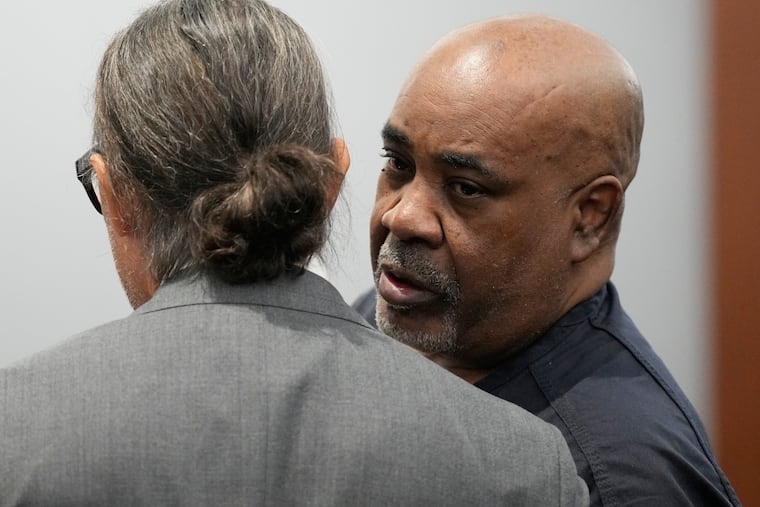
A judge in Las Vegas on Tuesday sentenced a man to 40 years to life in prison after he was convicted of orchestrating the murder of rapper Tupac Shakur in a 1996 drive-by shooting.
The murder of one of hip-hop’s most celebrated artists went unresolved for nearly 30 years until this past summer, when a jury found Duane Keith Davis guilty of arranging for the killing.
At the three-week trial, prosecutors accused Davis, 63, of obtaining the gun used in the shooting and pursuing Shakur amid a gang war that had become entangled with a feud between East Coast and West Coast hip-hop labels.
The prosecution prevailed in the case despite a dearth of physical evidence or direct witness testimony about the people responsible for the drive-by shooting — shortcomings that long stymied investigators.
But for years, Davis had admitted to being involved in the killing, repeatedly taking responsibility in a memoir and in podcast interviews. After he was indicted on a murder charge in 2023, he said he had been making false confessions to profit from a connection to the notorious case.
The sentence means Davis is likely to die in prison.
“You don’t get to take a man from his family,” Judge Carli Kierny of Clark County District Court told Davis before handing down the sentence. “You don’t get to take his very life, his whole future from him and just walk away from it,” she added.
“Especially when that man is Tupac Shakur,” she said. “The world never forgot about him and his death, and neither did Las Vegas.”
Wearing prison clothes and shackles, Davis declined to address Shakur’s death when given an opportunity to speak.
“I’m going to appeal this case for sure,” he said, and demanded that the government return items authorities had taken from his home, including photographs.
The judge handed down the sentence after emotional testimony from two of Shakur’s siblings, who described the immense pain that the murder had caused for their family.
“We lost something; our whole generation lost something huge,” said Sekyiwa Shakur, one of Shakur’s sisters, calling her brother the “promise of all of our grandparents.”
The state’s strongest evidence against Davis was his own statements, including a 2008 recording of him admitting his involvement to the police and interviews tied to the release of his 2019 memoir. He later disavowed the memoir and said he lied to the police to avoid prosecution in a separate drug case.
Known by the nickname Keffe D, Davis was depicted by prosecutors at trial as having been a powerful shot caller in California for the South Side Compton Crips, a gang that had ongoing hostilities with the Mob Piru Bloods. Suge Knight’s Death Row Records, which represented Shakur, relied on members of the Bloods for security, associating the label with an escalating gang war.
In September 1996, members of the Bloods and Crips ended up in Las Vegas for a Mike Tyson prizefight. A night of revelry descended into violence after the fight, when Shakur and Knight participated in a group beating of Davis’ nephew, Orlando Anderson.
According to prosecutors, that public attack fueled a brutal act of retaliation on the streets of Las Vegas.
Later that night, Shakur was in a black BMW driven by Knight when a car pulled up alongside them and someone inside opened fire. Shakur, 25, was hit four times and died in a hospital days later. The murder weapon was never found, nor was the car that Davis and three other members of the Crips were said to have been riding in that night.
Word soon spread in Compton that Anderson had been the person to open fire. But other accounts suggest it was Deandrae Smith, who had been sitting next to him in the back seat. Both men are now dead.
Christopher Wallace, the rapper on the rival Bad Boy label known as the Notorious B.I.G., was gunned down only six months later, turning the shootings into twin tragedies in hip-hop that long languished on detectives’ desks without any convictions.
“It took us 30 years,” Kierny told Davis at the sentencing hearing. “But at this time, you are going to face justice for what you did.”
This article originally appeared in the New York Times.