A troubling photo of a missing woman appeared on Raymond Horsch’s erotic website, years before police investigated
Horsch used a photo of Blair Tonzelli as one of several lead images on the site for years, even after she was reported missing to police in 2023.
In September 2023, seven months after Blair Tonzelli was reported missing, a nude photograph of her appeared prominently on a local pornographer’s website.
She is staring at the camera, with what appears to be a black eye and blood running down her lower lip.
While it is unclear when it was taken, Raymond “R.C.” Horsch first uploaded the picture to his website’s homepage around 2020, sometime after he had met Tonzelli in Kensington, and he used it as one of several lead images on the site for years, according to archived website data reviewed by The Inquirer.
Horsch’s website is now inactive. But it was up and running when Tonzelli’s friends reported her missing in February 2023, telling officers she was last seen at Horsch’s home the previous summer.
Police have not said whether officers ever visited the home or interviewed Horsch about her disappearance — or if they were aware Tonzelli’s nude photo was featured on his public website. Officers raided the home as part of a drug investigation in May 2025, but investigators in that case did not appear to link the property to any missing women at that time.
A Philadelphia Police Department spokesperson declined to comment, citing an ongoing investigation.
» READ MORE: A pornographer’s obsession and criminal past blur fact and fiction in Philly’s missing women mystery
Tonzelli’s disappearance did not appear to gain attention from law enforcement until June of this year, when police arrested Horsch’s son, Eugene, who was with a woman carrying a fake ID in Tonzelli’s name.
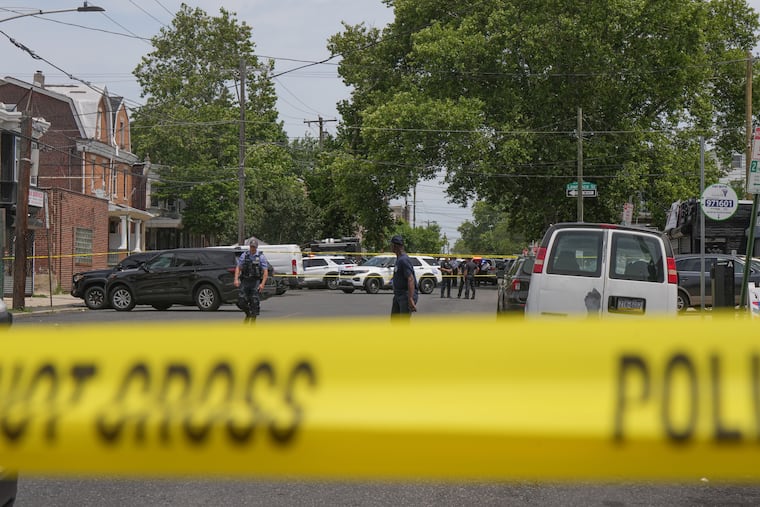
The discovery ignited a two-month search of Horsch’s home, where police unearthed an array of disturbing evidence — including “graphic and dark” photos, videos, and writings on hard drives. Police on Aug. 12 said the footage reviewed so far suggests two other missing women had died inside the property: Maribel Fresses, reported missing in 2018, and Gabrielle Amarando, who went missing in 2012.
Police have found no human remains, and have not said whether Tonzelli was featured in any of the materials on the hard drives. She remains missing.
Tonzelli was 35 when she was reported missing. Her Facebook page states she went to Archbishop Ryan High School. Her family could not be reached for comment.
She is among at least three dozen women, many still unidentified, featured in Horsch’s works. Website data showed his online pages once displayed at least 2,100 unique images spanning decades, though The Inquirer was able to recover only a fraction of them.
The elder Horsch died in May 2025 at the age of 82 from lung issues. He was well-known in pornographic and erotic art circles for publishing more than a dozen photo books, films, and novels. Some of Horsch’s writings describe a nearly autobiographical character who is an “empathetic” serial killer, murdering addicts to end their suffering. He built a small following, in part, by leaving viewers wondering what was real or fake.
Vulnerable women, desperate to stay off the streets and out of withdrawal, were often used as props for his violent fantasies as he profited off footage or images of them appearing to be strangled, drowned, hanged, or crucified.
Beneath the rotating photos of gaunt and dazed models, Horsch’s homepage also contained a chilling quote, attributed to him.
“I fear what I love,” he wrote. “And destroy what I fear.”
While Horsch claimed all his scenes were staged and consensual, he openly acknowledged that he recruited women in addiction with cash and drugs to enact his “psychosexual” fantasies.
“Without exception, their singular interest is their drug,” Horsch said in a 2006 interview. “Provide that — or the means — and they will do anything.”
Tonzelli had battled addiction for years, according to her friends. Horsch was in his late 70s when met her in Kensington, while she was living at a known drug house. He later claimed she worked as a “home health aide” before she went missing in August 2022.
» READ MORE: She disappeared from Kensington three years ago. A fake ID in her name led police to a disturbing Olney house.
The recent search for Tonzelli also led police to reexamine the disappearance of Amy McHale, Horsch’s ex-wife and onetime film collaborator, who was last seen at the family home in 2016.
McHale is also among the women Horsch featured on his website, in films and music videos.
So is Krista Killen, Horsch’s longtime companion, who died of an overdose last year. Killen lived at the Olney house, where she acted in several of Horsch’s publicly released films, on and off for years.
Several other women who cycled through the Olney house died of overdoses. Another woman who appeared in Horsch’s films and photographs overdosed in 2016 and a man was charged after leaving her dead body on the side of the road.
While some photos he took were more conventional erotic portraits, Horsch also published galleries of work on his website that portrayed women as dead or covered in blood. One series — titled “Thanatopsis,” a Greek term for the contemplation of death — shows a woman hanging from a noose. Horsch noted that the series also contained photographs of the real corpses of fatal overdose victims.
In a 2007 interview, Horsch said he focused on people addicted to opioids because he saw their need as a mirror of his own desires for increasingly “extreme” forms of sexual gratification.
“My motivation goes beyond desire and well into the realm of obsession,” Horsch said. “I am very much addicted to sex. And the more I do and the more I experience, the more jaded I become and the greater the stimulation, and extreme, I require. This is an obvious parallel to heroin addiction.”
But Horsch also sought to profit.
Through at least 2019, Horsch ran a membership program on his website, with subscription tiers ranging from $3 a day to $20 a year that offered paying customers “unrestricted access” to his photographs and videos.
Other archived images and video reviewed by The Inquirer show that Horsch used his personal website to solicit an escort service from 2017 through 2021, and reviews suggest that clients may have visited the Olney house.
Philadelphia police are in the process of sorting through the trove of digital materials recovered inside the home, and have said they may return to the property to continue searching the premises for evidence connected to the women.
Eugene Horsch, 44, remains in federal custody, charged with illegal gun possession. He has not been charged with any crimes connected to the women’s deaths or disappearances. His lawyer has declined to comment.
Police have declined to say whether they believe the younger Horsch played a role in his father’s business. Still, Inspector Raymond Evers said earlier this month, he resided in the house now linked to at least four missing women and a cache of disturbing documents.
“Eugene lived there,” he said. “He lived there for a long time.”

The Inquirer’s journalism is supported, in part, by the Lenfest Institute for Journalism and readers like you. News and editorial content are created independently of The Inquirer’s donors. Gifts to support The Inquirer’s high-impact journalism can be made at inquirer.com/donate. A list of Lenfest Institute donors can be found at lenfestinstitute.org/supporters.