James Woolsey, CIA director under Bill Clinton, dies at 84
His tenure was upended by the arrest of Aldrich Ames, a CIA traitor. In recent years, he suffered from “Havana syndrome,” his wife said.
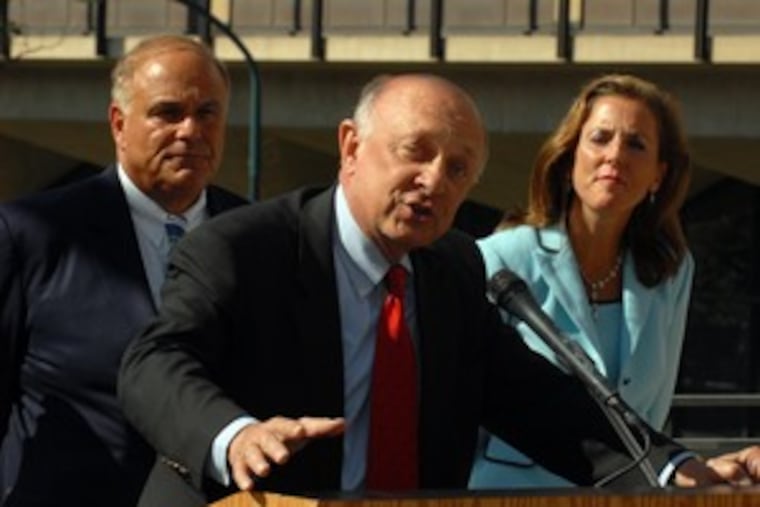
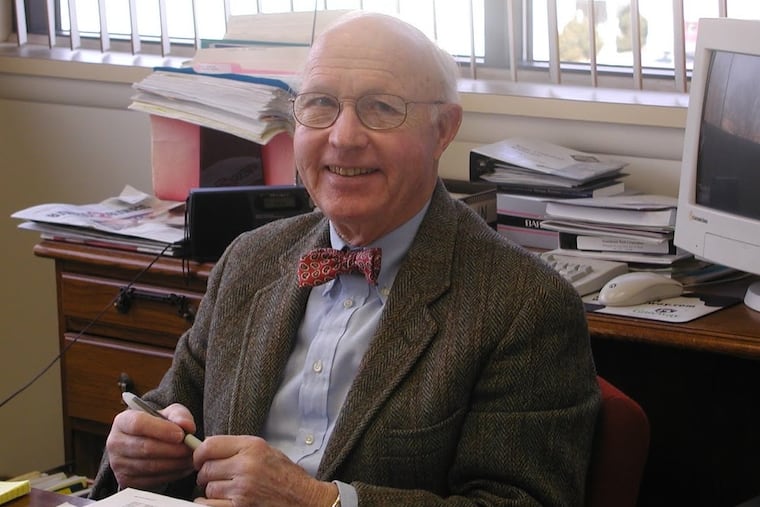
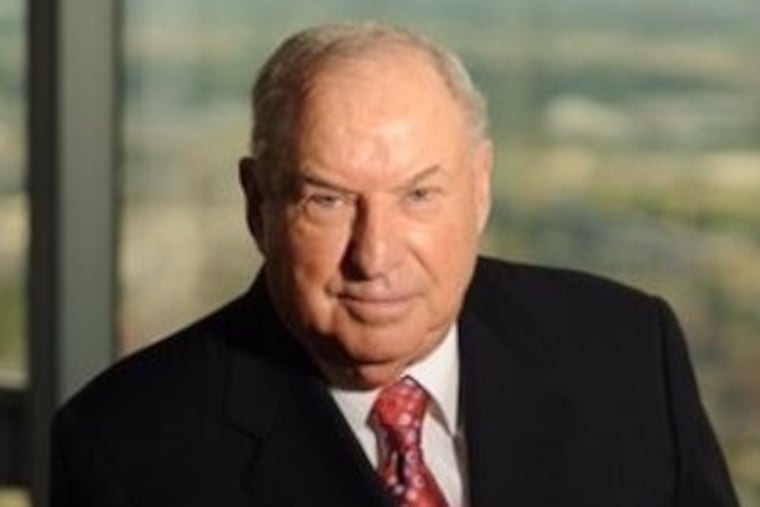
R. James Woolsey Jr., a Rhodes scholar and lawyer who led the CIA and the rest of America’s intelligence community for two troubled years during the Clinton administration, as the nation’s spy services struggled to adapt to the post-Cold War era, died Tuesday at his home in Washington. He was 84.
The cause was a stroke, said his wife, Conchita Sarnoff Woolsey. She added that Mr. Woolsey had been in declining health in recent years as a result of “Havana syndrome,” the mysterious ailment that hundreds of American spies and diplomats have reported experiencing around the world.
The malady’s symptoms, which the government refers to as anomalous health incidents, include dizziness, memory problems, and other neurological impairments. Mr. Woolsey began experiencing the condition following an incident in Washington in 2017 and in Istanbul the following year, according to his wife.
“We have traveled the world trying to find a cure and a treatment,” she said, “which sadly we never found.”
As the director of Central Intelligence in 1993 and 1994, Mr. Woolsey spent much of his time fighting to shore up morale and protect the nation’s intelligence agencies from sharp budget and staffing cutbacks, as Congress sought a so-called “peace dividend” following the collapse of the Soviet Union.
His tenure was upended by the FBI’s arrest in 1994 of Aldrich H. Ames, a senior CIA counterintelligence official who had spied for nine years for Moscow in what was then the worst known security breach in agency history.
Members of the House and Senate intelligence committees were openly critical when Mr. Woolsey declined to dismiss or demote anyone at the CIA, and instead reprimanded 11 current and former agency officials. Rather than focusing on individuals at fault, he highlighted a pattern of widespread inattention, citing a “systemic failure” in the agency’s inability to catch Ames, who was blamed for the deaths of at least 10 intelligence agents.
Mr. Woolsey sought to transform the agency’s culture. He was known among some staff as “the vacuum cleaner,” the Washington Post reported at the time, and told senior aides he always wanted to know more than anyone else in the room. He typically began his day reading classified cables at home at 4:30 a.m., and then arrived at CIA headquarters by 7:30 for meetings and briefings.
But he could be argumentative, even abrasive, and his relations with the White House became so strained that by the time he resigned after 23 months on the job, he complained that he could not get an appointment with the president.
White House aides said that Clinton had lost faith in his ability to overhaul CIA operations and reshape its priorities.
Still, the president praised Mr. Woolsey in a statement at the time, calling him “a staunch advocate of maintaining an intelligence capability that is second to none.”
Robert James Woolsey Jr., an only child, was born in Tulsa on Sept. 21, 1941. His father, a lawyer, was drafted into the Army and fought in the Battle of the Bulge during World War II. His mother was a homemaker.
Mr. Woolsey attended Stanford University, graduating with high honors and membership in Phi Beta Kappa in 1963. He was awarded a Rhodes scholarship to study at the University of Oxford in England, and then attended Yale Law School, where he was managing editor of the law review and was awarded his degree in 1968.
Mr. Woolsey served in the Army and came to Washington in the early 1970s, as a military aide to arms control negotiator Paul Nitze. He later served as general counsel to the Senate Armed Services Committee under Sen. John C. Stennis (D., Miss.).
A so-called “defense Democrat,” Mr. Woolsey was undersecretary of the Navy from 1977 to 1979, during the Carter administration. He later found positions under two Republican presidents, Ronald Reagan and George H.W. Bush, as a part-time, delegate-at-large to strategic arms talks and as chief negotiator of a European arms treaty.
When not in government, he worked for the Washington law firm Shea & Gardner, where he sometimes represented defense contractors and companies whose interests required that he register with the Justice Department as a foreign lobbyist.
A trim man with a bald head and thin glasses, Mr. Woolsey was little known to the public when Clinton, soon after taking office in January 1993, named him to lead an intelligence community still trying to find its footing more than a year after the Cold War had ended.
From the start, he was put on the defensive, forced to justify the need for a strong CIA in a post-Soviet world.
“Yes, we have slain a large dragon,” he said at his Senate confirmation hearings. “But we live now in a jungle filled with a bewildering variety of poisonous snakes.” He said the CIA should focus on terrorist groups and arms proliferation, as well as adversaries such as Iran and North Korea.
Mr. Woolsey was initially seen as a politically savvy expert on national affairs. In his first year, he held more than 150 meetings with members of Congress, mostly to discuss his shrinking budget.
He told the Los Angeles Times in 1994 that despite his efforts, the number of spy satellites had been “substantially reduced,” the civilian staff had been cut by one-fourth, and the military workforce had been cut by one-third.
“There’s a lot of slimming down that’s taking place,” he said.
Mr. Woolsey angered one group of senators when he sternly lectured them, pointer in hand, and demanded they not only reverse the cuts but add to his budget. He clashed repeatedly with Sen. Dennis DeConcini (D., Ariz.), who chaired the Intelligence Committee and, after Ames was arrested, charged that Mr. Woolsey acted more like a civil liberties lawyer than the head of a covert agency that had failed to keep its secrets.
Congress also was unhappy with Mr. Woolsey’s opposition to the creation of a congressionally mandated presidential commission to look at the CIA’s future role, and to Congress’s efforts to resolve a CIA and FBI turf battle over responsibilities for counterintelligence.
After leaving the CIA, Mr. Woolsey served on corporate boards and foundations and remained active in national security circles, including as a partner at Booz Allen Hamilton. He served as a senior adviser on Donald Trump’s transition team before resigning in January 2017, reportedly amid frustrations over the incoming president’s views on national security.
To the surprise of some of his former colleagues, he also published a 2021 book, Operation Dragon: Inside the Kremlin’s Secret War on America, in which he and coauthor Ion Mihai Pacepa, a top Cold War defector from Romania, claimed that the assassination of President John F. Kennedy was rooted in a KGB plot sponsored by no less than Nikita Khrushchev, the Soviet leader.
Mr. Woolsey’s marriage to Suzanne Haley, a former official of the National Academy of Sciences, ended in divorce. Mr. Woolsey was later married to Nancye Miller, a lobbyist, until her death in 2019. The following year, he married Conchita Sarnoff, an advocate for victims of trafficking, who had written a book about Jeffrey Epstein after covering his crimes in a series of articles for the Daily Beast.
In addition to his wife, survivors include three sons from his first marriage, Robert, Daniel and Benjamin Woolsey; two stepchildren, Cristina and Nicholas Sarnoff; and 10 grandchildren.
Mr. Woolsey had a wry sense of humor. Long after he left the CIA, he happily reminded interviewers about the pilot who stole a small airplane and crash landed on the South Lawn of the White House. The pilot was killed, but Mr. Woolsey found a punch line.
“Remember the guy who in 1994 crashed his plane onto the White House lawn?” he told an interviewer in 2002. “That was me trying to get an appointment to see President Clinton.”