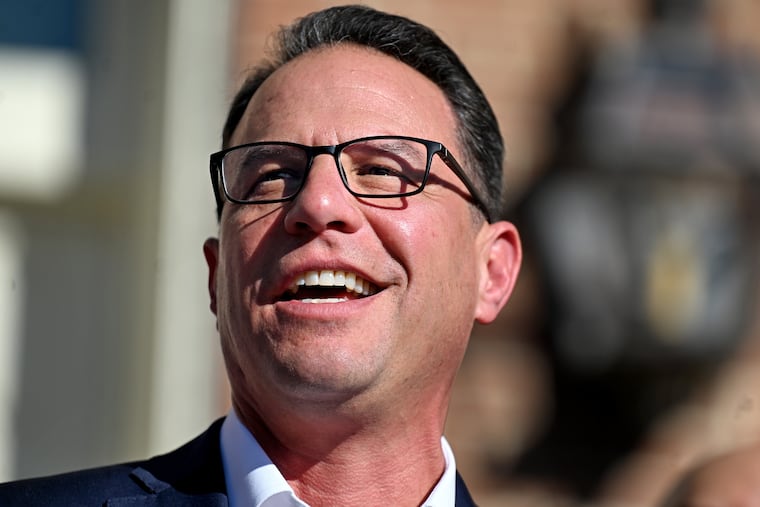
Josh Shapiro says running for president will be a ‘personal decision’ as he joins potential rivals at Denver gathering
The Pennsylvania governor, fresh off his blowout election win, is getting more involved on the national stage.
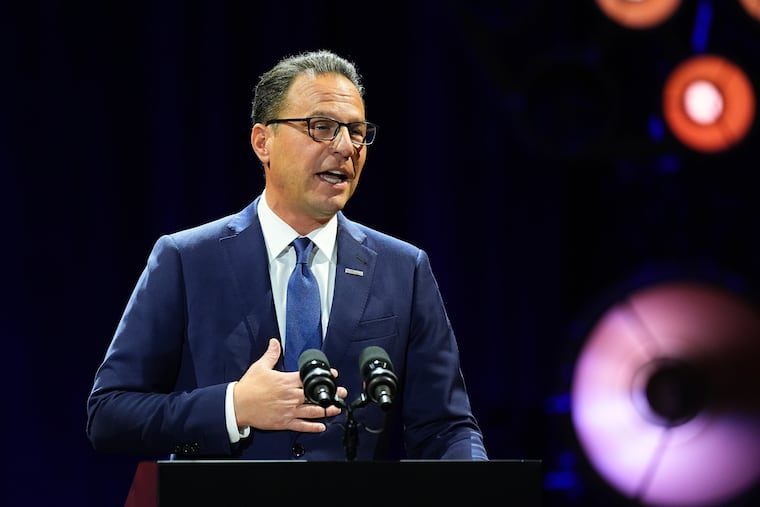
For months leading up to last week’s election, Gov. Josh Shapiro waved off the speculation.
He was focused on his reelection as others prepared to run for president in 2028, he said, while also forecasting a fierce debate over what Democratic Party stands for — a national conversation he expected to be a part of in some way.
That conversation, at last, has begun.
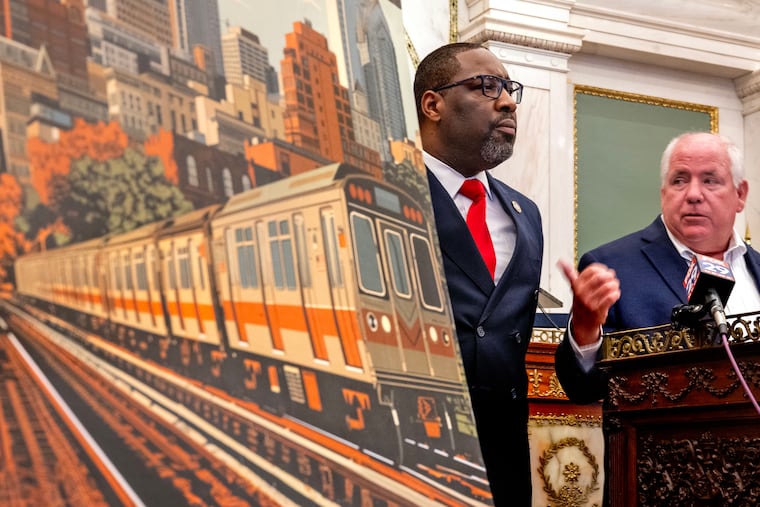
Shapiro, reelected in a blowout and taking credit for expanding the blue tsunami’s reach in Pennsylvania, at a gathering of Democratic Party heavy-hitters in Denver on Friday acknowledged he will decide on whether to jump into the 2028 presidential race.
“That’ll be a personal decision my wife and my kids and I make, and when we’re ready to say something we’ll let you know,” he told reporters when asked about his prospects of running.
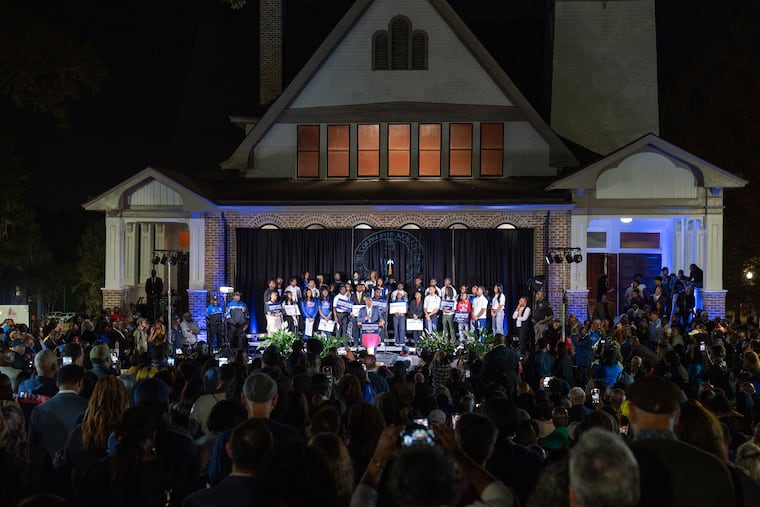
Shapiro’s comments followed a speech at Majority Democrats’ “What’s Next” conference, a first-of-its-kind event designed to build on Democrats’ success in the midterm elections and look ahead to 2028.
Surrounded by others who could be on a presidential primary debate stage with him within the next year, Shapiro made his pitch.
“Leadership today has to be about how big we can think together, how tough we can fight and whether Democrats have the discipline and know how to actually deliver for the American people,” he told a crowd of several hundred. “That’s what we’ve done in Pennsylvania.”
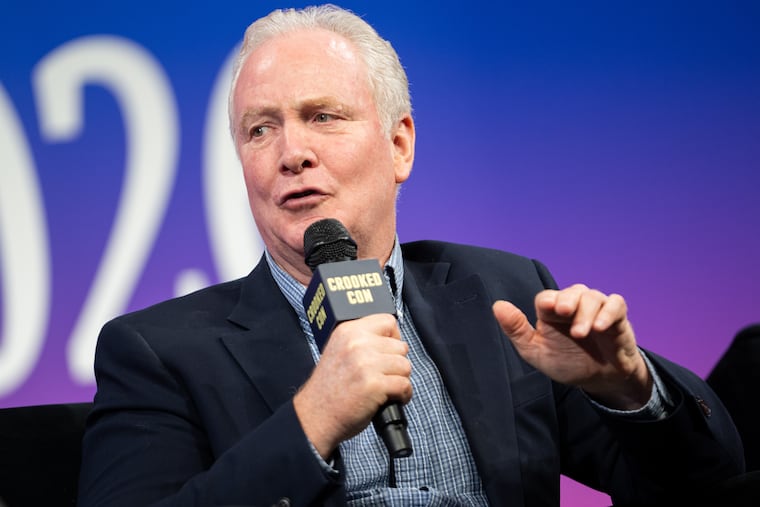
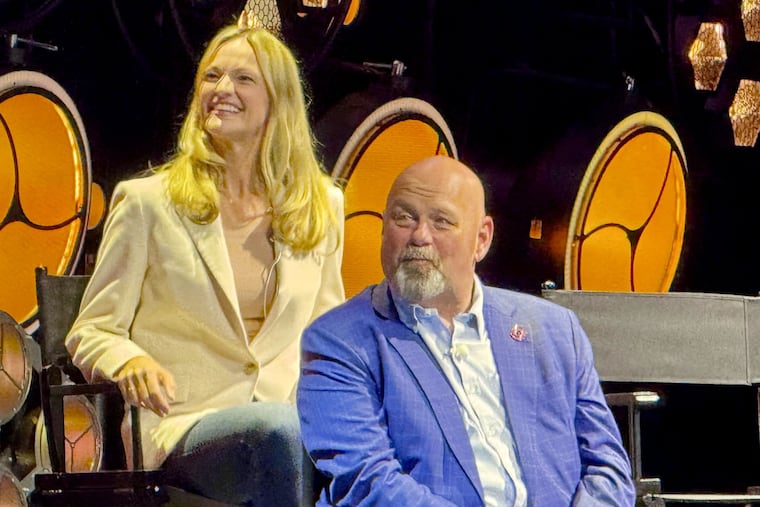
It was the second time in the last week that Shapiro, whose rumored presidential ambitions goes back decades, appeared at a high-profile gathering of Democratic Party faithful. Over the weekend, he sat down with former Barack Obama speechwriter Jon Favreau at “Crooked Con” in Washington. He also appeared on NBC’s Meet the Press, weighing in on national issues including the attempted impeachment of Defense Secretary Pete Hegseth.
Shapiro has not said that he’s actively planning a national campaign. But his increased involvement on the national stage and his resounding performance in a key swing state have further fueled the expectations.
Shapiro’s 12-point increase over Kamala Harris’ performance in Pennsylvania in 2024 was the largest improvement over the last presidential nominee among six other prospective 2028 candidates who ran in statewide elections this year, an Inquirer analysis found. In October, he launched a federal political action committee to help Pennsylvania’s federal candidates and those around the country, a key signal for those looking to raise the massive amount of money needed for a presidential bid.
The conference in Denver was unmistakably angled toward the 2028 presidential contest in addition to the more pressing agenda in Congress when Democrats take control in January.
Beyond Shapiro, other potential candidates who attended included U.S. Sens. Cory Booker, Ruben Gallego, Elissa Slotkin, Raphael Warnock and Chris Van Hollen; U.S. Rep. Ro Khanna; and former Transportation Secretary Pete Buttigieg. Other current and potential future party leaders — like expected House Speaker Hakeem Jeffries and Govs. Mikie Sherill and Abigail Spanberger — were also there.
Booker, a New Jersey Democrat who ran for president in 2020 and is already making visits to the first-primary state of South Carolina, was slated to address the gathering later Friday.
Sherrill, the state’s first-term governor, also spoke on a panel Friday and U.S. Sen. Andy Kim (D., N.J.) used his own appearance to push for Democrats to focus on healthcare when they regain the majorities on Capitol Hill in January.
In a personal and emotional speech, he spoke of his family’s increasing struggles to take care of his father with Alzheimer’s, and about his MediKids bill for universal healthcare for kids (Jeffries endorsed the legislation in a separate panel).
U.S. Rep. Jake Auchincloss, a Massachusetts Democrat who chairs the group that hosted the conference, was explicit about the ongoing shadow presidential primary and how the nominee should embrace a new track for the party.
“My challenge to everyone running in 2028, which might also be every person in this room, is, tell us, which ideas you will stop giving permission to, the ones that defy common sense or don’t work,” Auchincloss said. “Tell us which privileges you’ll confront, even if your donors or allies object. Tell us which opportunities you’ll promote so every child can share in the American promise. Voters did not tell democrats, we get it. They told us we get a chance.”
Shapiro — in a segment titled, “The Next Era of the Democratic Party” — laid out a broad vision similar to his stump speeches in his latest run for governor. And like others, he challenged his party to think big as it gains back control at different levels of government.
“The question is, what kind of force are we going to be?” he said.
Peppered with questions about 2028 by reporters later, Shapiro said he’s only “decided to be a loud voice in this process that we’re going through right now as a party to put ourselves in the best position to compete, and most importantly, put ourselves in the best position to be able to do good things for the American people.”
Other potential candidates for the Democratic nomination also stressed the need for the party to deliver, embrace a new generation of leaders, not get caught up in liberal ideological battles, and not fall prey to learning the wrong lessons from the midterms.
“This isn’t a blank check. If anything, it’s a short term loan,” Gallego, a first-term senator from Arizona, said while talking about Latino voters who helped Trump win in 2024 but swung back to Democrats this year.
Slotkin, a freshman senator from Michigan, stressed voters’ desire for younger leaders and avoiding Democratic infighting before ending with a line that could’ve fit into the closing pitch on a presidential debate stage.
“I will do everything in my power to be the principal leader that you all deserve,” she said.
Shapiro also made a reference to the 2028 race — opening his short speech by saying Pennsylvania suddenly has some competition in its role as the nation’s largest swing state. With Democratic wins across Texas, Georgia, Ohio, South Carolina and more, there are other states “looking pretty swingy right now.”
“Our party is ready to take on some big swings, too — not just going out and scrapping for 270 he said, referencing the Electoral College votes needed to win the White House, ”But fighting hard to swing for 370.”