Nutter to focus on increasing college admissions
In the year ahead, Mayor Nutter's administration will open an office to help more city residents to and through college, and seek from area universities up to 100 new scholarships for city students.
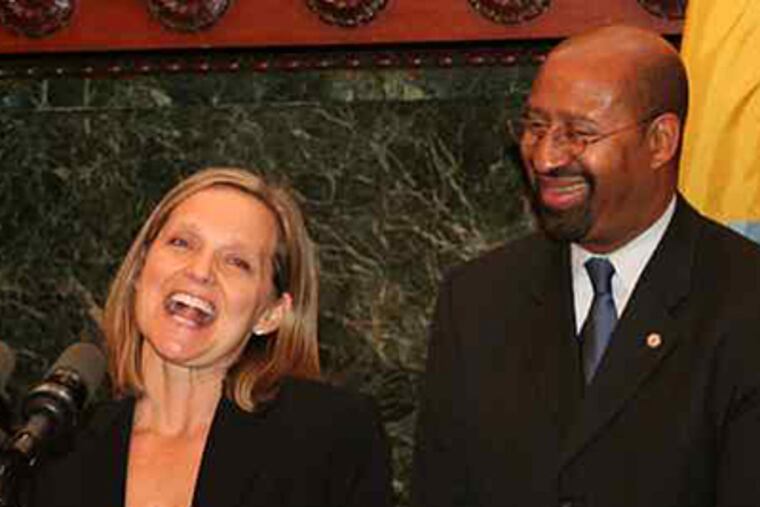
In the year ahead, Mayor Nutter's administration will open an office to help more city residents to and through college, and seek from area universities up to 100 new scholarships for city students.
It's part of a push to sharpen the city's focus on higher education - an area not often embraced by mayors traditionally more consumed with their kindergarten-through-12th-grade school systems.
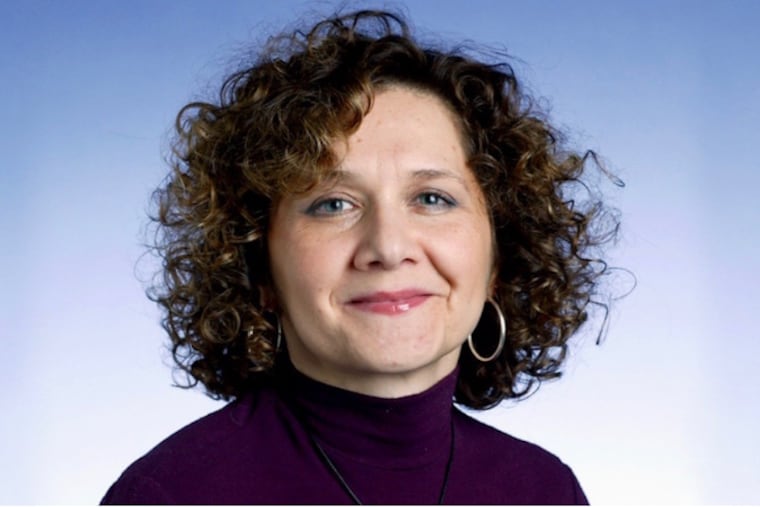
"If we are going to remain economically competitive as a region, we have to get more kids going to college," said Lori Shorr, Nutter's chief education officer.
At the outset of his administration two years ago, Nutter set as a goal doubling the percentage of city residents who have college degrees, which was 18 percent in the 2000 census.
"Education is critically important to the future of this city at all levels. We talk about education in the context of K-16," Nutter said.
In wide-ranging interviews on education last week - the midpoint of Nutter's four-year term - the mayor and his education officials heralded a three-percentage-point increase in the Philadelphia School District's graduation rate, even though it means four of every 10 students still fail to graduate in six years.
They vowed strong support for Superintendent Arlene Ackerman, who has come under fire in recent months for her leadership style; stressed the need for more emphasis on school safety in the wake of racial attacks on students at South Philadelphia High School; and released what will become an annual report card on K-12 and higher-education success rates for city students.
Among the education accomplishments of the last two years, Nutter and Shorr pointed to a steady rise in academic achievement for the school district, though about half of students still can't read or do math on grade level; more state funds for city schools; and a new, ambitious five-year strategic plan for the district. They also cited the nearly 1,500 new seats for students who have dropped out or are at risk for doing so, although the district now has fewer places in alternative schools for students with behavioral problems.
On the college front, a new "PhillyGoes2College" office will open early this year on the first floor of City Hall. It will direct city residents on where to get help in filling out aid forms and applications, preparing for SATs, and writing college essays. The office will run on a budget of $150,000 to $200,000, all raised from outside sources, Shorr said.
"We really thought one of the things we could do in City Hall is be a funnel for people - sort of the 311 of college-going," Shorr said.
Realizing the economic hardships of many families, Nutter said, he will look to get up to 1,000 fully funded college scholarships for city students from the region's 90-plus universities before the end of his first term. City officials had no estimate on how many exist now.
He expects an announcement soon from a major local university on more scholarships. The University of Pennsylvania for years has offered the Mayor's Scholarship to city students, and Temple added several new full scholarships in 2008, adding to other long-standing scholarships.
The city also trained 100 city employee volunteers to help students and their families fill out federal financial-aid forms for college this year, helping to bring in $194 million more in aid for Philadelphia students.
According to the Pennsylvania Higher Education Assistance Agency, Philadelphia residents received $966.4 million in aid for 2009 as of Dec. 4. The aid went to 95,617 residents, up about 13 percent from 2008. Nationally, numbers are up as more people seek aid in the bad economy.
Nutter pledged to step up the efforts this year.
"You're much less likely to go to school if you don't fill out those forms," he said.
The mayor's Council for College and Career Success, including a cadre of business and education leaders, also has released targets for improvement through 2014. It will release progress on targets every October.
Under the plan, 80 percent of the city's public school students would graduate within six years by 2014 - a gain of 20 percentage points. The graduation rate is on the upswing. Of students who entered in 2002-03, 60 percent graduated by 2009, up from 57 percent two years earlier, according to Shorr's office. The four-year rate was 56 percent, up from 53 percent.
Still, the city's dropout rate has risen slightly. In 2008, 28 percent of students dropped out; in 2009, the figure was 29 percent.
On the K-12 side, Nutter and Shorr claimed as a key accomplishment a reduction in violent incidents throughout the district - due in part, they said, to a relationship between the city and the district that's better than it's been in years.
Still, Shorr said, she's cautious.
"I'm celebrating it, but at the same time, you know that there are still things happening for kids all over the city, and we can't be happy with that number until you don't have kids who are afraid to go to school."
The December attacks on Asian students at South Philadelphia High rang an alarm about safety and the realities of city schools for many, Shorr said, illustrating that racism and violence are still very real in the city and its schools.
Immediate fixes, such as more cameras, counselors, and police officers at South Philadelphia High, are already in place. So are programs focused on addressing and healing racial divisions.
But "I think an overall safety strategy for the district is something we need to see," Shorr said. "Where's the plan for where the district's going to go with this?"
This year, the city wants the district to stress and strengthen its local safety teams - administrators, community members, students, and police officers who meet regularly on security issues. Each of the district's 264 schools has one, but the quality of the teams varies widely.
Both Nutter and Shorr expressed unequivocal support for Ackerman, who has led the district since June 2008.
"My support for her could not be stronger than it is today, and it continues to grow," the mayor said. "If you show me a leader who hasn't had a few bumps along the path, I'll show you someone who's never tried to accomplish anything."
Shorr said she has met every two weeks with Ackerman, and monthly with the mayor and Ackerman. She called the superintendent "an asset."
"Dr. Ackerman is a strong female leader. You don't get where she is without being strong and powerful, and I think sometimes that can be difficult for people to see in a woman," Shorr said.
Nutter said he had not thought about trying to bring the district - currently under state control - back under the city's wing, because things have gone so well in partnership with Gov. Rendell's administration.
"The governing structure for our purposes is working and working well," he said.
But the gubernatorial term of the former Philadelphia mayor ends this year, and whether the next governor will cooperate with the city as well as Rendell does is uncertain.