Three sets of grandparents, three different challenges
Just ask most grandparents and they'll tell you: If they'd only known how wonderful grandchildren would be, they would have had them first. Grandparents offer a recess from a world of "Nos" and a love that is often described as unqualified.
Just ask most grandparents and they'll tell you: If they'd only known how wonderful grandchildren would be, they would have had them first. Grandparents offer a recess from a world of "Nos" and a love that is often described as unqualified.
But there's also a very real, sometimes difficult side of grandparenting, too. We honor National Grandparents Day this week by introducing three sets of grandparents successfully dealing with unique challenges, perhaps some that mirror your own. One pair is coping with grandchildren living 2,000 miles away; another assumed custodial care of their grandchild; and the third pair is navigating child-raising theories that conflict with their own.
Long-distance love THE GLASSES
Eileen Glass can pinpoint the moment when everything she had come to love about grandparenting ended. She was driving her son, daughter-in-law and granddaughters to the airport for their permanent move to California.
"I had known it was coming - but when they got out of the car and walked away, I thought my heart would break."
From the time Alexandra, their first grandchild, was born in 1999, Glass and her husband, Harry, had helped out with her care as their son, David, and daughter-in-law, Ginger, juggled complicated professional lives. David is a lawyer and psychologist, and Ginger is a lawyer.
It meant Glass had to limit her own professional career as a full-time clinical social worker to help with Alex's daily care. Her husband, an anesthesiologist with a hectic schedule of his own, was her willing baby-sitting partner whenever possible. When Nicolette was born three years later, the grandparents again shifted gears, adding her care to their already involved routine.
But in 2003, David Glass broke the news that he and Ginger would be moving to Los Angeles, where opportunities for David's dual specialty were greater.
Fast-forward to the present: Every six weeks, Harry and Eileen Glass cross the country to spend long weekends with their transplanted grandchildren. What some would find exhausting and disruptive, the Glasses find exhilarating.
To make the constant travel possible, Harry Glass, 68, shifted his specialty to pain management to allow for a more flexible working life. Eileen Glass, 65, has fully retired.
"We make it a point to go to their school plays and dance recitals," said Harry Glass. "The reality is that if we're going to have a close relationship with David's kids, we're the ones who have to make it happen."
The Philadelphia couple also has seen the benefits of technology: They now often say goodnight to Alex and Niki via Webcam. "It's not quite the same as a hug," said Eileen Glass, "but it's the next best thing."
Unplanned parenthood THE WALKERS
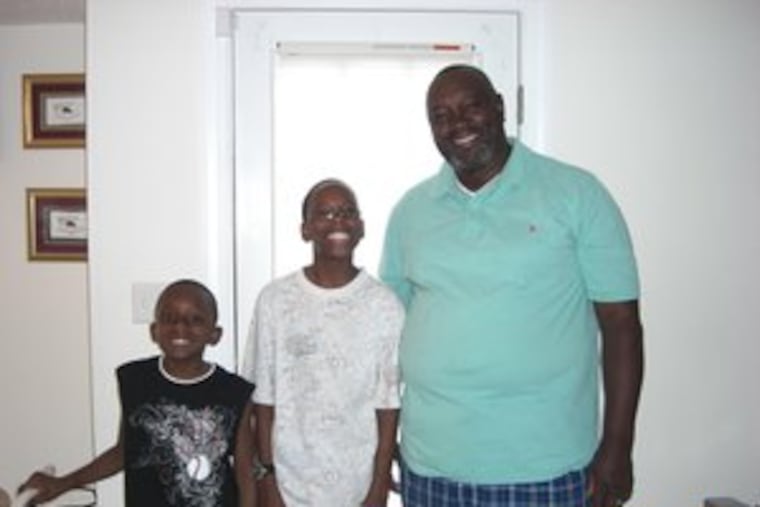
The 2005 call from Kansas came out of the blue. Felton Walker's daughter Kimylon was being deployed to Iraq, where her husband was already serving. Both are in the Army.
The request: Within two weeks, her son Malcom, then 10, needed a place to live.
And thus began a chapter that would dramatically alter the lives of these empty-nesters. Joyce, Kimylon's stepmother, never had children of her own. It was, in her words, "going straight to grandmom, without a stop at mom."
"It was like he fell out of the sky," said Felton Walker, recalling the arrival of a scared, confused boy just as the school year was starting.
The couple, busy partners in a Cherry Hill janitorial-supply business, had not had a chance until that point to develop a close relationship with Malcom, who lived with his parents in Kansas. (Now they live in Prince George, Va.)
Joyce and Felton Walker both admit that it was rough. Malcom missed his parents, and he had some academic issues - ultimately he was found to have dyslexia. "I suddenly became Malcom's education advocate, and I learned a great deal about how important that can be for a child," said Joyce Walker, who grew to be an expert in juggling her new and sometimes colliding worlds. She also was in frequent e-mail contact with Malcom's parents when problems arose. "We learned that we all had to work on this together, no matter how far away they were."
Felton Walker, who admittedly didn't always feel energetic enough to handle a homesick child, still managed to coach his grandson's basketball team and teach him a bit about golf. "I found that we could bond through sports," he said. "That worked."
Sometimes, the 14 months with Malcom seemed endless. Other times, they seemed too fleeting.
Malcom's departure was bittersweet. "We got our lives back," said Joyce Walker. "But I really missed him."
"At first, it felt like going against the wind to do this," said Felton Walker. "But in the end, I really understood what it meant to be a grandfather. I think it was a very good thing for Malcom - and a very good thing for me."
Learning boundaries THE DESAIS
Barbara and Kiran Desai were delighted when their younger daughter, Manisha, and her husband, Adam Olshen, had their first child in 2004 and their second two years later. Yet the younger couple worried how they would juggle parenthood and their demanding careers as cancer researchers.
Barbara Desai worried, too, and so she took action.
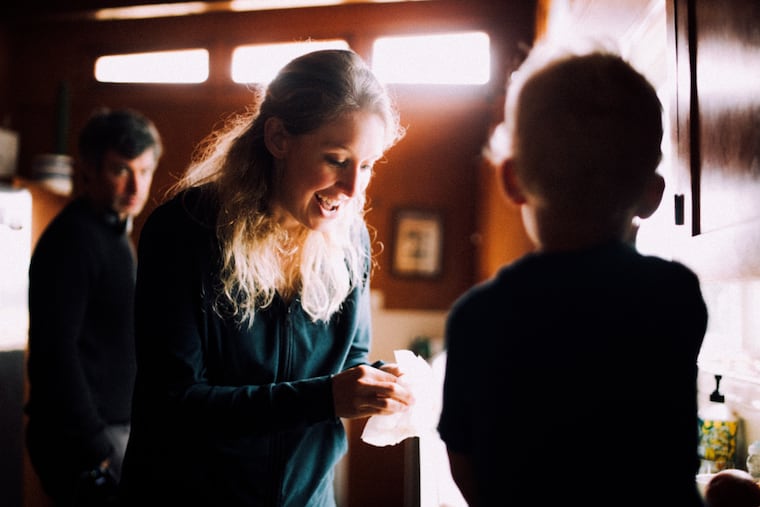
Every other week, Barbara Desai leaves her Voorhees home and drives to her daughter and son-in-law's apartment in New York City's Washington Heights section, staying for at least two days.
As wonderful as the visits are, they are not without their stresses. Desai believes Manisha and Adam have too many rules, and they feel annoyed when she breaks those rules. The main conflicts: discipline and food. The children's diets are closely monitored; occasional cookies are even off-limits. Desai thinks there is little flexibility in the younger couple's parenting.
Desai does speak up cautiously. Her husband, who is generally less involved, does not. Both have learned that grandparents in Western culture clearly do not command the same reverence as in their own Indian traditions.
So how do they handle those conflicts?
"By remembering," said Desai, "that silence is golden."
Answers From an Expert
James Delpino, a licensed social worker in private practice for 28 years in Southampton, Bucks County, specializes in individual, couple and family therapy. He addressed some of the most common grandparenting conflicts.
Question: What happens when grandparents and parents clash over issues of discipline?
Answer: Unless there are special circumstances like custody, grandparents should not be disciplining - that's up to the parents, and must be, unless there is danger involved.
Q: How do grandparents get their adult children to tap their wisdom?
A: That wisdom and experience are worth sharing if they're requested. And that's a very big if.
Q: What if my grandchildren complain to me about their parents?
A: Grandparents should never undermine or ridicule a child's parents. The best approach is to comment privately to the parent if the issue seems serious.
Q: How can grandparents convince their adult children that their generation's ideas are not old-fashioned?
A: Join them in seeking information on the Web and by reading the parenting books that they're reading. But still remind them that not all information and wisdom comes from books or the Internet - it often comes from life experience.