Miscarriage: A private experience gets more public
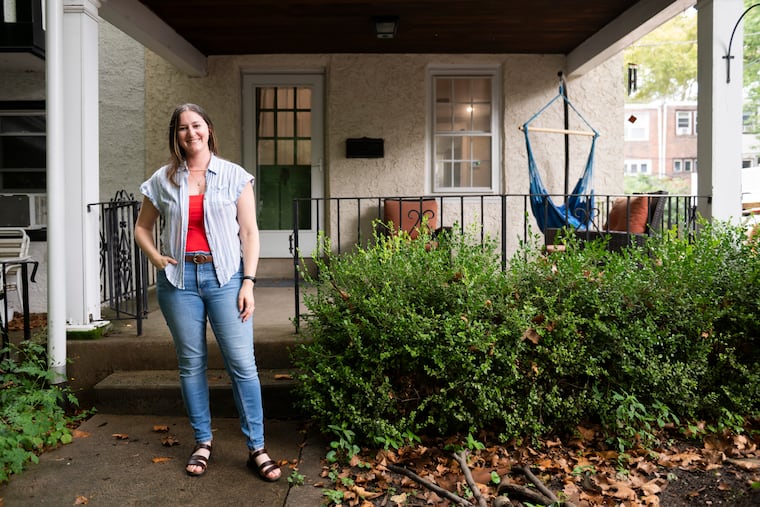
The day Mandy Edwards learned she was pregnant, in summer 2013, she texted her husband, Keats Rickard, a photo of a sesame seed and jotted, "We can talk about it later."
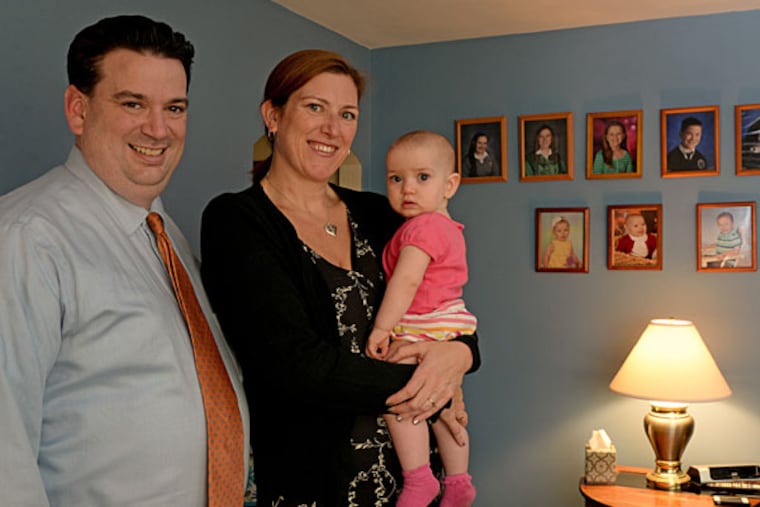
The day Mandy Edwards learned she was pregnant, in summer 2013, she texted her husband, Keats Rickard, a photo of a sesame seed and jotted, "We can talk about it later."
Edwards, 36 at the time, figured it would be safe to broadcast the news more widely after her first trimester. And when that marker passed, with an all-clear on the genetic testing and confirmation that the baby was a boy, the couple began to prepare a Facebook blast.
Two days later, Edwards posted this instead: "It's kind of hard for me to put my business out there, especially with something so personal and painful, but . . . I had a miscarriage last night." The baby she delivered at Abington Memorial Hospital had already died.
Back home the next morning, she and Rickard clutched each other in shock and grief. They wandered around their house: There was the baby carrier, the nursing pillow, the clothes Edwards had just bought from Motherhood Maternity. And then they turned to the computer.
"We felt weird doing it in that forum, but . . . it was too much to call or text people individually," recalls Edwards, who lives in Abington. Soon, flowers arrived. Friends showed up with food. Messages, many of them from people who'd also experienced pregnancy losses, crowded her in-box.
"It's amazing, how that comes out . . . but people don't want to talk about it," Edwards says.
Miscarriage is common - fertility specialists say 20 percent to 25 percent of pregnancies end with a loss - yet people are often hushed about the experience, reluctant to broach it even among close friends and longtime colleagues.
Digital and social media - Facebook, Instagram, blogs - have opened new, sometimes easier, arenas for discussion of this once-taboo topic. Through digital media, bereaved parents can share without the discomfort of face-to-face encounters; they can cast a wide net without the painful intensity of individual phone calls; they can seek and receive support from the refuge of their living room couch.
When Mark Zuckerberg, Facebook's creator, used the online forum this summer to announce that his wife had experienced three losses before becoming pregnant with their daughter, he brought more light to the topic, but he wasn't a pioneer - simply the most public person so far to share the news in that fashion.
"Zuckerberg was openly discussing something that's common and taboo," says Jon Cohen, author of Coming to Term: Uncovering the Truth About Miscarriage. "Women who miscarry often torture themselves over this. The more open conversation there is, the less stigma there will be."
October, National Pregnancy and Infant Loss Awareness Month, will bring more conversation - and other ways to acknowledge what is often private suffering: A Walk to Remember in Neshaminy State Park on Sunday, and remembrance services at local hospitals. On the 15th of the month, Edwards and Rickard will light a candle and think about their son.
For Jim and Kate Meredith of Fox Chase, the hardest part of losing a pregnancy wasn't telling the world; it was telling their daughters.
Twelve-year-old Anna, 10-year-old Mary Grace, and 6-year-old Kara had been lobbying for a little brother or sister. After their parents sat them down one night and said, "We're going to have another baby," the girls gleefully spread the news through their parish and school. The family called the baby "Cuatro."
At a Memorial Day picnic, Kate noticed she was spotting a bit - unusual for her during a pregnancy. The following Tuesday, the ultrasound tech's face was grim as she examined the flickering image: There was a placenta, but no fetus.
Kate and Jim remember the wrenching sound of their daughters' wails when they told them. "We all sat around the living room and hugged," Kate says. "It was just a cry-fest."
Then Jim got busy, texting and emailing relatives, friends, and colleagues. "I said, 'We lost the baby.' And it was really hard to say that. It's hard for people to talk about."
Kate told her boss at Aramark and asked him to share the news with the rest of her team; Jim emailed the girls' teachers. They mourned together and separately: Kate pored over her daughters' artwork and photos; Jim prayed and gave in to occasional surges of tears. His parents, who had planted roses in their yard to honor each of their granddaughters, added a sunflower bush in memory of the loss.
And the couple - who later went on to have two more daughters - discovered they were part of a quiet community of grief: "Everywhere we went, somebody came over and told me they were sorry, and there was a story: 'Oh, I had a miscarriage, too,' " Kate says. "And I never knew."
Most miscarriages are due to chromosomal abnormalities that would likely threaten a baby's survival outside the womb. But that doesn't stop women from faulting themselves, says Jacqueline Gutmann, a fertility specialist with Reproductive Medicine Associates (RMA) at Thomas Jefferson University Hospital in Center City.
"Women's biggest concern is: I did something wrong. But exercise, coffee, stress at work, or flying in an airplane do not increase somebody's risk of miscarriage."
Midwife Ronni Rothman, in practice for 20 years, believes the stigma that shrouds miscarriage is rooted in self-blame and shame. "There's something about our self-worth," she says, "wrapped up with whether or not we can grow a baby."
In online chats, soul-baring blogs, and traditional face-to-face support groups, women and men find safe arenas for the confusion and grief that follow a pregnancy loss. Unite Inc., a grief support organization, sponsors gatherings at Philadelphia-area hospitals for people who have experienced miscarriage, ectopic pregnancy, stillbirth, or early infant death.
On a September evening at Jefferson, six parents gathered at a conference table, a box of tissues as the centerpiece. Andrea Braverman, a clinical psychologist, facilitates the monthly group.
Jill Novosel of Mount Airy wept as she described the death of her son, Bruce Levi, born full-term but with no brain function. He lived for three days - enough time for Novosel and her husband to cuddle him, change his diaper, and sing to him in Delaware County Memorial Hospital's NICU.
Afterward, Novosel silenced her phone for a month. "I couldn't talk to anybody," she recalled.
Karen Brooks of Center City felt differently. After three pregnancy losses - one, of her daughter, in the second trimester, one at 10 weeks, and one just a week after an IVF cycle - she yearns to tell the story, to say her daughter's name, to have loved ones witness her grief.
After the first loss, in 2014, she posted this on Instagram: "Liam and I just spent four months navigating a troubled pregnancy that ended last week in heartbreak." The post drew 29 comments.
"I wanted people to know what we were going through," Brooks said. "I didn't want it to get brushed under the rug."
Later that year, she wrote on Facebook: "A few weeks ago, Liam and I observed the due date for our daughter, whom we lost halfway to term over the summer." She also had the baby's name - Thora, after the Norse god of thunder - tattooed over her ribs.
"Losing a wanted pregnancy - and I've done it three times now - is so devastating," she told the group at Jefferson. "How do so many people get through it and not share it?"
Resources for Loss
"Coming to Term: Uncovering the Truth About Miscarriage," by Jon Cohen. After his wife lost four pregnancies, the award-winning science writer set out to understand what he calls the "black hole" of miscarriage, a topic fraught with misunderstanding, controversy, and emotional turmoil.
A Walk to Remember, 2 p.m. Sunday in Neshaminy State Park. Fourth annual walk for families who have experienced miscarriage, ectopic pregnancy, stillbirth, or early infant death. Register: http://walktorememberphil.wix.com/walkphilly.
Unite Inc. provides online resources, newsletter, and free grief support groups for parents at hospitals in the Philadelphia area. Many of these hospitals also hold remembrance services during October. 1-888-48UNITE or unitegriefsupport.org.
- Anndee Hochman