Analysis: Bridgegate shows how the 'big gray cloud' of scandal doesn't go away
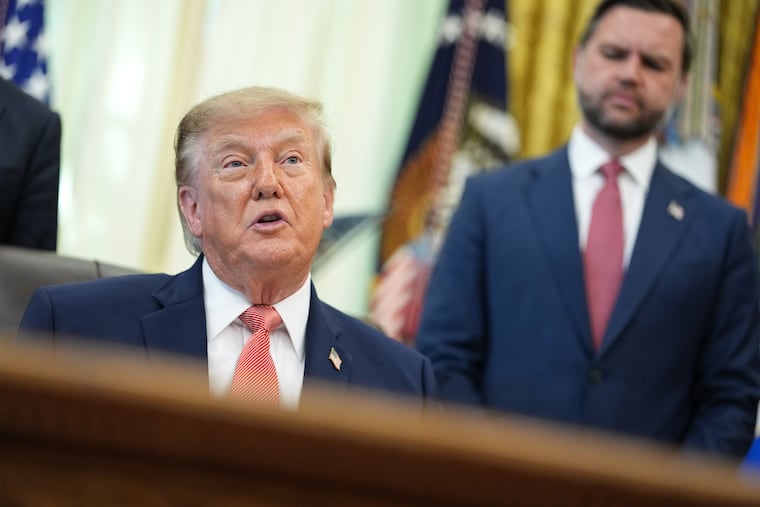
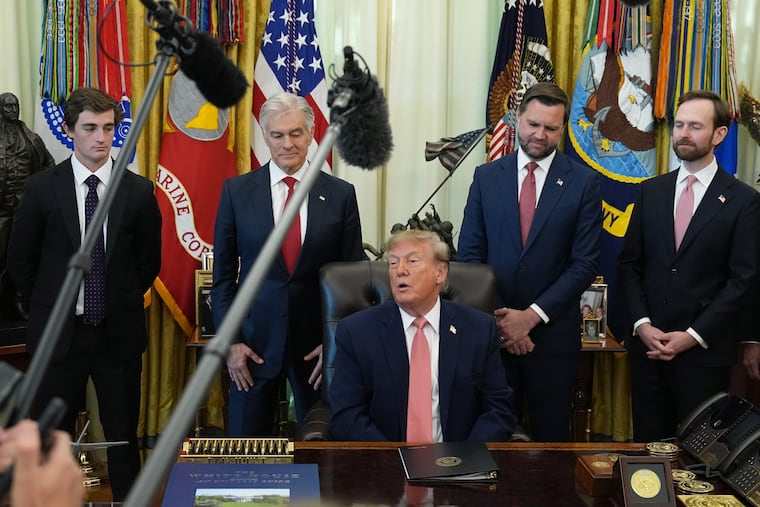
Wednesday was supposed to be Chris Christie's coming out party. After Donald Trump passed him over for vice president and dumped him as head of his transition team, the president tapped the New Jersey governor to lead a national effort to combat the opioid addiction crisis.
But as he was inside the White House, two of his former associates were sentenced to federal prison for their roles in a conspiracy to tie up traffic on the George Washington Bridge as part of a revenge plot against a Democratic mayor who refused to support Christie's 2013 re-election bid.
"Bridgegate" illustrates how political scandals rarely fade away quickly and can dog an administration for years. It's a lesson Trump's team is beginning to learn as an FBI investigation and congressional inquiries into potential connections between Russia and the president's advisers heat up. These, and what grows from them, may drag on for a very long time and undermine his presidency — even if a smoking gun never emerges to directly implicate Trump in any criminal wrongdoing.
Though Christie was never charged with any crime, and continues to plead ignorance to what his subordinates were doing, the scandal that derailed his political career has still not gone away. Almost four years later, it continues to rear its head at the most inopportune times and will forever taint his legacy.
Bill Baroni, 45, the former deputy executive director of the Port Authority of New York and New Jersey, was sentenced to 24 months in prison, and Bridget Anne Kelly, 44, Christie's former deputy chief of staff, was sentenced to 18 months. "Time for some traffic problems in Fort Lee," Kelly wrote in one infamous email, setting in motion five days of gridlock that slowed emergency vehicles from getting dying patients to hospitals, buses from getting kids to school and commuters from getting to work.
Christie went on three morning shows Wednesday to talk about his plan for fighting drug addiction. But what the anchors really wanted to talk about was Russia and Bridgegate. "The judge will do what the judge believes is appropriate," the governor told Matt Lauer on NBC. "And it's not my role or anybody else's role, other than the judge in that courtroom, to pass sentence on people who have committed crimes." His office declined to comment after the ruling.
Every time Christie has gotten a little distance from the scandal or appeared to turn the page, some new revelation has emerged to stomp on him. The drip, drip, drip of revelations big and small kept his presidential campaign from ever getting real traction. Donors always worried about which shoe would drop next. Even Christie himself has said the scandal was "a factor" in Trump passing him over for vice president, despite his early endorsement and their longtime friendship.
The seven-week trial for Baroni and Kelly last fall showcased just how fixated Christie and his operation were on laying the groundwork for his 2016 campaign. It also shined a light on a with-us-or-against-us culture inside the governor's office. One of the prosecution's key witnesses said under oath that he told the governor about the bridge conspiracy during a 9/11 memorial service. He testified that Christie laughed when informed of the plot. (Christie denies this.)
Trump himself, not long before Christie endorsed him, said it is inconceivable that the governor was out of the loop: "He totally knew about it!"
And Wednesday's convictions are also not the end of the story. Both Baroni and Kelly promise to appeal. The Democratic-controlled state legislature conducted investigations, held hearings and issued subpoenas until the feds asked them to pause their efforts while they pursued a case. Now some Democrats are pushing their leadership to reopen those inquiries and to issue a fresh round of subpoenas targeting Christie.
Christie was the U.S. attorney for New Jersey before he ran for governor, so he knows first-hand how long these sorts of investigations and prosecutions take to play out. He also understands how hard it is to put a genie like Russia or Bridgegate back in the bottle.
Last summer, Christie called for a special prosecutor to investigate Hillary Clinton: "We must get to the bottom of what looks like a pay to play scheme," he said in a statement distributed by the Trump campaign. "Unfortunately, the only appropriate action for our compromised Attorney General is to appoint a truly impartial Special Prosecutor. . . . Our system of justice deserves nothing less."
Now that Trump is the one potentially in jeopardy, Christie has completely changed his tune: "When a special prosecutor gets involved, the thing gets completely out of control," Christie said on CNN last month, rejecting GOP Rep. Darrell Issa's call for one. "That doesn't serve anybody's purposes. We have a lot of important problems to deal with in this country. I'm not saying that's not one of them. But I believe the Justice Department can handle it."
Meanwhile, the Garden State has turned hard against Christie. A Fairleigh Dickinson University poll published Tuesday puts the Republican's approval rating at just 20 percent and his disapproval rating at 72 percent. Two-thirds of voters think the state is on the wrong track.
It's not just Bridgegate that's driven his fall from grace. New Jersey's credit rating was downgraded again this week, the 11th time that has now happened under Christie's leadership. "The state has increased pension contributions since 2012, but Moody's says they're still below recommended levels and that unfunded pension obligations are growing," the AP notes.
Christie reiterated Wednesday that he plans to serve out the final year of his term, but he's keeping the door open to taking a formal role in the Trump administration early next year.