Murphy: Learning to appreciate Sixers' Robert Covington
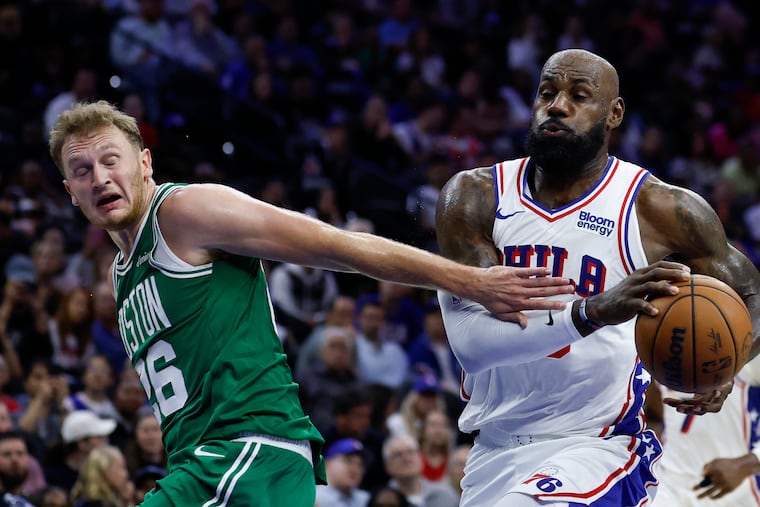
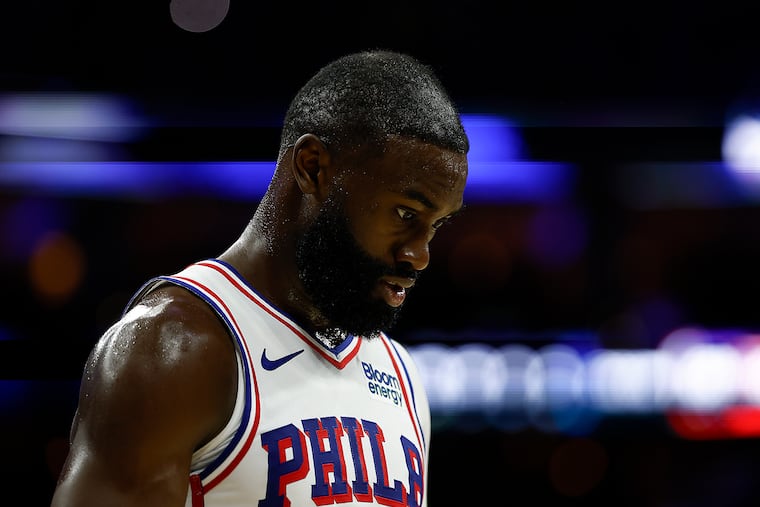
ROBERT COVINGTON is something of an archetype when it comes to Sixers players, a guy who finds himself subject to some of the same externalities as guys such as Andre Iguodala and Aaron McKie did in their time. Iguodala, in particular, is whom Covington most calls to mind, at least as far as his essence goes, a Sixers player whom a small but learned minority of NBA die-hards have latched onto as a guy whose attributes the hoi polloi simply doesn't get.
ROBERT COVINGTON is something of an archetype when it comes to Sixers players, a guy who finds himself subject to some of the same externalities as guys such as Andre Iguodala and Aaron McKie did in their time. Iguodala, in particular, is whom Covington most calls to mind, at least as far as his essence goes, a Sixers player whom a small but learned minority of NBA die-hards have latched onto as a guy whose attributes the hoi polloi simply doesn't get.
Covington is like an indie band in that regard, the sensation of watching him play seemingly heightened by the knowledge that nobody else around you can really appreciate what they are beholding. Beer snobs, music snobs, defensive stalwart snobs: In the afterlife, heaven won't be high enough ground for any of them.
This was always Iguodala's lot in life at the Wells Fargo Center, a player whom people just couldn't seem to agree on. On the surface, they are drastically different players. Iguodala was a physical specimen who entered the NBA as a top-10 draft pick, around whom the Sixers were determined to build their post-Iverson offense. Covington is a longer, leaner undrafted free agent whose scrappiness must make up for a lot more than Iguodala's ever needed to.
Again, though, we're talking more about essences, and over the last couple of seasons, Covington has been to these Sixers something along the lines of what Iguodala was to those teams of the previous decade. In a nutshell: a guy whose obvious attributes as an NBA player were overshadowed by the fact that, by choice or by necessity, he spent much of his time trying to be a player he was never supposed to be.
If that notion makes no sense, let me try to explain where it's coming from: There's a school of thought that this last month or so has demonstrated the irrationality of the segment of the Sixers fan base that spent much of December expressing its vocal displeasure with the fourth-year swing man after every miss. As Brett Brown noted after Wednesday night's loss to the Mavericks, Covington's absence because of a hand bruise was glaring as the Sixers struggled to rebound and defend pretty much everywhere on the court.
Yet treating the performances of the Sixers and Covington during their surprising run to relevance as some sort of validation ignores the fact that Covington has been a different kind of player during that stretch. Namely, the kind of player he needs to be.
No doubt, Covington's defense, versatility and endurance have been big factors for the Sixers, but no more so than they were during the first 30 or so games of the season. The difference since the start of the new year has been the fact he's actually converting a high enough percent of his shots that he is no longer negating so many of his positive defensive possessions with empty offensive ones.
In his first 28 games of the season, he shot only .346 from the field and .279 from three-point range. Rock bottom occurred in a Dec. 29 loss to the Jazz in which he missed all 11 shots he attempted from the field, seven from three-point range. Since then, he's averaged 10.9 attempts and 4.8 makes, including 2.3-for-6.1 from three-point range (percentages of .437 and .367).
Charlie Manuel always used to say that the most important quality for a hitter is to "know thyself." Over the last month-plus, Covington has looked like a player who learned that. Like Iguodala, his lot in life is not as a 1-on-1 player whose team lives and dies on his performance. He is not a create-your-own-shot shooter. Consider this: Heading into Thursday night's game against the Spurs, 42 NBA players were averaging 5.0 attempts from three-point range per game. Of them, Covington ranked dead last in conversion percentage, shooting an awful .312 on the season. In other words, no other player in the league had taken so many shots and given his team so little in return as Covington.
Therein lies the genesis of the discontent you heard at the Wells Fargo Center throughout the first few months of the season. Mediocre shooters generally do not operate with the presumption of a guy like Covington. Of those 42 players averaging 5.0 three-point-attempts per night, 34 were shooting at least 36 percent from downtown, while 25 were shooting at least 38 percent. Covington is a career .352 shooter from downtown. He's one of only 14 active players to average at least 6.0 attempts per game over the last three seasons, and his .352 percentage ranks dead last among them.
Yes, Covington is a tremendous value. Yes, his athleticism and versatility would earn him a spot in any playoff team's rotation. But all of those attributes shine even more when he plays a style that matches his skill set. Enter the cliches: when he plays within himself, when he doesn't try to do too much. That's the Covington the Sixers need. And for the last month, that's the guy they've been getting.
@ByDavidMurphy