Don’t believe the anti-hype. The Sixers are as good as they look, Super Team or not.
There is a very good chance that this team is better than it even looks on paper with an eminently functional roster on a lot of different levels.
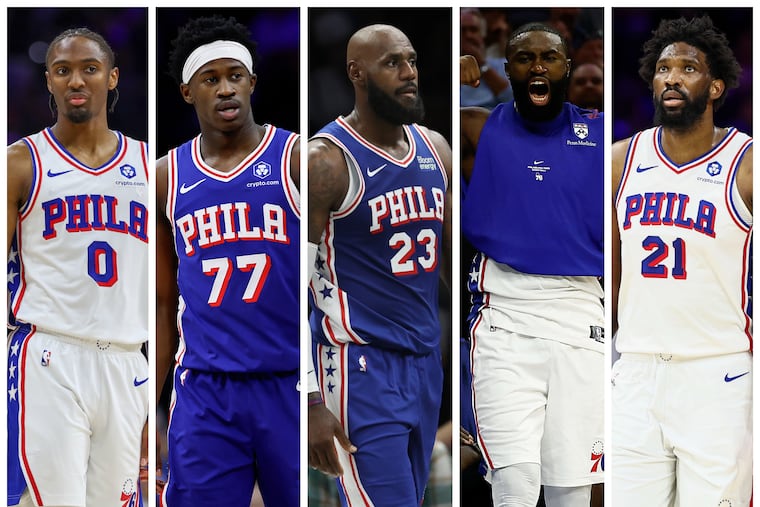
Maybe it’s all Vince Young’s fault.
That flicker of doubt. Heck, that flame. A whisper in your head. It can’t be this easy, can it? Five months ago, the Sixers were rebuilding. Now, they’re too big not to fail. That’s just the way it goes, isn’t it?
The whisper won’t stop ...
Super team.
Super team.
Muahahahahah.

David Murphy alerts
Few notions in the language of sport have been turned on their heads as completely as the idea of the Super Team in recent years. Once an accolade, it is now a warning, most often snickered in a tone of ironic detachment. A popular Nets blog offered a fitting case in point with its recent headline atop a story about Brooklyn’s recent preseason win.
“Nets Spoil 76ers’ ‘Super Team’ debut,” it crowed.
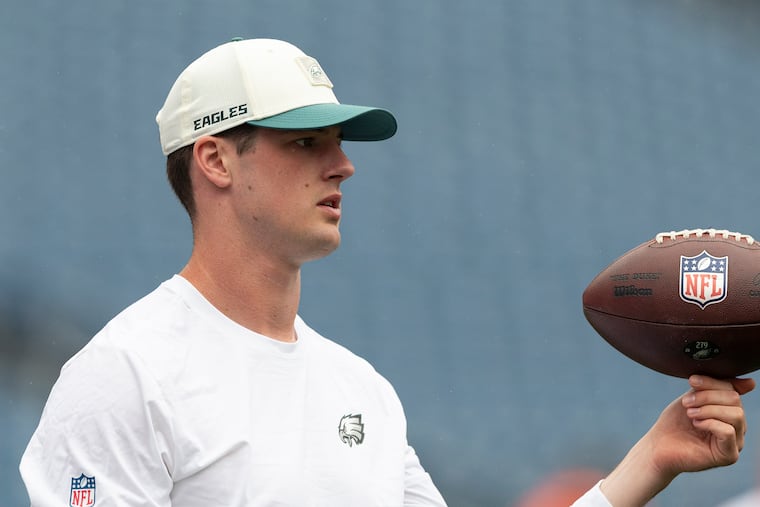
Here locally, Young deserves some of the blame. The former Heisman Trophy winner’s declaration that the 2011 Eagles were a “Dream Team” was mostly a lesson in things a newly signed backup quarterback shouldn’t say when a team acquires Dominique Rodgers-Cromartie and Nnamdi Asomugha. That said, the hype was real. The Eagles went off as the third betting favorite to win the Super Bowl that year. The underperformance was just as real: an 8-8 record despite top-10 finishes in yards and points on both sides of the ball.
No league popularized the idea of the Super Team quite like the NBA in the late 1990s to mid-2000s. It began as a reaction to the lack of parity. Clyde Drexler and Charles Barkley ended up in Houston alongside Hakeem Olajuwon in an attempt to counter the dominance of the Jordan 2.0 Bulls. The Shaq-Kobe Lakers run included a season when Karl Malone and Gary Payton wound up in L.A. Neither of those two teams won a title. But they did pave the way to the insta-championship era. Payton and Shaq eventually landed together in Miami alongside Antoine Walker, Alonzo Mourning, and a young Dwyane Wade en route to the 2005-06 title. A couple of years later, the Celtics won a ring with Paul Pierce, Kevin Garnett, and Ray Allen. You can trace a direct line between those two teams and LeBron James’ decision to form a Super Team in Miami.
At some point, the idea of the Super Team became a parody of itself. The 2012-13 Lakers added Dwight Howard and Steve Nash to Kobe Bryant and Pau Gasol. The experiment did not last long. The 2013-14 Nets traded for the husks of Pierce and Garnett while delivering to the Celtics the draft capital they would use to select Jaylen Brown and Jayson Tatum. Hilarity ensued.
In recent years, comedy has given way to something more closely resembling Greek tragedy. The brief, wondrous life of the Kyrie Irving-James Harden-Kevin Durant Super Team in Brooklyn was the official end of the era. The collapse of the Kawhi Leonard-Paul George Clippers was the post script. Turns out, building a championship roster isn’t as easy as recruiting a bunch of aging stars and letting them do as they please.
» READ MORE: LeBron James’ commute has drawn attention. Here’s what we know about the 76ers star’s helicopter trips from New York.
You may have noticed that we have yet to offer an example of a Super Team whose origin story sounds even remotely similar to the Sixers’ current circumstances. If so, you should be skeptical of any analysis that attempts to evaluate them through such a framework. Regardless of the names and the reputations and resumés you’ll find on this Sixers roster, they are built much more like a super team than a Super Team.
The crazy thing about the Sixers is how much sense they make. Go back to draft night, when the team selected guard Labaron Philon Jr. with the 22nd overall pick. At the time, coach Nick Nurse and team president Mike Gansey acknowledged that the undersized Alabama star would do little to address the biggest short- and long-term question on the Sixers roster: the lack of size, strength, and switchable two-way ability on the wing.
Those deficits were glaring in the postseason, throughout both the Sixers’ conference semifinals loss to the Knicks and their come-from-behind first-round victory over the Celtics. During the Boston series, there were plenty of moments when you might’ve watched Brown bully his way to the glass and thought to yourself that what the Sixers really needed alongside Tyrese Maxey and VJ Edgecombe was a player like Brown. If only, right?
Five months later, there was Brown, clad in Sixers white, scoring 22 points in 17 minutes of his preseason debut.
“You’d better send some help or he’s going to be finishing,” Nurse said after the game. “He does a little bit more with balance and strength than with maybe quickness.”
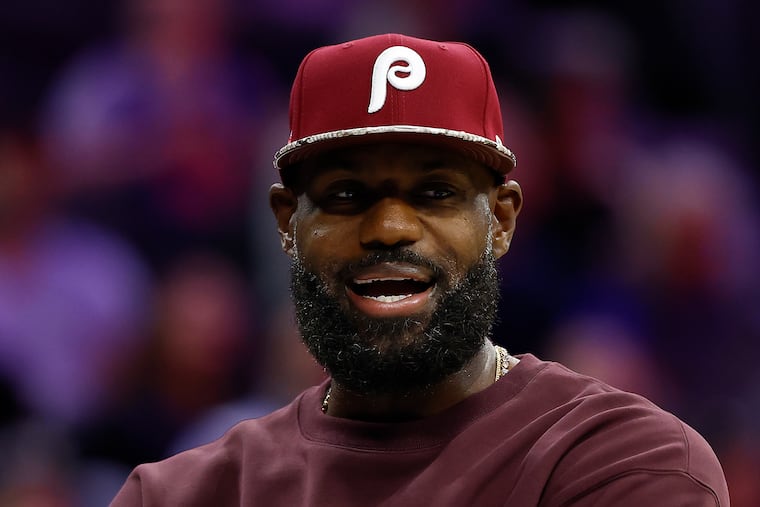
Likewise with LeBron. As notable as James’ signing with the Sixers was on an abstract level, the real coup was the need he filled. As exciting as Maxey and Edgecombe were, turning them into a championship pairing clearly required a very specific set of skills on the wings. In Brown, they found one such player. In James, they found another.
» READ MORE: ‘Sixers Extra’ season preview: What to expect from LeBron James and his new team this year
“Having the two big wings that can both post mismatches will create a lot of interesting things,” Nurse said. “We see that already. You can just move the pieces around a lot.”
Frankly, what the Sixers have accomplished is a lot closer to the Knicks adding OG Anunoby, Mikal Bridges, and Karl-Anthony Towns than it is Irving, Harden, and Durant teaming up in Brooklyn. Maxey has played with Joel Embiid in each of his six pro seasons. Edgecombe was with them last year. They won a playoff series together, against Brown’s Celtics to boot. The Sixers aren’t necessarily starting over from scratch. They upgraded from George and Kelly Oubre Jr. to Brown and LeBron, all while building out the bench.
Maybe the biggest difference between the Sixers and ostensible Super Teams from years past is the lack of downside risk. Even if you view it as some kind of wild, volatile experiment, the Sixers’ total investment is essentially two first-round picks. What’s the worst-case scenario? The 2026-27 season goes horribly, James opts out of his contract, and the Sixers trade Brown. In that scenario, they end up exactly where they would have been, except for some potentially less valuable draft capital.
The risk-reward calculus is wildly in favor of doing what the Sixers have done. There is a very good chance that this team is better than it even looks on paper. This is an eminently functional roster on a lot of different levels. Pay no attention to the nagging doubts. Sometimes, best-case scenarios happen.

After an exciting Sixers offseason highlighted by the additions of LeBron James and Jaylen Brown, join Inquirer beat writers Gina Mizell and Chris Hine for a preview of the season. Watch here.
Watch the full interview below and subscribe to the Sixers Extra podcast on Spotify or Apple Podcasts.