Vote like your vote depends on it | Editorial
Robust democratic participation is the surest remedy for President Trump’s efforts to undermine our democracy.
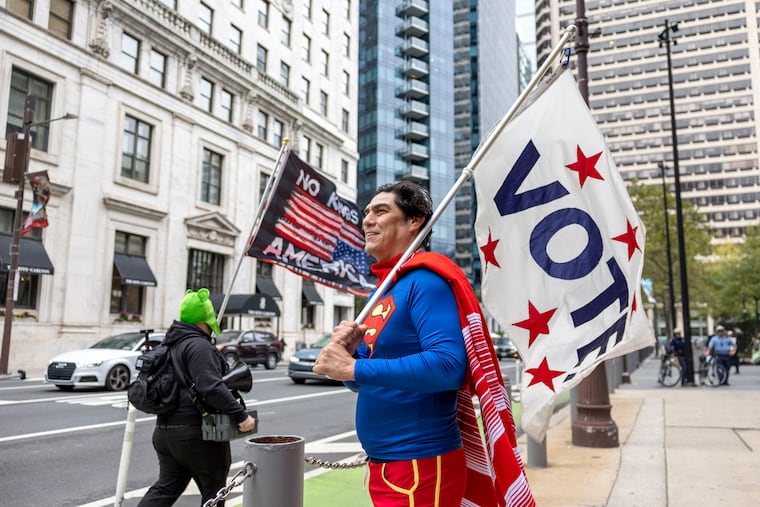

As President Donald Trump’s approval ratings have sunk, his corruption and policy disasters have proliferated, and his party has deployed a particularly subpar crop of candidates, the midterm campaign has been accompanied by increasingly confident predictions of a Democratic takeover of Congress. At the same time, Trump and his allies have been more inventive than ever in their schemes to skew, suppress, and subvert a well-earned rebuke from the electorate.
But neither the polling nor the plotting should affect the calculus for voters who prize their right to vote. We’ve seen more than enough flawed public opinion assessments over the past decade to know we shouldn’t count on them. And we’ve seen more than enough of Trump’s failed efforts to undermine and ignore elections to know we can defeat them.
Casting your ballot is the most important answer to those who would deny your power to do so.
Polling has only seemed to grow in prominence even as the decline of the landline and rise of institutional distrust have made it more difficult. Polling aggregators and betting markets have made political prognostication an even bigger business, as have the high stakes of elections that put the rule of law and democracy itself on the line.
» READ MORE: The Inquirer’s 2026 General Election Endorsement Guide
This year’s polls certainly are auspicious for the opposition. Midterm elections tend to function as referendums on the incumbent party and president, and voters remain nearly as disgruntled as ever with Trump. Democrats are heavily favored to win a majority in the House despite extraordinary gerrymandering, and they’re narrowly ahead in the Senate despite a map forcing them to compete in red states such as Texas, Kansas, and Alaska.
That said, polls over the past decade have famously underestimated support for Trump as well as, somewhat less famously, his opponents. The public opinion trade has also been shaken by isolated but troubling recent revelations of fake polling. And, of course, even the best polls have margins of error that indicate high uncertainty about races that will be decided by a few percentage points or less. This year’s closely contested House races in Bucks County and Central and Northeastern Pennsylvania all fit that description, and fundamentally unpredictable margins in several states could make the difference in the Senate.
Meanwhile, rather than address the policies that put his congressional majorities in jeopardy, chief among them his inflationary trade and actual warfare, the president has looked to cheat his way out of the widely expected midterm shellacking.
His allies’ unprecedented gerrymandering of Texas and other states, partly offset by Democratic retaliation, didn’t appear to yield enough gains to withstand a blue wave. So Trump tried to use his power over the U.S. Postal Service to interfere with voting by mail, only to be (narrowly and provisionally) blocked by the U.S. Supreme Court. His latest gambit is to use trumped-up charges of noncitizen voting to arrest and intimidate those who might cast ballots for Democrats.
» READ MORE: The Art of the Steal: How Donald Trump has been lining his pockets | Editorial Series
The frustration of these desperate measures isn’t likely to prevent Trump and Co. from further attacks on the voting process and results. Administration officials have alluded to the possibility of misusing federal personnel to intimidate voters on Election Day and retain power afterward. They have already threatened to prosecute Alaska’s Democratic Senate candidate, Mary Peltola, and opened a dubious investigation of Rep. Ilhan Omar (D., Minn.), pointing toward a reprise of the postelection assaults on democracy that Trump undertook after his 2020 loss.
Fortunately, voters here and abroad have successfully resisted authoritarian tactics and elected pro-democracy leaders. As recent elections in Brazil and Serbia demonstrated, the more decisively the will of the people is expressed, the more difficult it is to thwart.
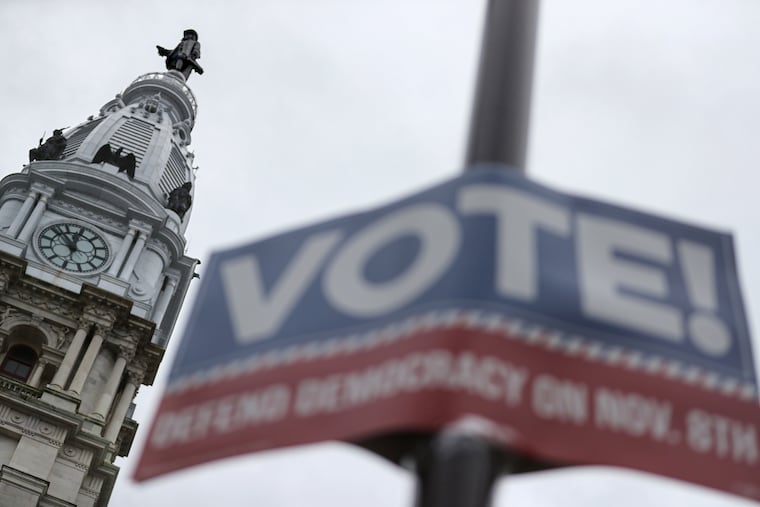
On Tuesday, let’s vote as if it’s the last time to ensure it won’t be.
About our editorials
Editorials express an opinion about a matter of policy or public interest that has been researched and written by our Editorial Board, a group of journalists separate from the newsroom. Unlike news stories, which are fact-driven and written by reporters, editorials advocate, champion, argue, critique, and offer solutions. Editorials are not intended to dictate what readers should think, but to cut through the noise of polarized debate and provide a catalyst for elevated discourse.