Trump’s election attacks enter new preemptive phase
One elections expert says of a lawsuit against Alaska, “The goal is to create doubt about the process and then use that doubt to justify later intervention or interference.”
WASHINGTON — For months, President Donald Trump has mounted a sustained effort to attack the integrity of U.S. elections while using the federal government to try to assert more control over the voting process overseen by states.
Recently, Trump opened a new front.
Rather than simply push false claims at his rallies or target voters his administration claims should not be on the rolls, Trump moved to preemptively challenge the certification of Alaska’s Senate election if the Republican candidate narrowly loses.
In doing so, Trump harnessed the power of the federal government to try to interfere in the voting process before Election Day — essentially trying to nullify an opponent’s potential win before the game has been called.
Even for a president who worked to undermine and overturn the 2020 presidential election, the anticipatory strike reflects a new intensification of Trump’s attempts to use his official powers to achieve the election results he wants — one that undermines the democratic process, according to election and legal experts. While they say the administration’s lawsuit is unlikely to be successful, the tactic could still further Trump’s goals by shaking the confidence of voters in the outcome of the race.
“This is part of the election takeover playbook that I’ve seen around the world and unfortunately in some other autocratic environments,” said Michael McNulty, a former senior elections adviser for the U.S. Agency for International Development who has studied election issues around the world, including in El Salvador, Hungary, and Venezuela. “Trump has essentially undermined the independence of the DOJ and it’s been weaponized.”
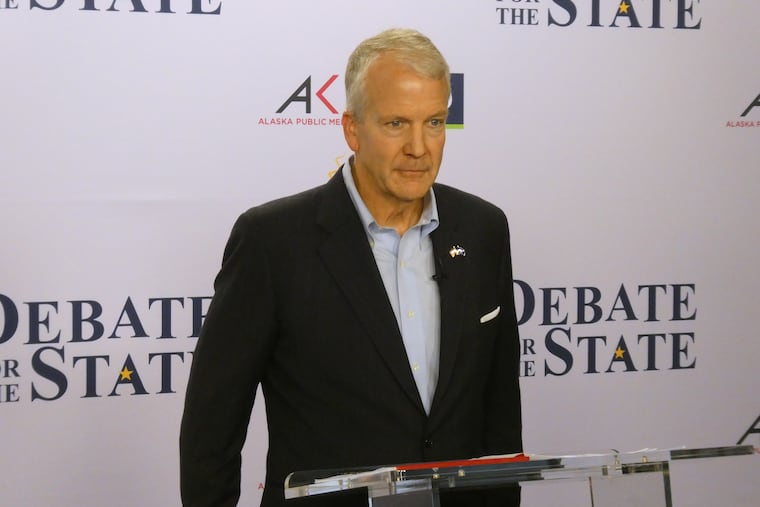
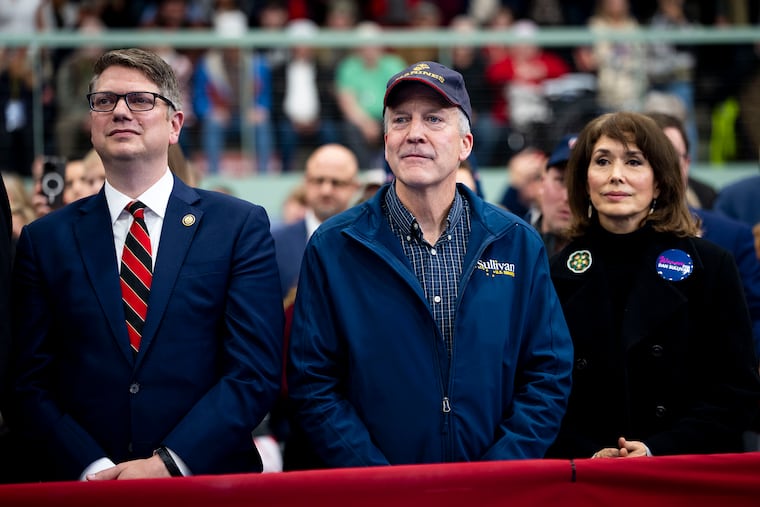
The latest phase of Trump’s strategy centers on the Justice Department, which asked a federal court to block the certification of the election if the Republican incumbent, Sen. Dan S. Sullivan, were to lose by a slim margin. The administration argued the presence of another candidate with a nearly identical name on the ballot has skewed the election toward Democrats.
The issue has already been litigated in the state: In June, the Alaska Supreme Court ruled that Daniel J. Sullivan Jr., a retired elementary schoolteacher, could appear on the ballot.
But Attorney General Todd Blanche maintained on Sunday that the federal government had a role in inserting itself into the process.
“We’re not saying that the federal government is going to decide who the next senator from Alaska is,” Blanche said on CNN’s State of the Union. He added: “But if it’s clear that there was confusion and that confusion led to an unjust, improper result that is not the will of the Alaskan voters, we want to make sure that the Alaskan system and the Alaskan state courts and the Alaskan electoral process can understand that in a way that lets them do the right thing.”
When asked for comment, the White House referred to an exchange Trump had with reporters on Saturday about his administration’s efforts to intervene in Alaska, a lawsuit he said was made at his direction. Republicans have asserted that the candidacy of the second Sullivan is a Democratic scheme to confuse voters. Democrats have said they have no connection to that candidate, who will appear on the ballot without any party affiliation and has said he is running a genuine campaign.
“It is a totally corrupt weaponization situation, and they shouldn’t be allowed to do it,” Trump said of the Democrats in Alaska. “So I recommended it to the DOJ. They looked at it, they agreed with me, and they’ve gone to court. Let’s see what happens. But that’s pure corruption.”
Election law specialists say Trump’s lawsuit in Alaska lacks legal basis and will likely fail. But that might not be the point.
The lawsuit is just one piece of a blitz of federal actions by the Trump administration to assert more control over the electoral process that have run into court challenges. Trump introduced a plan to have the U.S. Postal Service screen mail ballots, only to have it be blocked by the Supreme Court.
The administration has sued 30 states and the District of Columbia for refusing to cede to the federal government’s demands to turn over voter rolls. The administration has lost 27 of those cases. The other cases are pending.
Trump has deployed Homeland Security investigators to find evidence of illegal voting in states where it has claimed without evidence there is widespread noncitizen voting. A federal judge restricted much of that effort in the past week.
But with each claim of election fraud, Trump is creating another platform to sow doubt about the elections and, some state officials and election experts worry, lay the groundwork to challenge the results of the specific contests.
“The goal is obviously not to win the legal case because if so, that would be a complete failure because it’s going to fail,” said McNulty, senior policy director for Issue One, a nonpartisan group that tracks election issues. “The goal is to create doubt about the process and then use that doubt to justify later intervention or interference.”
Trump’s frequent attacks on the security of voting machines have raised fears among congressional Democrats and some election officials that he could be setting the stage to contest the results of the November elections.
The lawsuit in Alaska has added a new layer to those worries. The federal challenge could give cover to officials in the state to question the results of the election, experts warned.
The state’s Division of Elections is overseen by Alaska’s lieutenant governor, a Republican, who initially gave the green light to remove the second Sullivan from the ballot before he was reinstated by the courts. The lieutenant governor, Nancy Dahlstrom, previously challenged Rep. Mary Peltola, Sullivan’s primary Democratic opponent in the Senate race, for her House seat.
Trump has installed allies throughout the federal government who have echoed his false claims about voting. And across the country, a number of local election officials who have expressed sympathy with the election-denier movement now occupy key posts.
Benjamin Hovland, who was ousted by Trump from the independent, bipartisan federal Election Assistance Commission earlier this year, said he worried the various actions by the administration were serving a pretext for lawsuits after Election Day, based on dubious claims of noncitizen voting and fraud in the electoral process.
“What the DOJ is tipping its hand to is stepping in as essentially the president’s personal law firm to try to undercut the credibility of election results they don’t like,” Hovland said. “And that is a pretty horrible prospect.”
This article originally appeared in the New York Times.