Americans for Prosperity dropped its support for Martina White and other GOP lawmakers over their prevailing-wage vote
The right-leaning group has pulled its endorsements at a time when Republicans in swing districts may need all the help they can get.
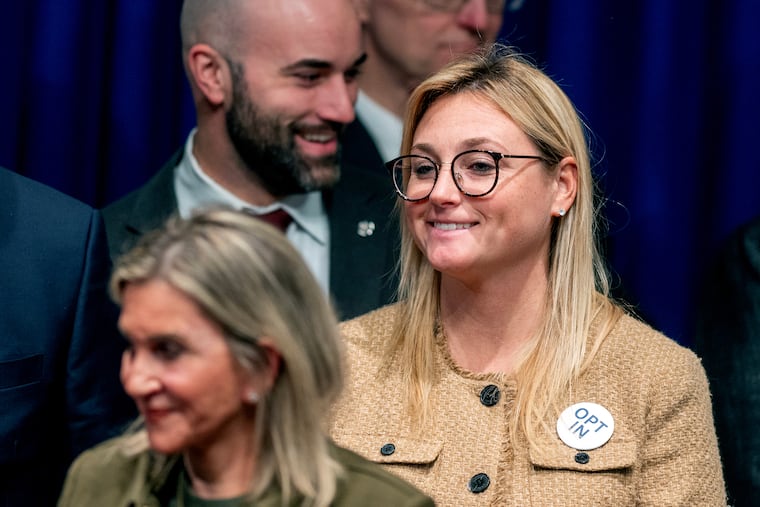
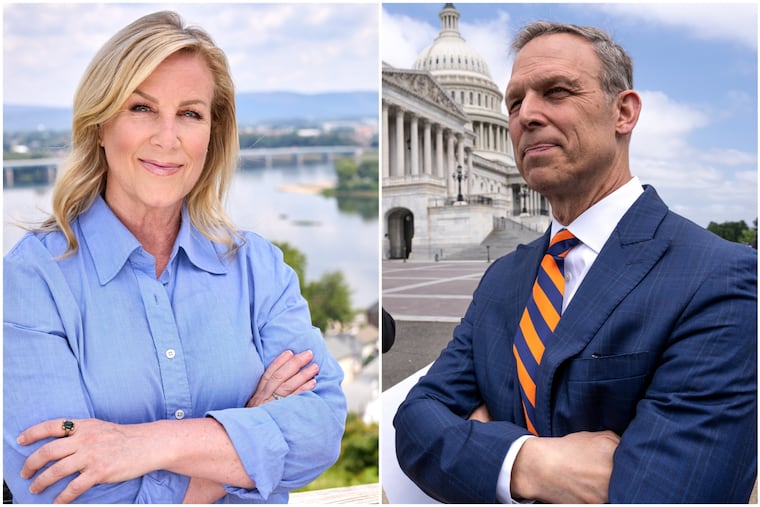
A pro-business policy group that helps turn out Republican voters is dropping its endorsements of State Rep. Martina White of Northeast Philadelphia and three other GOP state House members over their recent support for a labor-friendly bill.
White, Philadelphia’s only Republican state House member, and her colleagues voted for Senate Bill 908, which amends the Pennsylvania Prevailing Wage Act of 1961. A prevailing wage is an established minimum wage paid to workers for certain publicly funded construction jobs.
The bill, sponsored by Republican State Sen. Frank Farry of Bucks County, sailed through the House 128-75 — with 25 Republicans voting yes. On Thursday, Democratic Gov. Josh Shapiro signed it into law.
According to Americans for Prosperity, the Republicans’ support crossed a “red line” that required the group to drop its endorsements.
“We exist beyond Election Day,” said Emily Brey, AFP’s Pennsylvania director. “We are fighting back the threats from the progressive movement in Harrisburg, but at the end of the day we are also an accountability shop. We’ll hold members on both sides of the aisle accountable.”
Brey said Americans for Prosperity is also dropping its endorsements for Republican State Reps. Valerie Gaydos and Jeremy Shaffer, each representing parts of Allegheny County outside of Pittsburgh, and Rep. Joe Emrick of Northampton County, due to their yes votes on the same bill.
The withdrawal of support from the influential lobbying group, founded in 2004 by conservative billionaire brothers Charles and David Koch, comes at a time when Republicans may need all the help they can get. Pollsters expect strong midterm election turnout among Democratic voters, and all four Republicans that AFP abandoned face viable challengers.
As part of this change, Americans for Prosperity’s network of “activist-volunteers” who are door-knocking and making phone calls will no longer ask people to support these candidates, Brey said.
“Any new costs on the taxpayer driven by government regulation, that’s something that we’re going to fight back. Prevailing-wage law is a red line for our organization,” Brey said.
What is the new prevailing-wage law?
The new law expands the Pennsylvania Prevailing Wage Act to include heating, ventilation, and air conditioning duct cleaners and workers at publicly funded off-site custom fabrication projects. It also excludes residential rehabilitation jobs and some school improvements from the prevailing wage.
Brey said these requirements edge out smaller businesses that can’t afford to pay higher wages. The wage requirement can drive up project costs as much as 20%, she said, and the increases get passed on to taxpayers.
“We know voters are turning out because of that cost of living. Prices are too high,” Brey said. In that environment, she said, it doesn’t make sense to do anything that could increase costs.
Democratic State Sen. Christine Tartaglione of Philadelphia’s 2nd District, who cosponsored the bill, said the law will help resolve an issue that has frustrated skilled trades workers — they get paid less for work done away from the construction site, even if it is the same work.
“A lot of labor and craftsmanship goes into a public construction project before materials ever arrive on-site,” Tartaglione said. “Whether it’s fabricated in a workshop or installed in the field, it is still essential construction work, and the workers doing it deserve fair wages.”
Loyalists and purists
Within political parties, there are two types of people, said Republican strategist Samuel Chen: loyalists who support their party at all cost, and ideological purists, who care about issues above all else. Americans for Prosperity, he said, falls into the purist camp, and isn’t solely focused on winning races.
“They’re all about economics and fiscal conservatism,” said Chen, who also teaches political science at Northampton Community College. “They’re not necessarily thinking about the winning side of it, the electoral side.”
Both Emrick’s and Gaydos’ House districts are among those that Pennsylvania Democrats hope to flip this year, according to a Spotlight PA report. In particular, Emrick faces a significant challenge due to the most recent round of legislative redistricting, Chen said.
White, in Northeast Philly’s 170th District, has always managed to win reelection, despite Democrats having a registration advantage.
“If she loses her seat, it is a long night for Republicans,” Chen said.
Chen said he isn’t predicting that outcome, but he also doesn’t underestimate the impact of outside help from groups like Americans for Prosperity — especially in state-level races where one or two key players can make a big difference.
So far, White has managed to keep winning because her votes line up with her constituents’ interests, Chen said. The same goes for Gaydos in the traditionally union-friendly Pittsburgh region, he said.
In these areas, where union support has been crucial for Republican elected officials to stay in office, these lawmakers probably made the right choice, Chen said. But if AFP volunteers out door-knocking omit the state House candidates, conservative voters will notice.
“It helps chip away at the base. And in a tight race, you can’t afford to lose your base.”