Why Josh Shapiro put himself on the line for the midterms — but still won’t talk about 2028
There’s been a noticeable shift in the first-term Democrat, as he's gone all-in to flip the state Senate and is more willing to directly challenge President Donald Trump. That's not by accident.
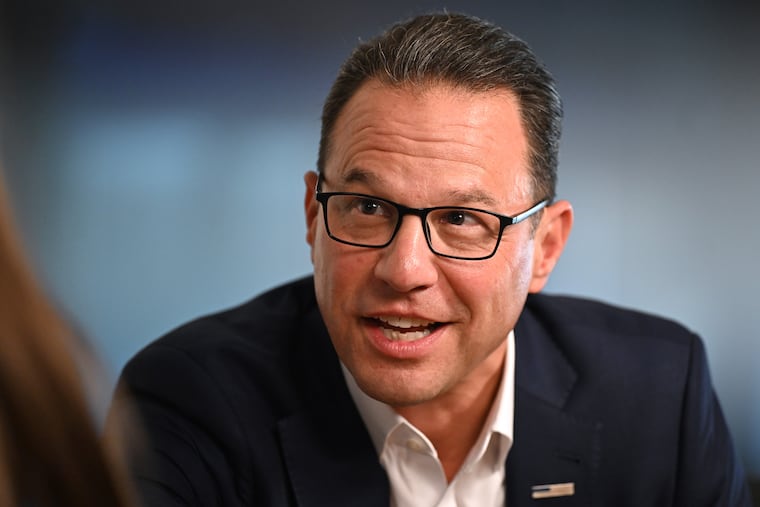
Josh Shapiro knows you’re going to ask.
He won’t flinch when you do. No jutted lip, no flicker of emotion. No fiddling with his wedding band or smart ring, one on each hand.
He’s been preparing for this kind of thing for decades.
Shapiro, 53, of Abington Township, has been rumored to have his sights set on the White House dating back to his time as a state representative, as a Montgomery County commissioner, as the state attorney general, and now as Pennsylvania’s governor. And while other 2028 Democratic presidential hopefuls are more outward with their ambitions, hosting fundraisers and making themselves known in early primary states, Shapiro — a disciplined and careful communicator — has led a calculated balancing act as he runs for reelection to the state’s top post, hoping to carry the rest of the Pennsylvania ballot with him.
Are you running for president in 2028?
“I’m going to give you the same answer that I’ve given everyone,” Shapiro told the moderators at a debate earlier this month against his Republican opponent, Stacy Garrity. “The only thing I am focused on is running for reelection as governor, and I’m focused on these midterms in trying to generate the kind of turnout and support the kind of candidates who will push back on the chaos, the cruelty, and the corruption of Donald Trump.”
The first-term governor — wearing his daily uniform of a navy blue suit, bright white dress shirt with no tie, white tennis shoes and black-framed glasses — does the same again earlier this month in a set of interviews in The Inquirer’s newsroom across from Independence Hall; he smoothly side-steps the question of whether he’ll promise to fulfill another four-year term if reelected.
Instead, he boasts his administration’s “get stuff done” motto, citing some of his proudest accomplishments as the leader of Pennsylvania, such as reopening I-95 in 12 days, speeding up the state’s process to get licenses or permits to do work, utility rate caps, and new pathways to careers in the trades. In the run-up to the Nov. 3 election, those triumphs have blanketed the state’s TVs, social media and mailboxes, as his campaign tops $42.3 million in ad buys, according to media tracker AdImpact.
Nearby, his campaign staffer sports a pin featuring the number 48. Shapiro is Pennsylvania’s 48th governor. If he runs in 2028, he’d be vying to become the nation’s 48th president.
Nowadays, there’s a noticeable shift in the Democrat who has long prided himself in his willingness to work across the aisle, but who has struggled as a dealmaker in the state’s split legislature as he goes all-in on flipping the Senate in hopes of more easily achieving his goals.
At the same time, he’s become more willing to directly challenge Trump in the state that helped boost the president to a second term just two years ago, as Trump’s approval ratings continue to decline — and national Democrats are looking for a strong leader to carry them into 2028.
“When he’s going to do something to hurt Pennsylvanians, I’m going to stand up to him, and when I stand up to him, I win every single time,” Shapiro said last week.
The shift — and the sharper edge — may be strategic as Shapiro readies himself for a White House run, said Christopher Borick, a political science professor and pollster at Lehigh University.
“He is more willing to express his animosity toward Republicans, toward Republican policies, and of course, the president,” Borick added. “He’s been more vocal than you may have thought he would be, given his brand.”
‘Straight down the middle’
When Shapiro sat down for an interview at The Inquirer’s offices last week, he studied where he should sit before answering the question himself.
“How’s this, straight down the middle?” the moderate Democrat suggested with a grin, setting himself up at the center of the table.
Shapiro’s brand as a centrist has been tested over the last few years, as he governs one of the only states in the country with a politically split legislature. An early misstep in Shapiro’s first budget negotiations in 2023 over school vouchers tarnished his relationship with the state’s Senate Republicans, a wound that has never fully healed. Republicans accused Shapiro of reneging on their handshake deal to create a new school voucher program. At the time, Shapiro said the move was necessary to avoid a protracted budget impasse.
Still, for the past four years, Shapiro and top state negotiators have struggled to agree on a state budget before the constitutionally required deadline, as Pennsylvania faces worsening fiscal conditions and spends more money than it collects in revenue.
He’s had some major wins, too. State lawmakers have approved $3 billion in funding increases and created a new funding system for public education, after a state appellate court ruled that Pennsylvania’s previous system was unconstitutional. He has celebrated increases to the state’s property tax and rent rebate programs for seniors, a new state tax credit for working families, and a pension bump for retired teachers, police officers and firefighters. He boasts significant reductions in wait times for business licenses and environmental permits and continued cuts to the state’s corporate net income tax, as part of his cut-red-tape approach.
Shapiro has faced criticism throughout his tenure as governor from top Republican leaders, who say he lacks conviction on the issues he says he cares about and instead changes his stances to reflect what’s popular.
“He was for helping kids out of failing schools, then he was against it,” Senate President Pro Tempore Kim Ward (R., Westmoreland), the top Republican in the state Senate, said last month. “He was for data centers, then he was against them.”
On school choice, he said last week he still supports the creation of a new school voucher program if House Democrats and Senate Republicans can agree on it. And he has defended himself on his recent reversal on increasingly unpopular data center development, which became a political flashpoint that threatened Shapiro’s popularity. He has said his change in position was a direct response to constituent concerns.
» READ MORE: In a major shift, Gov. Josh Shapiro restricts data center development in Pennsylvania
Garrity’s campaign has capitalized on the perceived flip-flops, calling Shapiro in a statement a “career politician whose policy failures have left Pennsylvania families struggling.”
His first term as governor also saw the resignation of a long-time top aide, former Rep. Mike Vereb (R. Montgomery), who was accused of sexual harassment by another staffer in the governor’s office that resulted in the state paying the accuser a $295,000 settlement.
Shapiro, previously largely untested on the national stage, also came under scrutiny when he was being considered by Vice President Kamala Harris to be her running mate in 2024. She ultimately passed him over, and he later said he didn’t want the job. But the consideration significantly boosted Shapiro’s rising national profile, and he later retold the story in his memoir, Where We Keep the Light, released earlier this year.
» READ MORE: In his new book, Gov. Josh Shapiro recalls an ‘offensive’ vetting process to be Kamala Harris’ running mate
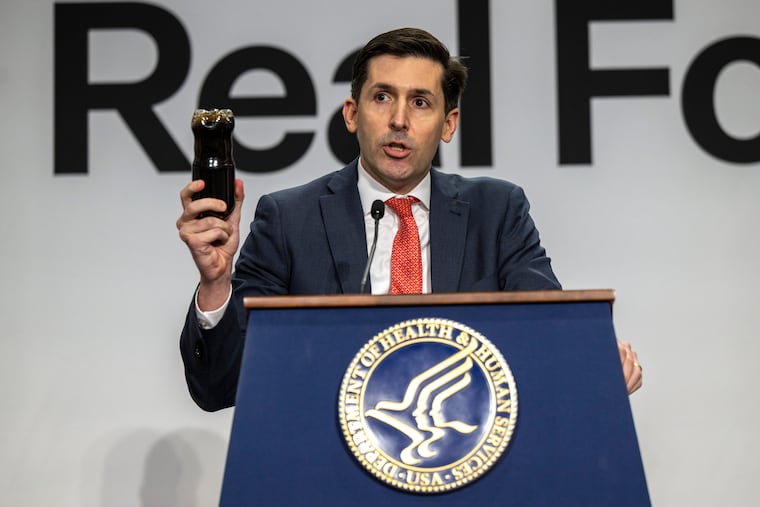
And most recently, he’s faced the state’s worst measles outbreak in more than three decades, which the state says has led to the deaths of six Pennsylvania residents. The surge in measles cases, which now tops 1,317 cases in Pennsylvania, led to a public clash with Health and Human Services Secretary Robert F. Kennedy Jr. As of Thursday, the Centers for Disease Control still refused to recognize three of the measles-related deaths as caused by the preventable disease.
And heading into the election, a number of top issues facing the legislature remain unresolved. Lawmakers left Harrisburg this week, failing to regulate and tax skill games or update sentencing guidelines for second-degree murder — both of which have blown past court-appointed deadlines for the General Assembly to act.
“There’s a whole bunch we’ve been able to get done by bringing people together, and then there’s some things that I view as quite common-sense that I haven’t been able to convince the Senate to move on: raising the minimum wage to 15 bucks an hour, funding mass transit even though it helps their communities,” Shapiro told The Inquirer’s editorial board this month. “I’m frustrated I haven’t been able to get that done, but again, that’s why I’m still working at this. That’s why I’m still going forward.”
(The editorial board runs The Inquirer’s opinion pages and decides endorsements, operates independently from the newsroom. Newsroom editors and reporters — including two reporters who attended the editorial board meeting as observers — have no role in endorsements, and opinion staffers have no role in news coverage.)
Shapiro has maintained widespread popularity throughout his first term, including among some Trump supporters, recent polls of likely Pennsylvania voters show. Shapiro’s job approval topped 63% in a Quinnipiac University poll released Oct. 7, and he led Garrity in the poll by 25 points. A poll released Thursday by Franklin & Marshall College had similar findings, including a 22-point lead for Shapiro over Garrity.
“If you can be as popular as he is with divided government and the dysfunction in our Senate… that’s a pretty damn good comment on what he’s been able to accomplish,” said House Majority Leader Matt Bradford (D., Montgomery).
’A responsibility and pride’
These days, Shapiro can’t go to the store or take a walk with his wife, Lori, and their dogs, Bo and Bentley, without a state police detail present and careful coordination.
He and his family narrowly escaped an arson attack last year at the governor’s mansion, where they were staying to observe the Jewish holiday of Passover, a moment that he said left him shaken and “deeply concerned.” The fire caused significant damage to the mansion in downtown Harrisburg, with the state spending $32 million on repairs and restorations to the historic home, in addition to $2 million in taxpayer dollars used to update Shapiro’s personal home security in Montgomery County. (The upgrades prompted scrutiny from Senate Republicans over whether his office followed state protocol in making the updates, as well as a lawsuit from his neighbors.)
» READ MORE: The arson at Gov. Josh Shapiro’s mansion erupted within minutes. The impact lingers.
As Shapiro, one of the nation’s most prominent Jewish politicians, seeks reelection and eyes a presidential run, the impacts of his high-profile, public-facing office have weighed on him, he said. At least six people have been charged in the last nine months with making terroristic threats or ethnic intimidation, he said.
“If I ever got to the point where I was afraid to go out, or afraid to do my job, or unwilling to do something because I was fearful, that would be the day I would hang it up,” he said. “I don’t feel that way. I feel a lot of purpose in my work, and I feel unafraid when I’m doing it.”
Shapiro said he believes many of the threats he’s received have stemmed from his open practice of his Jewish faith, and he wrote in his memoir that since Hamas’ Oct. 7, 2023 attack on Israel, he and his family “feel both a responsibility and pride demonstrating our faith and living it out loud.”
For Shapiro, Israel is “a place that’s meant a lot to me and my family,” he said. It’s where he proposed to his wife, and is a country he said he loves — which has been complicated by Prime Minister Benjamin Netanyahu’s actions during the war in Gaza that he sees as weakening Israel’s position globally. He supports a two-state solution, with Palestinians having a state and living side-by-side with Israel, and said he hopes Israeli voters will select a new leader in its election next week.
“Unfortunately, we’re in a time where there are people who are calling into question whether the very country has the right to exist,” he said.
None of these positions, Shapiro points out, have much to do with his role as governor.
But they could be key in the 2028 Democratic primary as debate over the United States’ relationship with Israel continues to fracture the party. According to a September Inquirer/Times/Siena poll of likely Pennsylvania voters, 63% of Democrats said they would support a candidate who opposed aid to Israel.
» READ MORE: Pennsylvania voters are split on whether they want Gov. Josh Shapiro to run for president in 2028
“Josh is very religious and proud of it, and he has learned about the religion, and it made him a better person,” said former Gov. Ed Rendell, Pennsylvania’s second Jewish governor. But, Rendell raised: “Does it make it harder for him to go further in politics?”
“It’s a tough time for Josh if he’s thinking about launching a national campaign,” Rendell, a Democrat who also served as Philadelphia mayor, said, but “one thing Josh has convinced me of is that anything he wants to do, he’s going to have a good chance of succeeding at.”
Growing impatient
When Trump returned to office in 2025, Shapiro vowed to work alongside the president — as long as it didn’t compromise Pennsylvanians. He joined lawsuits on Pennsylvania’s behalf as Trump threatened to slash federal funding.
His tone has since changed. As Trump’s approval numbers continue to decline, Shapiro has begun to more directly instigate Trump, often repeating that Trump has caused “chaos, cruelty, and corruption” in Washington, D.C.
He has also put his reputation on the line to flip the U.S. House, endorsing, campaigning and fundraising for four Democratic challengers in competitive congressional districts across Pennsylvania in hopes they win and take control of the chamber.
In Harrisburg, he has poured more than $10 million in total into the state Democratic Party and the House and Senate Democrats’ campaign arms, his campaign said Thursday.
And after he struggled to break through gridlock with Senate Republicans, he went all in on winning full Democratic control in Harrisburg for the first time since since 1993.
That move is an example of Shapiro as a pragmatic leader, said Bradford, who has known Shapiro for decades. He wanted to find common ground with Republicans, Bradford said, but when he couldn’t, he found a new solution: winning a trifecta.
» READ MORE: Why Josh Shapiro and top Pa. Democrats think they can win a trifecta for the first time since 1993
“His ideology is competence,” Bradford said. “He’s not an ideologue, and I say that as a proud progressive... It’s also a recognition that at times he is stymied by a Senate that is incapable of governing.”
Shapiro has been strengthening his grip on the state’s Democratic Party, too, since the fallout of the 2024 election, when Democrats failed to deliver Pennsylvania for Harris. He installed a former top aide as the party’s executive director. The state party has since turned around its declining voter registration numbers.
Still, Shapiro said finding common ground is the most necessary strategy to being a good elected official.
“The people make their choice, and if you’re privileged like I am to be elected, then you’ve got a responsibility when you’re in the room to govern,” he added.
‘Campaign 101′
There’s a lot on the line this November for Shapiro. If he successfully helps flip control of the U.S. House and gains a trifecta in Harrisburg for the first time in decades, he will have “a great resume in America’s premier swing state,” Borick said, giving him a leg up among other 2028 contenders.
“That’s a great result that you can bring out on the campaign trail if you so choose to run in 2028,” Borick added.
But if he doesn’t meet expectations, “there may be some questions” about his viability for a presidential run, Borick said.
That may help explain why Shapiro has never publicly said he’s considering a run, as he needs to win reelection first, Borick said.
“You don’t want to get hit at all for looking like you’re thinking ahead and not focused on the race before you,” Borick said. “That’s Campaign 101.”
Still, he’s left a breadcrumb trail of a 2028 run: writing a book, a national media tour, and just last week — creating a federal political action committee, which he could use in the future to finance a White House run.
(His campaign has stressed he is using the PAC to financially contribute to the four Pennsylvania Democrats vying to flip the U.S. House.)
» READ MORE: Gov. Josh Shapiro launches a federal PAC — the strongest signal yet he’s eyeing a 2028 run
State Sen. Greg Rothman (R., Cumberland), who chairs the state Republican Party, said he believes Shapiro is running for president in 2028. “And I read his book,” he added.
He had some advice for the potential presidential hopeful: Improve your debate performance.
“I’ve been alive for 20-plus presidential debates. He’s gonna need work if he’s gonna compete on a national stage,” he said.
Manuel Bonder, a spokesperson for Shapiro’s campaign, said in response that he appreciates Rothman “taking a break from overseeing this disastrous, flailing Republican campaign for governor to offer unsolicited advice,” adding that Shapiro is only focused on electing Democrats down ballot.
Rothman said he’s still hopeful for a “huge upset” against Shapiro, citing past examples where the expected winner ultimately lost the election, including most recently former U.S. Sen. Bob Casey’s loss to U.S. Sen. Dave McCormick in 2024, without mentioning Garrity. The state party has given no financial support to the state treasurer’s gubernatorial campaign, according to her September campaign finance filings.
“We are a state known for huge upsets,” Rothman added.
» READ MORE: Stacy Garrity hopes ‘the cavalry will be coming’ with less than a month until Pennsylvania’s governor election
Shapiro has also cultivated allies from across the country and ideological spectrum. After conservative influencer Charlie Kirk was murdered while on a Utah campus, Shapiro forged a strong relationship with Republican Utah Gov. Spencer Cox to speak out against political violence. And last week, U.S. Sen. Elizabeth Warren (D., Mass.), who ran for president in 2020 as a progressive, headlined a fundraiser with him in Delaware County, introducing Shapiro as “a man who has the right values.”
“Winning Pennsylvania makes a great argument” for Shapiro’s chances as a prospective 2028 candidate, U.S. Sen. Chris Coons (D., Del.) said last week. “If you win Pennsylvania, you win the whole presidency.”
But no Pennsylvania governor has ever won the presidency.
(James Buchanan represented the state in the U.S. Senate a decade prior to his election to the presidency in 1856 and Scranton-born Joe Biden’s political career was forged in Delaware.)
Former Govs. Milton Shapp, a Democrat and Pennsylvania’s first Jewish governor, and William Scranton, a Republican, sought their parties’ nominations in 1976 and 1964, respectively. Other popular governors, like Rendell, Bob Casey Sr., and Tom Ridge also considered runs for the nation’s highest office, Borick said, but didn’t pursue them.
Shapiro, he said, is the most poised Pennsylvania governor to be considered seriously for a presidential run in modern history.
Bradford, a top state Democrat who has negotiated the last several state budgets alongside Shapiro, said Shapiro should “absolutely” run for president in 2028. He cited the governor’s popularity and his “record of accomplishment that is rewarded in not just the polls, but by the people.
“And I think that’ll show on Election Day on Nov. 3,” he added.