This Montgomery County Army veteran could go to prison for protesting ICE in a church. He says it’s worth it.
Ian Austin, indicted for protesting inside a St. Paul, Minn. church, said he’s speaking out against fascism while he still can.
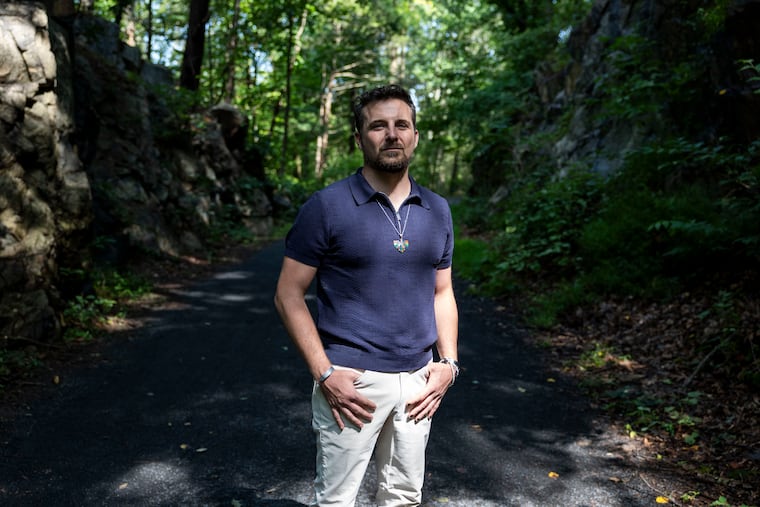
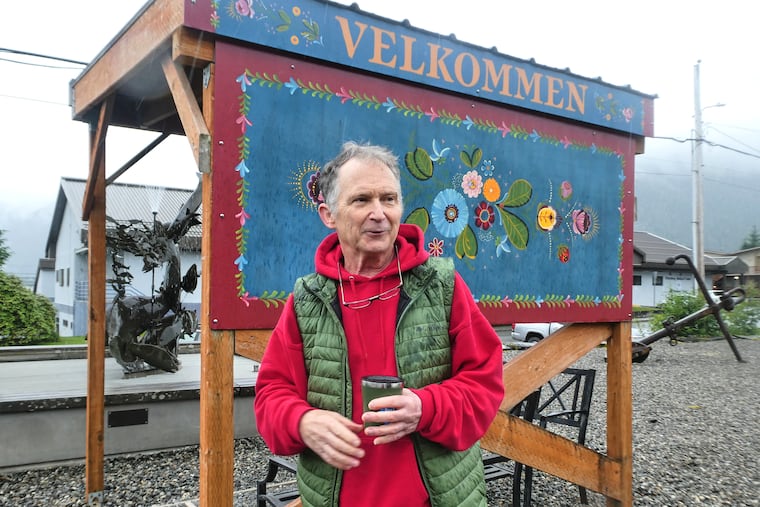
Ian Austin, like so many Americans, watched the video of an Immigration and Customs Enforcement agent fatally shooting Renee Nicole Good in January. But unlike most people, the 36-year-old U.S. Army veteran knows how it feels to shoot someone while wearing a uniform.
“I can still see myself on the firing line, and I can still feel what I felt in my stomach then. I couldn’t identify it at the time, but I knew it didn’t feel right,” Austin said.
After watching the video, Austin drove from his home in Bryn Athyn to Minnesota, where he participated in a protest inside a St. Paul, Minn., church. He soon became a defendant in the high-profile federal case alleging protesters infringed on churchgoers’ rights. Former CNN anchor is one of the co defendants.
To Austin, his trip to Minneapolis is part of a much longer journey that began during his military service in Afghanistan. Killing people at war, he said, traumatized him and led him to seek healing and spiritual renewal. It’s a road he’s still very much on, as he lives with post-traumatic stress disorder and bouts of depression.
Austin said watching Good’s killing brought back the guilt, shame, and rage he was trying to overcome. Mixed in, he said, was outrage — a federal agent shot someone, and top officials, rather than launching an investigation, quickly blamed the dead woman. This, he said, was fascism.
“I cannot sit here,” he recalled thinking. “I cannot stand by. I have to act.”
Austin must return to Minneapolis for hearings this week as he seeks to have his case dismissed. If convicted, he could face up to 10 years in prison, his attorney said, though she doesn’t expect that outcome.
Defense attorneys in the case call it an unprecedented misuse of the Department of Justice to silence critics of the Trump administration’s immigration policies. The DOJ did not respond to requests to discuss the case.
Austin’s story provides one glimpse into the lives of the 38 people now facing felony charges over the protest. For him, any consequences are worth it. He said his need to protest goes back to the American ideals he thought he was defending overseas.
“What I’m doing now is actually fighting against the things that they said we were going to fight against over there,” he said.
A ‘course correction’
Austin grew up in Huntingdon Valley and Bryn Athyn, where he excelled at baseball and wrestling. He said he joined the military after an arm injury quashed his dreams of securing an athletic scholarship. He also believed that if there was a war, he should do his part.
From 2008 to 2014, Austin served in the U.S. Army, where he was part of the prestigious 1st Ranger Battalion. He was deployed to Afghanistan six times, his military records show, and was honorably discharged. Among his awards is a joint service commendation medal with “V” device, given to those who showed heroism while engaged in combat.
But he said his Afghanistan deployments left him with “crippling” depression, treatment-resistant PTSD, and moral injury — psychological, spiritual, or social distress experienced when someone causes, witnesses, or fails to prevent something that violates their value system.
His unit’s job involved going after high-value Taliban or al-Qaeda targets. His team of Rangers was often dropped into the mountains by helicopter at night, where, backed by air support, they pursued small groups of Afghans. One soldier would shout “gun” — meeting their rules of engagement — and they would open fire, Austin said.
“That, to me, is murder, whether they’re combatants or not,” Austin said.
After completing his Army service, Austin focused on his mental health. This has included everything from inpatient and cognitive behavioral therapy to MDMA-assisted treatments and the psychoactive drink ayahuasca. He spent time with horses — equine therapy — which he said was surprisingly effective, and traveled to India for Vipassana meditation and cold exposure therapy on the Stok Kangri mountain.
But as Austin grappled with the larger forces that drew him into serving in the Army, he began to see parallels with his experiences as a soldier and what he saw happening in the U.S. under the Trump administration.
“They’re making it more and more normal that there’s Army in the streets,” Austin said. “That’s just them getting people accustomed to that. And now the National Guard is walking around with ICE in D.C. It’s absolutely insane.”
After George Floyd’s murder in 2020, some of Austin’s classmates at La Salle University got involved in the protests and were pepper sprayed. Austin joined them, serving as an ad-hoc medic providing water and supplies.
This began what he called a “course correction” in his life. His therapist had often asked him to envision what a life worth living looked like. Increasingly, his answer to that question required that he protest the government.
“It’s morally difficult to not be just protesting constantly,” he said. “I don’t see a future where I can be sane unless we stem the fascist tide. Nor do I see freedom for myself.”
The protest at a Minneapolis Church
Austin traveled to Minnesota at the height of Operation Metro Surge, a series of ICE and border patrol arrests targeting the Twin Cities. As ICE activity increased, so did opposition from members of the public. After Good was killed Jan. 7, protesters and federal law enforcement frequently clashed outside the Bishop Henry Whipple Federal Building, where people were being detained.
That’s where Austin went first, and within a day, federal law enforcement detained him. While in jail, Austin recalled, another protester told him about a planned protest at Cities Church in St. Paul, where one of the pastors was a local ICE official.
The DOJ indictment says that inside the church, Austin was part of a group of “approximately 20-40 agitators” who were part of a “coordinated takeover-style attack and engaged in acts of oppression, intimidation, threats, interference, and physical obstruction.”
Protesters shouted “ICE Out!” “Hands Up, Don’t Shoot!” and other chants, the document states, “while gesturing in an aggressive and hostile manner, which congregants and the pastor perceived as threats of violence and a potential prelude to a mass shooting.”
Austin and others interfered with churchgoers’ ability to move freely, the indictment says, and Austin “approached the pastor and congregants in a menacing manner ... and loudly berated the pastor with questions about Christian nationalism and Christians wanting to have their faith be the law of the land.”
A slow-moving case
Austin’s attorney, Sarah Gad, filed a motion to dismiss his case. She said her client’s actions did not violate the two federal laws he is charged under.
“For example, it’s not an offense to stand in a church and chant. And so it feels like the DOJ really stretched some preexisting federal laws to kind of turn this conduct of protesting at a church into a crime,” Gad said.
Defendants are charged with violating the Civil Rights Act of 1871, enacted to protect Black people from the Ku Klux Klan and other violent white supremacist groups.
Gad noted that protesters are also charged with violating the Freedom of Access to Clinic Entrances (FACE) Act — a law established to protect people entering abortion clinics, but which also includes a provision for those in places of worship.
Last year the Trump administration pardoned 10 antiabortion protesters who were convicted of violating the same law when they blockaded a clinic in Washington, Gad noted. This apparent double standard led her and colleagues to pen a “selective and vindictive prosecution” motion to dismiss, she said.
With 38 defendants, the case, still in its pretrial phase, has moved slowly, Gad said. The defense has filed several more motions to dismiss, while the federal government has sought delays. At least five prosecuting attorneys have withdrawn from the case, court documents show.
This week, however, the case kicks into gear with a string of hearings, Gad said.
To Jordan Kushner, the attorney for lead defendant Nekima Levy-Armstrong, the case is part of a “concerted effort” by the Trump administration to target anti-ICE protesters and other critics of its policies. He pointed to the “Minnesota 15” case, the “Broadview Six” case in Chicago where charges have since been dropped, and the recent investigation of U.S. Rep. Ilhan Omar of Minnesota as other examples.
“This is part of a very serious political offensive, using the criminal justice system in a way that hasn’t been used in this country,” Kushner said.
Kushner said the prosecution offered protesters a chance to plead down to misdemeanor offenses. No one has accepted that offer yet.
For the moment, Austin has stopped protesting — but only on a judge’s orders. Austin was charged with disorderly conduct in June after demonstrating against ICE near the Delaney Hall detention center in New Jersey. As a result, the judge in the St. Paul case barred him from leaving Pennsylvania.
He said the actions of protesters at Delaney Hall helped defend their neighbors, who were being rounded up and detained. Even more than in Minneapolis, he said, he felt like that protest stood a chance of making a difference — but people got worn out, and the movement fizzled.
Austin said it’s hard for him to imagine what tomorrow brings beyond the federal case, but he believes that the future must be about more than just himself.
“Maybe this is a bit grandiose, but I would like to live in a world where our laws and systems reflect our actual values.”