Mikie Sherrill pledged Black-owned businesses will get more opportunities in N.J. Black leaders say it’s only a start.
Sherrill declared a "moment of action" when she signed an executive order meant to reduce hurdles to Black-owned businesses in competing for state contracts.
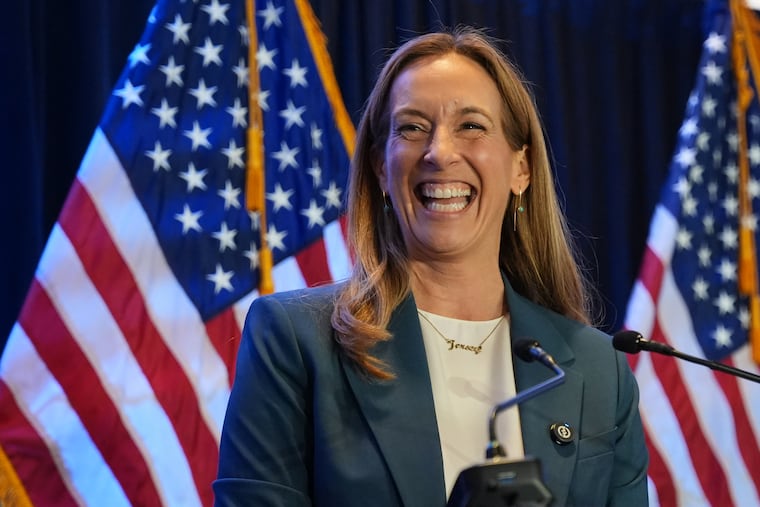
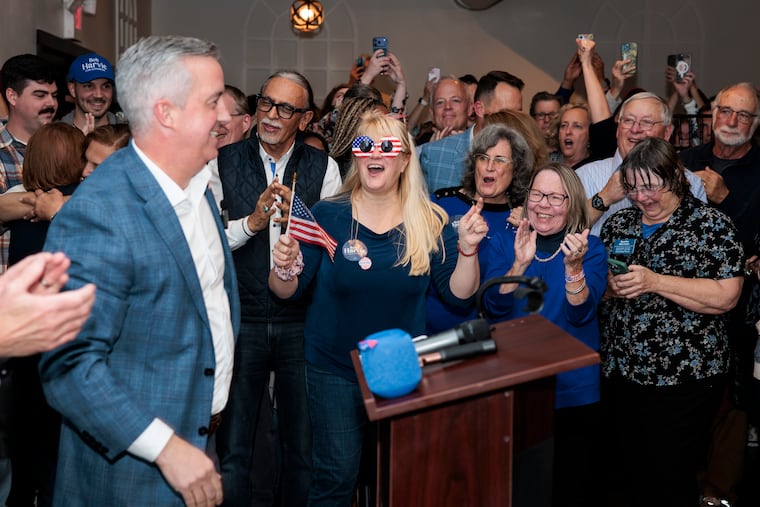
Inside a packed church in Atlantic City, Gov. Mikie Sherrill celebrated the blue wave of wins across the nation in the midterm elections by giving credit to Black women — 94% of whom voted for Democrats.
Declaring it was “a moment for action,” the Democratic governor then signed an executive order from the pulpit that she said would reduce the barriers Black business owners and other people of color face competing for hundreds of millions of dollars in state contracts.
“I’m ready to do it all in partnership with you,” Sherrill told a receptive audience of leaders and congregants before she departed the St. James AME Church.
Then for the next hour, Black leaders like Newark Mayor Ras Baraka, Assemblyperson Verlina Reynolds Jackson (D., Mercer) and civil rights activists, described that what Sherrill offered as a meaningful start. But without naming the governor or any other specific official, they said they intended to use their political clout from electing Democrats to work as partners with Sherrill and seek more for their communities.
“Why are we still asking for things and begging for things? Why do we have our hand out and let people tell us that they did something for us? I never accepted the concept that we are asking for a hand out,” said Baraka, who lost to Sherrill in a crowded primary election in June 2025.
The governor and Newark mayor’s speeches were part of an event commemorating the first anniversary of the “New Jersey Statewide Black Agenda” organized by the Baraka, the clergy-led Salvation and Social Justice, and the New Jersey Institute for Social Justice.
But the gathering, which coincides with a larger of conference of local officials happening in Atlantic City, also took place against the backdrop of this month’s national “blue tsunami.”
Baraka thanked Black women for helping deliver big wins in states like Georgia and Mississippi.
“But what do you do when the state is blue and still deeply racist?”
New Jersey, Baraka noted, is fighting a lawsuit that seeks to force the state to desegregate its schools, which are among the most racially disparate in the nation.
Reynolds Jackson, who leads the New Jersey Black Legislative Caucus, acknowledged the governor is taking important steps, such as spending more money to recruit midwives and doulas to address the state’s high rate of maternal mortality among Black mothers.
But now it’s time to “bring the passion and urgency” to demand more from the state, Reynolds Jackson said. “We are not taking that ‘it’s not in the budget’ anymore. We know the money is there,” she said.
Speakers credited Sherrill for signing the John Lewis New Jersey Voter Empowerment Act in July, which prohibits politicians from redrawing legislative districts that minimize the minority vote, among others provisions. In January, Sherrill’s predecessor, former Democratic Gov. Phil Murphy signed a “survivor’s justice” law that requires courts to recognize domestic abuse as a mitigating factor if they retaliate against their abusers.
The blueprint for the Statewide Black Agenda grew in part as a reaction to a disparity study completed two years ago that found people of color own 28% of construction businesses in New Jersey but received less than 4% of the state construction contracts. Similarly, people of color own nearly 24% of the businesses selling goods and services, but held a little more than 4% of these state contracts.
The agenda is broader than seeking a share of state contracts. The plan includes strategies to improve economic equity and generational wealth through homeownership, reduce homelessness and preventing companies from polluting urban neighborhoods.
Henal Patel, interim president and CEO for the Institute of Social Justice, said Sherrill signed “one of the strongest voting rights laws in the country.”
”But it didn’t come from nowhere. It came from the relentless advocacy from Assemblywoman Verlina Reynolds Jackson and from communities and activists over four years," Patel said.
“All of this stuff is progress, but it just scratches the surface,” Patel said.