Who will be in charge of Pennsylvania’s new Democratic trifecta? The leaders come from Philly, Montco, and across Pa.
The leadership teams are set as the new legislative session begins in January. And the challenges are already brewing.
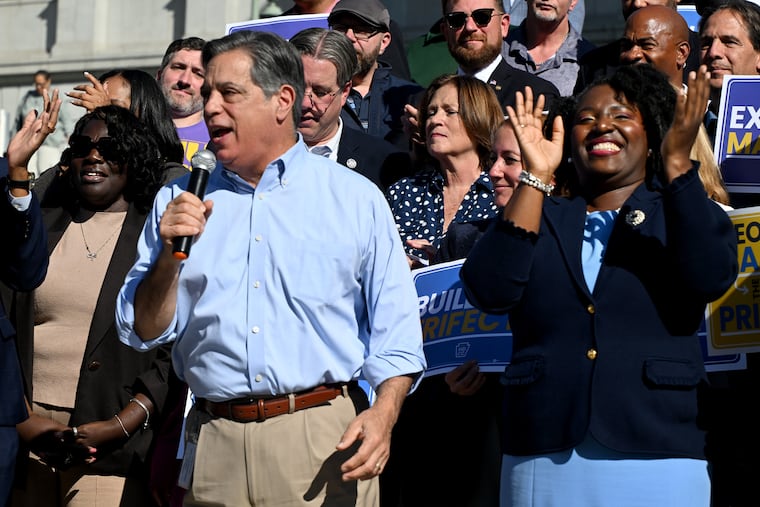
HARRISBURG — State lawmakers are readying themselves for a new beginning next year in Pennsylvania’s Capitol, where Democrats are set to control the state House, Senate, and governorship for the first time since 1993.
The first order of business: Choosing who will be in charge.
Gov. Josh Shapiro and top Democrats have pledged to be more productive by passing more laws now that they do not have to compromise with Republicans to do so. During his first term, Shapiro often blamed the state’s split legislature — and the GOP-controlled state Senate — as the reason why so many top Democratic priorities were never passed. He’s relying on the new Democratic trifecta to pass his agenda, in part, as a way to round out his resume before an expected 2028 presidential run.
Top Democrats from the state House and Senate are working with Shapiro to outline their priorities for the first 100 days of their trifecta. Shapiro promised that plan will include doubling the state’s minimum wage, securing a long-term funding source for mass transit, and more. The new legislative session begins on Jan. 5, 2027.
Despite Democrats consolidating power for the first time in decades and a lengthy list of long-stalled priorities to pass, it won’t all be smooth sailing in Harrisburg. Senate Democrats, with a two-seat majority, will need to learn how to govern in the majority for the first time iwhile navigating a politically diverse caucus. Meanwhile, the outgoing top Senate Republican, President Pro Tempore Kim Ward (R., Westmoreland) — an outspoken critic of Shapiro — chose not to stay in leadership and has positioned herself to be a thorn in the side of Democrats as they move into power.
Each caucus chamber — Senate Democrats, Senate Republicans, House Democrats, and House Republicans — this month elected leaders for the next two-year legislative session. These administrative jobs play critical roles in the function of Pennsylvania’s General Assembly, which is the largest and most expensive full-time legislature in the country with 203 members in the House and 50 members in the Senate.
Who will lead Harrisburg?
The most powerful roles in the state legislature belong to each chamber’s highest-ranking officials: the Senate president pro tempore and House speaker. As the top leaders of their chambers, they can have as much control over the legislative agenda as they want. Some former House and Senate leaders, like former House Speaker Mike Turzai or former Senate President Pro Tempore Joe Scarnati, have tightened their grip on everything that happens in the chamber and pushing their own personal priorities, while others like former House Speaker Bryan Cutler or current Speaker Joanna McClinton have focused on running the floor and the many administrative roles that come with the job.
Come January, longtime Minority Leader Jay Costa (D., Allegheny) will take the helm as the Senate president pro tempore.
McClinton (D., Philadelphia), the first woman and second Black person to ever hold the gavel, was reelected as House speaker.
The majority leader also holds a powerful position in the Pennsylvania General Assembly, controlling which bills get a vote, working closely with their caucus whip to ensure they have the support they need to pass a bill, and negotiating an annual budget deal with the governor in closed-door meetings.
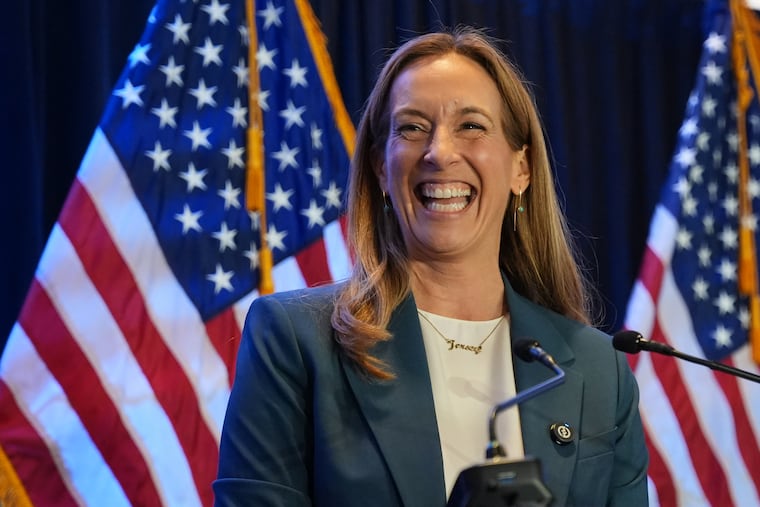
Senate Democrats chose Sen. Maria Collett, who this month was elected to her third term representing parts of eastern Montgomery County, to assume the majority leader role. She will replace Sen. Joe Pittman, now the minority leader, as the new floor leader in the Senate. House Democrats also reelected Rep. Matt Bradford as their floor leader, a role he’s held since 2023.
The appropriations committee in both the House and Senate is an influential committee that reviews every single bill to determine whether the policy change will cost the state or its taxpayers any additional money. Chair of the appropriations committee is a coveted position responsible for dividing up more than $50 billion in state revenues. Sen. Vincent Hughes (D., Philadelphia), who was formerly the minority chair, was elected as Senate appropriations chair.
Other leadership positions include: caucus whip, who is responsible for corralling votes; caucus chair, who leads the closed-door caucus meetings; policy committee chair, who is focused on developing the policy agenda for their caucus; caucus secretary, who has special recording duties for legislative action; and the caucus administrator, who assigns parking spots and other operational duties.
Committee chairs, who will be chosen by leaders in early January, also play an influential role in what legislation gets considered. There are also a number of different caucuses that members can join, including those based on a member’s geographic or identity-based interests, which focus on how policies affect specific communities and regions.
Here’s a look at who will lead each caucus in the 2027-28 legislative session.
Senate Democrats
The most anticipated choice among the new legislative leadership: Who will lead the state Senate as Democrats take control of the chamber for the first time in more than 30 years with a narrow 26-24 partisan split. The split will require Democrats to enforce party discipline and find consensus among its members from vastly different parts of the political spectrum — and in some cases, may require them to compromise with Republicans.
Senate Democrats chose the following top leaders:
Jay Costa (D., Allegheny), a Pittsburgh native who served as Senate minority leader since 2010, will be named Senate president pro tempore. (Costa’s position will not become official until the start of the new legislative session, when the full Senate casts a vote.)
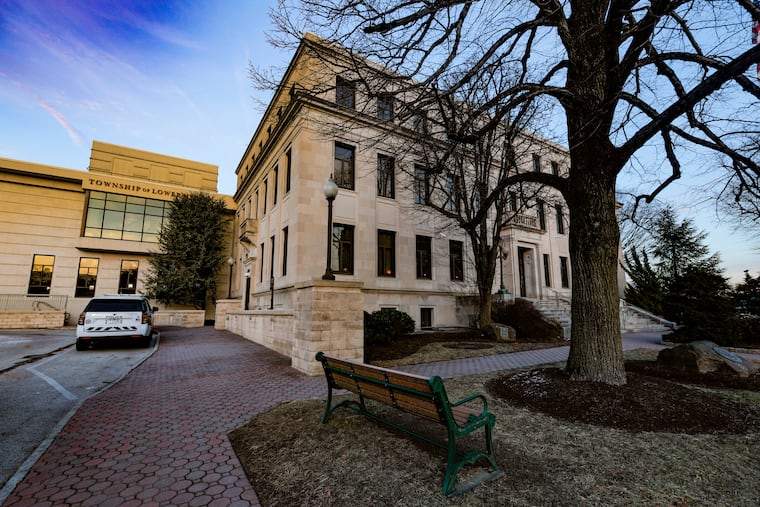
Maria Collett (D., Montgomery), of Lower Gwynedd Township, will be the Democrats’ majority leader. She is a nurse-turned-legislator and attorney who was first elected to the state Senate in 2018.
Vincent Hughes (D., Philadelphia) will be the majority appropriations chair, after serving as its minority chair since 2010. He has been in the state Senate since 1994, and for seven years in the House before that.
Senate Republicans
Senate Republicans will have to learn how to be in the minority and successfully negotiate with Democrats, after decades in control.
Senate Republicans on Tuesday chose:
Joe Pittman (R., Indiana) will be the Republican floor leader, after previously leading the chamber as its majority leader.
Scott Martin (R., Lancaster) will be the minority appropriations chair, which he has led since 2023.
But there’s notably one name not on the GOP leadership list. Ward, the outgoing top Republican firebrand who is known to frequently challenge Shapiro, said she sees herself as much freer to speak her mind by not operating on behalf of the chamber.
“It’s me, Kim Ward, unplugged,” she said in a brief interview Tuesday.
Ward will also serve as the interim Senate president pro tempore until Costa is officially elected at the start of the year. She was sworn into the position on Tuesday.
“I’m rooting for you, because I care about our state,” she told Democrats, in a brief speech following the oath of office.
House Democrats
With a newly expanded 112-89 majority, House Democrats will no longer struggle for votes with a one-seat majority, as they have for the last four years. Since Democrats flipped the state House in 2022, they’ve sent hundreds of bills to the GOP-controlled Senate that never received a vote.
» READ MORE: Philadelphia’s House delegation in Harrisburg names Ben Waxman as its new chair
Now with fortified ranks, House Democrats are looking to promptly send legislation to a Democrat-controlled Senate that will pass it.
House Democrats reelected their same top leaders for the 2027-28 legislative session:
Joanna McClinton (D., Philadelphia), who was first elected to the job in 2023, will again be House speaker. She is the first Black woman and second Black person to lead the chamber in state history.
Matt Bradford (D., Montgomery) will also return as House Majority leader. He has been a representative in the state House since 2008.
Jordan Harris (D., Philadelphia) will again chair the House appropriations committee, which he has led since 2023.
House Republicans
Jesse Topper (R., Bedford) will return as House minority leader, a position he’s held since 2025.
Jamie Barton (R., Schuylkill) will be the minority chair of the appropriations committee, replacing Rep. Jim Struzzi.
Challenges ahead
Both Democratic and Republican leaders in the Senate are poised to face a number of challenges over the next two years. And the most immediate one for Senate Democrats — soon to be in power — is finding a way to govern.
No currently elected member of the Senate from either party was in office in 1993 when Democrats last held a trifecta. They’ll have to quickly learn how to do so, including whipping votes and finding consensus they have never had to do before. The 26-24 split leaves no room for Democrats to lose support from any member of their caucus — one with some deep ideological divides between progressive and moderate members.
Some of the divides between members are limited to specific issues, such as school choice, where at least one Philadelphia Democrat supports its expansion. Others are ideological, like at least one member who was endorsed by the Democratic Socialists of America. And other differences come from incompatible personalities who just don’t see eye-to-eye.
Top Senate Democrats like Hughes and Collett said in interviews this month that although individual members may differ on specific issues, the caucus shares a core belief of “people first.”
“For decades, the Pennsylvania Senate has not been putting good energy toward making people’s lives better,” Collett said in an interview Tuesday. “For our purposes, we have been looking at this as our opportunity to deliver for people.”
Hughes, just minutes after the Associated Press called the state Senate control for Democrats earlier this month, said his caucus is representative of the differences across Pennsylvania.
“They’re ready to roll up their sleeves to get some work done, responding to the needs of the people of Pennsylvania,” Hughes added.
In the case of a tie, Lt. Gov. Austin Davis has some tie-breaking powers but cannot be the deciding vote on a bill’s final passage.
Senate Republicans, meanwhile, will also have to learn how to be effective in the minority, including how to challenge Democratic policies while also convincing top Democrats to consider their proposals.
Collett said she hopes her Republican colleagues know that “now is their opportunity to collaborate with us to make sure that the people in their communities are benefitting from the initiatives that we’re putting forward, just as much as the people from our communities.”
“This is not a partisan issue,” she added. “This is about Pennsylvanians.”
The entire General Assembly will also have to face the state’s tough financial straits, with Pennsylvania state government on path to spend $6.6 billion more than it brings in next fiscal year, according to an Independent Fiscal Office report released Tuesday.
Shapiro is likely to propose spending down the state’s Rainy Day Fund, which Senate Republicans have painstakingly protected over the last few years. The potential 2028 presidential candidate is also likely to pitch a number of new revenue generators, rather than broad-based tax increases.
Pew Charitable Trusts has cautioned against state legislatures using their emergency reserves to help balance the budget.