Economic stagnation means Philadelphia is America’s poorest big city, again | Shackamaxon
Plus: Development needs for Market East, and will City Council members be up to the challenge?

This week’s edition of Shackamaxon covers a short-lived reprieve, the future of Market East, and a welcome flood of candidates for city jobs.
Poorest, again
It was nice while it lasted. Last fall, Philadelphia shed a title we’d held for too long: America’s “poorest big city.” One year later, we’re back.
Unfortunately, this should not be a surprise. While poverty in Philadelphia has slowly receded from 2011’s high of 28%, the city and the region simply do not have enough jobs or economic opportunities to lift up the roughly one in five residents who live in poverty. In fact, research suggests the stagnation has led to Philadelphians of all income levels being less likely to earn more than their parents. Out of the 50 cities economist Raj Chetty looked at for economic mobility, Philadelphia was 50th.
There are some who’d like to spend their way out of this situation. This would be ill-advised.
Chicago, a city that shares many of Philadelphia’s positive and negative attributes, has tried that strategy. While Philadelphia’s leaders have spent decades being prudent with money, Chicago’s have repeatedly chosen the easy and popular route. The result is $55 billion in debt, a number that threatens the Windy City’s ability to perform basic services. Philadelphia, on the other hand, has the highest bond rating in city history.
Still, Philadelphia’s stagnant economy and low wages limit our ability to raise revenue. Despite seeing regular tax increases, Philadelphia spends less than $4,500 per resident. Chicago spends more than $6,000 per resident, and Baltimore spends nearly $9,000.
Because of Pennsylvania’s uniformity clause, any new taxes would fall on all, including the poorest. They also wouldn’t raise enough money to make a serious difference. Mayor Cherelle L. Parker’s rideshare tax would have raised $50 million. That’s enough to save important jobs in the school district, but it doesn’t come close to covering the billions of dollars’ worth of maintenance our schools need, let alone a sum that could substantively change the lives of the 300,000 residents who live below the poverty line.
If Philadelphia wants to permanently stop being called America’s poorest big city and supply economic mobility to all our residents, we’re going to need to embrace commerce and growth.
Market East muddle
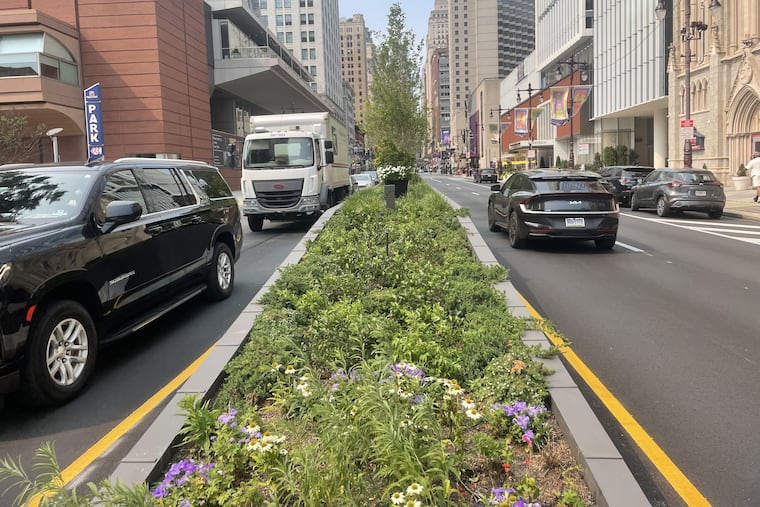
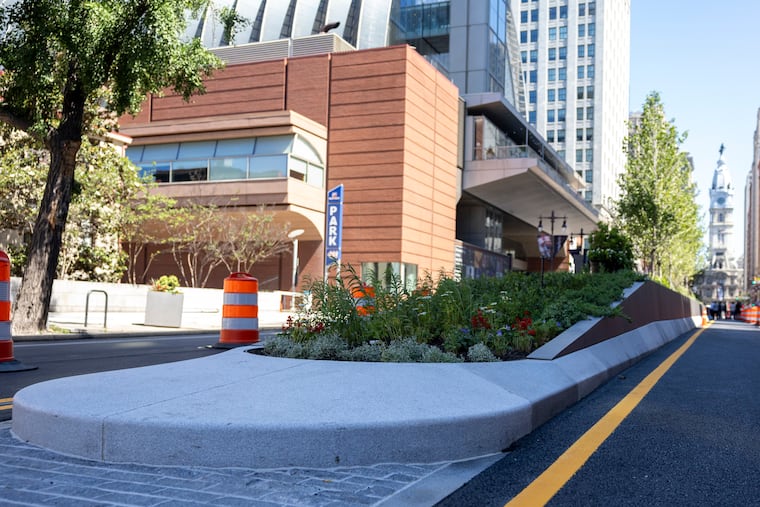
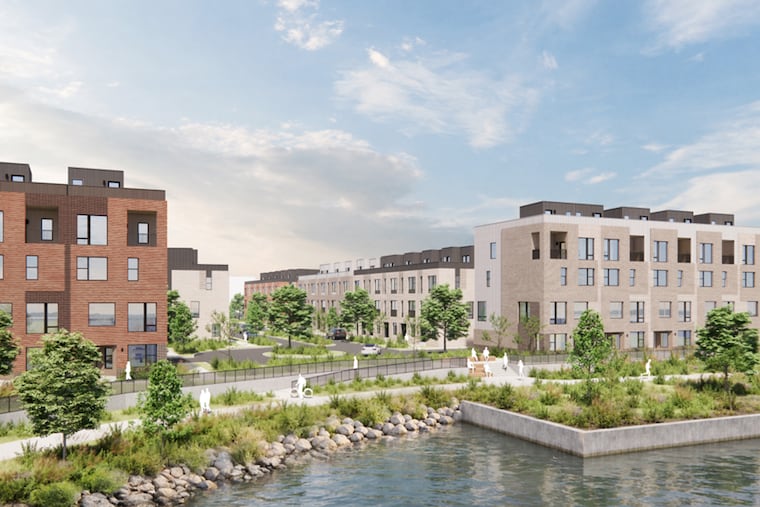
After a year of conversation, Mayor Parker’s Market East Advisory Group has finally issued its recommendations for the long-underutilized corridor. They want to add thousands of homes to the area. Of course, new housing is positive for the city and the region, but the plan is frustratingly unambitious — and poorly timed.
After all, housing construction is a struggling industry these days. One of Philadelphia’s largest multifamily apartment building contractors, Clemens Construction, is literally closing its doors. Higher interest rates, tariffs on building materials, and other factors have raised costs, and existing residential buildings have struggled to attract tenants, leading their owners to sell to the Philadelphia Housing Authority.
Market East’s struggles are downstream of the city’s economic stagnation. In a Philadelphia that grows jobs at the same pace as the median American city, Market East would have long ago been filled with office towers and hotels.
Beyond supplying residents with opportunity, these buildings would make use of the billions of dollars’ worth of infrastructure that already exists in the area, including access to 13 Regional Rail lines, five trolleys, two highways, and both of Philadelphia’s subways. Ideally, this corridor would serve as a regional destination, rather than simply an urban bedroom community.
Of course, a plan to do just that was attempted … and abandoned. While the Sixers did not do the best job selling the public on their proposed Center City arena, the concept represented a more ambitious alternative than simply building more apartments. It would have made Market East a place the entire Delaware Valley visited again.
The 60-member committee that drafted the plan has no shortage of brainpower or economic intuition. I know and respect many of its members. But meetings cannot overcome the corridor’s underlying problems.
There’s no amount of collaboration or tinkering with zoning that can substitute for a cultural shift toward embracing growth and opportunity.
Full field
For years, I have wanted Philadelphia to have more competition for its 10 district Council seats. Often, these legislators see few, if any, challengers once they take office, and even fewer of them actually lose after completing a full four-year term. The fact that district councilmembers have near total control over planning and development within their districts has been cited as an obstacle to fundraising and coalition building by past competitors. Simply put, it is hard to write a check or issue an endorsement if it could have a negative impact on your business or the community groups that you support.
Next year, however, promises to be different.
Even if Councilmember Mark Squilla takes a job at the Philadelphia Parking Authority, I expect fierce competition for his 1st District seat. Challengers are also circling around Curtis Jones Jr. in the 4th District, thanks to a series of gaffes as varied as asking transportation officials to delay a bridge reconstruction process and taking a payment from the notorious retirement program known as the Deferred Retirement Option Plan, or DROP.
The 8th District’s Cindy Bass, who narrowly defeated Seth Anderson-Oberman in 2023, looks set to face him once again. The self-proclaimed former member of the communist party came close to defeating her last time, dominating the decidedly non-proletarian Chestnut Hill in the process.
But it is the 5th District, represented by Jeffery “Jay” Young Jr., that has brought out the biggest field. While local attorney Jalon Alexander has been openly seeking the seat for some time, he’s been joined by at least four others: Kellan White, a former first deputy city controller, Dustin Dove, a Fairmount resident and lawyer, and Curtis Wilkerson, formerly chief of staff to Darrell L. Clarke, Young’s predecessor. Aissia Richardson, a staffer for State Sen. Sharif Street, told me she’s also planning to run, and local philanthropist Max Tuttleman gave me a statement that suggested that while he’s likely not going to run, he hasn’t totally ruled it out.
The surge of challengers exists, in part, because Young is seen as the weakest incumbent district councilmember in decades. At the same time, it could also help him survive. The more divided the field is, the fewer votes are needed to win.
While fundraising and petition gathering could trim the field, it would be against the city’s and the district’s interests for a winner to emerge with a mere 25% of the vote. Especially if their support is concentrated in just one neighborhood or community in what is an extremely racially and economically diverse district.
About our columnists
In contrast to news reporters, who operate within an independent, nonpartisan framework, columnists are charged with including their perspectives, opinions, and viewpoints when presenting their reporting. Inquirer columnists include Jenice Armstrong, Will Bunch, Luis F. Carrasco, Paul Davies, Daniel Pearson, Trudy Rubin, and Sabrina Vourvoulias.