Fiery Senate debates in Maine, Michigan and Georgia: Five takeaways
A trio of debates in key Senate races on Thursday night underscored how fraught the midterms have become, as candidates in Maine, Michigan and Georgia traded personal and heated attacks.
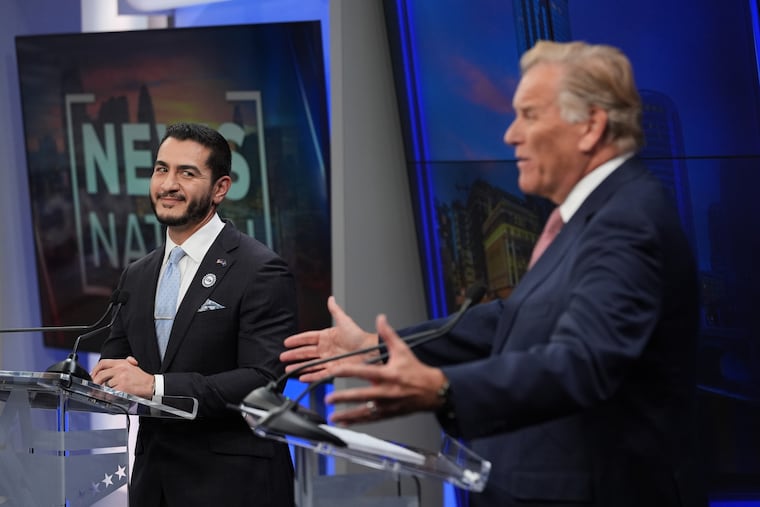
A trio of debates in key Senate races on Thursday night underscored how fraught the midterms have become, as candidates in Maine, Michigan and Georgia traded personal and heated attacks.
In Michigan, Abdul El-Sayed, a Democrat, said former Rep. Mike Rogers, a Republican, was a warmonger, while Rogers tried to tie El-Sayed, a Muslim, to terrorism.
In Georgia, Sen. Jon Ossoff, a Democrat, called Rep. Mike Collins, a Republican, a “bigot.”
And in Maine, Sen. Susan Collins demanded a public apology after her Democratic opponent, Troy Jackson, accused her and her husband of profiting from the Iran war.
Here are five takeaways from the debates across three states that could determine control of the Senate.
Democrats tied their opponents to President Donald Trump.
In all three debates, Democrats said that Republicans marched in lock step with the unpopular president.
Again and again, Jackson charged Collins with failing to use her power to oppose Trump administration policies that have hurt Maine, including the war in Iran and tariffs. “We are in a crisis now,” he said of energy prices, “because she and her Republican colleagues would not stand up to Donald Trump.”
In Georgia, Ossoff asked Collins repeatedly how Trump’s tariffs have helped Georgians, at one point calling them the “Mike Collins-Donald Trump tariffs.” Ossoff argued that economic pain for farmers and increased healthcare premiums for consumers were both “predictable,” but Collins still voted for Trump-backed policies that contributed to them.
“Whatever Donald Trump says, Mike Collins does,” Ossoff said. “Doesn’t matter what it is. Doesn’t think for himself.”
And in Michigan, El-Sayed accused Rogers of being “a guy who wants to be a sock puppet for the Trump administration,” especially over the war in Iran, which has pushed gasoline prices higher.
Debate questions put Republican candidates on the defensive.
You can usually tell who is winning debates based on the questions. Candidates on offense get to talk about issues that are good for them, while those on defense are trying to change the subject to more favorable territory.
The problem for the Republican candidates in Thursday’s debates — along with their compatriots running for offices across the country — is that the issues core to voters’ concerns this year are not good for them. Moderators asked about high gas prices, Trump’s tariffs, the Iran war and immigration raids — all topics that forced Republicans to defend unpopular Trump administration policies or explain why they are now skeptical of stances they previously supported.
There were no questions across the three debates about transgender athletes in youth sports, a topic that often divides Democrats and that Trump and the super political action committees he controls have used to attack Democratic candidates.
In the Michigan debate, El-Sayed was not asked about his association with Hasan Piker, the left-wing streamer who campaigned with him during the primary but has since kept his distance. In Maine, Jackson was not asked whether he is a member of the Democratic Socialists of America, which has endorsed his bid and backed his run for governor this year.
Rogers tried to link El-Sayed to terror groups. El-Sayed called Rogers desperate.
It took just 20 seconds into his first answer, about the federal gas tax, for El-Sayed to attack Rogers for backing the war in Iran.
There would not be a single exchange during the debate that did not include a personal attack, with the two men frequently interrupting each other. The two argued about second homes — Rogers’ in Florida and El-Sayed’s overseas. El-Sayed, who was quicker on his feet and a smoother talker, got the best of Rogers on many of these exchanges, frustrating the former member of Congress.
Their jousting continued when they were off the air.
“In 30 years of doing debates, I’ve never seen it continue during the commercial, but it did,” said the moderator, Rick Ablin, of the Grand Rapids NBC affiliate.
Perhaps the nastiest, most personal exchanges came when Rogers tried to tie El-Sayed to terror organizations. He said the man running to be the first Muslim in the Senate is “bought off by Hamas, Hezbollah, al-Qaida, those people who are supporting you, pour that money into your campaign.”
There is no evidence El-Sayed has support from terror groups.
When he got a chance to speak uninterrupted, he called Rogers desperate.
“He wants this to be about anything but his own record,” El-Sayed said.
Accusations of Nazism and hatred flew in Georgia.
Ossoff began the Georgia Senate debate saying it would be the “trial of Mike Collins.” Then, he set out to prosecute his case.
He accused the Republican congressman of hiring “half the Third Reich,” referring to past Collins aides who have espoused white nationalist and antisemitic views. He slammed him for reposting a video in 2024 of white male students taunting and jeering a female Black student with racist and profane remarks.
“If John Lewis were marching today from Selma to Montgomery,” Ossoff said, “Mike Collins would be grabbing a billy club.”
Collins said that he has “condemned racism, antisemitism, hate.” And he tried to turn the tables on Ossoff, who is Jewish, by criticizing the Democrat’s support for El-Sayed, whom Collins claimed “hates Israel” and “loves Iran.”
Ossoff, who is the more polished debater, tied every policy problem to Trump, while Collins, who owns a trucking company, leaned into his experience to suggest he was more in touch with regular Georgians.
Jackson accused Susan Collins of corruption. She accused him of lying.
Jackson shifted his approach for the second Maine Senate debate of the week. He devoted far less attention to questioning Collins’ support for abortion rights and her vote to confirm Justice Brett Kavanaugh, who joined the conservative Supreme Court majority that overturned Roe v. Wade. Instead, he focused his attacks on rising costs, including the drastic increase in heating oil prices, and accusations that Collins is abusing her position for personal gain.
“Ever since I was a young boy, I watched power and corruption hold people back,” Jackson said of reports that the FBI last year shut down an inquiry into corruption allegations against an adviser to Collins.
That prompted a sharp response from Collins. She repeatedly charged Jackson — whom she called “Troy” throughout the debate — with lying about her record. “These allegations are absolutely false, and they’ve been proven false.” She also accused Jackson of running “false ads” about the issue.
This article originally appeared in The New York Times.