GOP faces ‘civil war’ over MAGA movement’s future after midterm wipeout
Long before Republicans were swept away in congressional races across the country, debate was churning within the party over the war in Iran, economic priorities, immigration, and more.
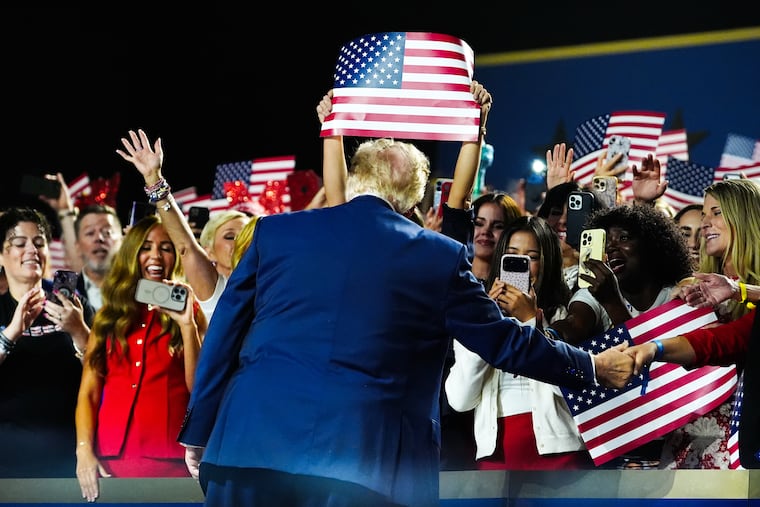
Elon Musk, a major funder of the Make America Great Again movement, declared this month, “I’m not MAGA.” Tucker Carlson, a leading MAGA apostate, said President Donald Trump had committed a “profound betrayal” of MAGA principles. And Rep. Lauren Boebert of Colorado, a longtime MAGA loyalist who was defeated in the midterms, said Trump had hurt her voters.
In the weeks since the Republican Party’s disastrous midterm showing, a fight has been escalating over the future of the president’s political movement and his place in it.
Long before Republicans were swept away in congressional races across the country, debate was churning within the party over the war in Iran, economic priorities, immigration, and more.
But the election results were far worse than the party had expected. And nearly a month later, Republicans are feuding over a central question: What does it mean to be MAGA as the twilight of Trump’s second term approaches?
“We’re having a civil war inside the Republican Party,” said Steve Bannon, a podcaster and longtime Trump ally. “People should strap in.”
The debate will carry significant implications for Republicans in the final two years of Trump’s second term. It is expected to play out in a skirmish for the party chair, in the halls of Congress, and in the 2028 presidential nominating contest.
Some of the president’s longtime loyalists are calling for the party to refocus on issues at home, saying that the president’s war in Iran has violated his campaign pledges and made life in America too expensive. But others are standing with the president, who has displayed a powerful hold on the party’s base across a decade.
Rep. Derrick Van Orden of Wisconsin, a MAGA stalwart and fierce supporter of the war who was defeated by a Democrat this month, said that he was “disgusted” by Republicans who had criticized Trump over the war.
“The problem with the Republican Party is there are so many of my colleagues that would rather hold an office themselves than put the country first,” Van Orden said, arguing that the war prioritizes America’s national security interests and embodies MAGA values.
The ideological diversity of the Republicans surrounding Trump in his second term has offered kindling for the fiery intraparty battle. The two leading contenders to be heir to the president’s movement — an isolationist, populist vice president and a hawkish secretary of state with more traditional Republican views — are poles apart on some issues.
The fight is also fueled by Trump’s own political shape-shifting over the years, from inward-looking China hawk who promised no new wars to second-term president at war who is consumed with foreign policy and increasingly solicitous of China.
The term MAGA, a shortening of Make America Great Again (a slogan that Trump recycled from Ronald Reagan’s 1980 campaign and that some Democrats have long argued is a racist dog whistle), has always had a certain elasticity. Is it about channeling cultural conservatism? Supporting muscular foreign policy? Prioritizing U.S. interests above those of other countries? Or is it simply code for loyalty to Trump, even as his whims and priorities change?
Different Republicans have different ideas.
Trump, who once declared that “MAGA is me,” may play a critical role in shaping the answer.
“MAGA, to me, means something very specific, and when people veer from it, they don’t do very well,” he told NBC News this month, as he pushed back on Musk’s declaration that he was not MAGA.
But former Gov. Chris Christie of New Jersey, the centrist Republican who led Trump’s 2016 transition team but long ago turned against him, argued that close ties to Trump would be a liability in the 2028 presidential race.
“If we nominate someone who’s been a member of the Trump administration 2.0, or a Trump-adjacent acolyte, we are going to get beat as badly as we got beat four weeks ago,” Christie said.
Even Boebert, a die-hard Trump loyalist for years, told the Associated Press that the midterms had been a referendum on his leadership and that the “president did some things that — that hurt my voters.”
The president appears significantly weakened after the election, and his approval rating has never been lower.
But Trump has revived himself politically before. Four years ago, he was out of power and a political pariah, blamed for Republicans’ underwhelming showing in the 2022 midterms and living under a cloud of potential criminal charges.
He stormed back to the White House 24 months later.
Trump’s critics may be happy to target him now. But the midterms followed a primary season in which the president regularly reinforced his hold on the Republican Party, powering allies to victories and ousting incumbents he deemed disloyal.
In the general election, the only Republican to buck the party’s trend and flip a blue seat red without the support of gerrymandering was former Gov. Paul LePage of Maine, who has described himself as “Donald Trump before Donald Trump became popular.”
Earlier this year, some Republicans, such as Rep. Thomas Massie of Kentucky — who said he represented “half of MAGA” — had sought to claim the mantle of a Trumpism they said Trump had abandoned. They argued that the war in Iran had violated a core tenet of Trump’s movement: keeping America out of foreign entanglements.
But Massie was defeated in a primary by a Trump-backed rival. And former leaders of the MAGA movement who turned on the president over the Iran war — including Carlson and former Rep. Marjorie Taylor Greene of Georgia — have left the party in the last year.
Nonetheless, Bannon, a critic of the Iran war, cast the midterms as a statement of public support for a “populist, nationalist agenda” that he said was “not aggressively pursued” in the first two years of Trump’s second term.
“The future is populism,” Bannon said, arguing that Trump had acknowledged as much through his decision to elevate Stephen Miller, a right-wing populist and an immigration hard-liner, as White House chief of staff after the midterms. Bannon said Secretary of State Marco Rubio was not “even close to being MAGA.”
The race for Republican National Committee chair, which is expected to be decided in January, will be an early test of the president’s sway. The chair, Joe Gruters, a Trump loyalist, faces a challenge from KC Crosbie, who has called for more scrutiny of what went wrong in the midterms.
Later in 2027, the presidential primary race is expected to take shape. Trump’s own vice president, JD Vance, a potential heir to the MAGA movement, has sought distance from the Iran war, pointing to it as the primary driver of Republican midterm losses, frustrating Trump.
Gov. Ron DeSantis of Florida, who lost to Trump in the 2024 presidential primary, has also been critical of the war. He told radio host Stephen A. Smith on the eve of the election that Republicans were “gaslighting” the public by downplaying the ways the war was driving up prices.
Even Sen. Ted Cruz, a relatively hawkish Texas Republican who ran for president in 2016, said on his podcast after the midterms that the war “should have been brief, decisive, and over.”
DeSantis, Cruz, and Vance are all considering runs for president in 2028. And Christie, who is also weighing a campaign, criticized them for turning on the war after long supporting it.
“That’s not principle, that’s opportunism,” he said, adding: “What they were saying before was all supportive of the president. Because they’re afraid of the president.”
Republican officeholders who have long been at odds with Trump are offering their own explanations for the midterms and ideas of where the party should go from here.
Rep. Don Bacon of Nebraska, a moderate Republican who did not run for reelection this year, has blamed the president in scathing terms for the party’s midterm losses. But Bacon, a possible 2028 candidate, has supported the war and said that Trump went astray with tariff policies, his moves to bring America closer to Russia, and his crass commentary.
Bacon said Vance “isn’t even MAGA,” citing the vice president’s differences with Trump on foreign affairs. He spoke more approvingly of Rubio, predicting that the secretary of state would have a “foot on MAGA and a foot on Reagan.”
“It’s going to be a heck of a debate for the soul of the party,” Bacon said. “Losing forces people to reassess. And Trump got destroyed.”
This article originally appeared in the New York Times.