Chester County is the only Philly suburb weighing a property tax hike. Here’s what’s in collar counties’ 2027 budgets.
All four Pa. collar counties in the Philadelphia region are grappling with rising costs, inflation, and uncertainty about federal and state dollars.
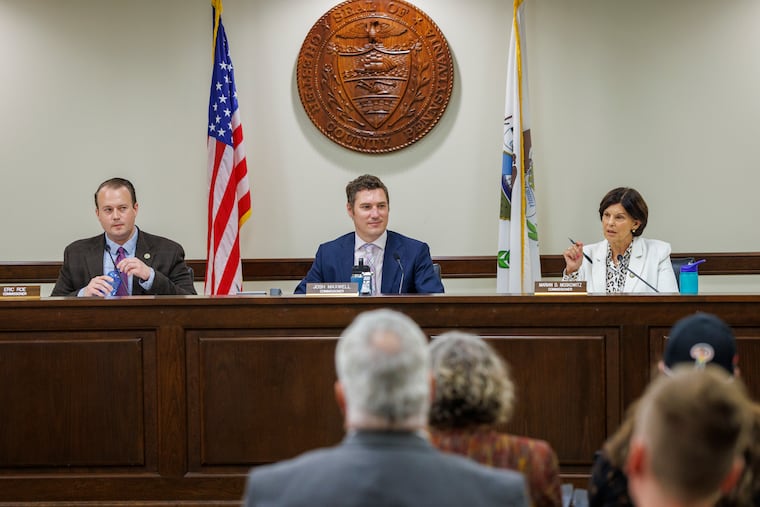
Chester County is the only Philadelphia collar county to propose an increase on property taxes next year, a roughly 5.29% hike that will amount to an estimated extra $47 per year for residents.
It was the only Philly suburb to not raise property taxes for 2026.
Though Bucks, Montgomery, and Delaware Counties are not proposing a property tax increase this year, they’re still grappling with skyrocketing costs, high inflation, and dwindling allocations from the COVID-19-era American Rescue Plan Act.
But for Chester County that’s coupled with decreases in revenue, such as from state funding, which leave the county to fill in some of the gaps — even after making budget cuts in recent years.
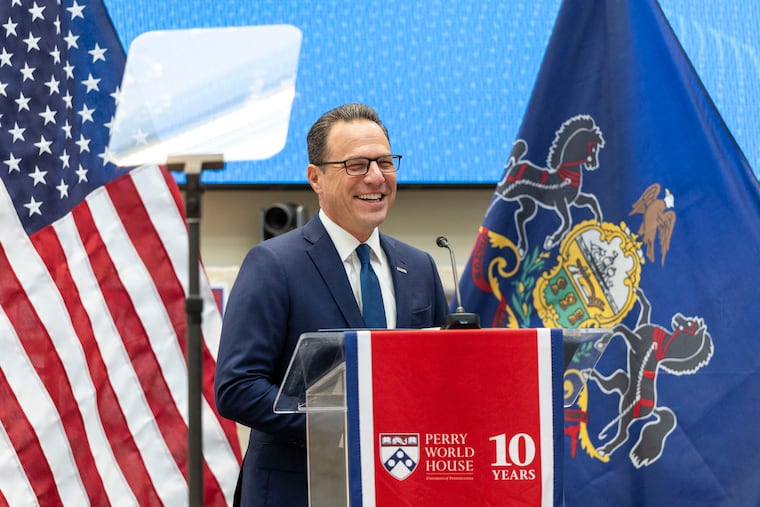
“Chester County is the wealthiest per capita county in Pennsylvania, but even just increases in healthcare and utilities and all the stuff is putting strain on the federal and state government, which is decreasing funding all the way down to us,” said Chester County Commissioners Chair Josh Maxwell, a Democrat, in an interview.
“And it’s just one of those times where us in our personal lives, us in government, are trying to find ways to cut back to save as much money as possible, and hoping that there’s a better day ahead when construction isn’t as expensive, and you know the world is a little more affordable,” he said.
Pennsylvania counties can only increase their revenue by increasing property taxes.
All four collar counties have released their 2027 budget proposals in recent weeks and are expected to be deliberated on in the coming weeks before final versions are passed next month.
Here’s what to know.
Chester County
Last year’s flat property tax rate was due to the county aiming to take a more “conservative” approach, Maxwell said.
The county put certain programs (meaning no property tax increase needed to fund them) on pause while federal and state budgets were in an impasse, Maxwell said.
But looking ahead to 2027, Chesco, in its total $782.2 million budget, will now have to cover a $500,000 gap in state grant funding for meals and rides for seniors. Maxwell said the funding cut from the state would amount to 30,000 fewer meals.
Maxwell estimates that total federal and state grants, which make up 44% of revenue, will decrease by $6 million. Federal and state capital grants are down 30%.
The county’s spending will remain roughly the same between 2026 and 2027, which includes a $10 million increase in spending on personnel raises, such as for employees in the 911 call center. There are also increasing costs to the prisons and the district attorney’s office.
Maxwell said leading up to this proposal, the county has prioritized hiring only for necessary positions and has been trying to cut costs.
“The problem is that we’ve been cutting across the board about 5% over the last couple years and we’re running out of things to cut that aren’t necessary,” Maxwell said.
He’s open to making other moves, such as selling county property, and as commissioners deliberate the new budget he’d be in favor of taking a page out of the Birds’ playbook when it comes to reducing the burden of maintenance costs in county parks or trails.
“We can spread some of those maintenance costs over a few years, and kind of like the Philadelphia Eagles do with their contracts, move some of these things into a time when the cap goes up, in our case, at the time when inflation has settled and state and federal money is more reliable,” Maxwell said.
Commissioner Eric Roe, the only Republican on the board, argues that residents are being taxed excessively and is planning to propose an amendment early in December that would prevent a property tax increase by cutting more costs and dipping into other revenue sources.
Roe said in an interview that the exact details of his proposal are a work in progress, but he expects it would include a hiring freeze and tapping into the fund balance, the county’s “piggy bank,” though he acknowledged there is some risk to Chesco’s credit rating and overall financial health if that option is taken.
“We should use a lot of the same mechanisms that families use to balance their budgets,” Roe said. “If expenses are exceeding revenues, the earners of a family don’t get to go to their bosses and demand a raise … why should Chester County’s politicians be able to just reach further into the taxpayers’ pockets?”
Residents can share in-person feedback at the commissioners’ Dec. 16 meeting before the budget is voted on.
Bucks County
Bucks County is putting forth a $521.6 million budget for 2027 that doesn’t include a property tax increase for residents.
Spending is projected to be up by 0.7%, according to a county news release Wednesday, but the 2027 budget is balanced after Bucks saw a $16.4 million deficit in last year’s proposal that was eventually addressed by an 8% property tax increase.
“This preliminary budget represents months of collaborative work between our many departments to present a budget that delivers the high level of services Bucks County residents have come to expect,” said Jeannette Weaver, the county’s chief financial officer, in the news release.
The county acknowledged “the continued financial pressures facing local governments, including inflation, rising operating costs and increasing demands for County services” and said it considered resources and the needs of each department in its proposal.
The budget, completed in collaboration among the finance division, departments, and row offices, proposes cuts to the finance and administration, community services, and debt services.
The commissioners will vote on the proposed budget on Dec. 16 after hearing from the public at an earlier to-be-determined date.
Montgomery County
Montgomery County Commissioners Chair Jamila Winder said the 0% property tax increase shows the county “can be fiscally responsible while continuing to deliver on the services our residents count on,” especially after the county had a 4% increase last year, but that rising costs and the uncertainty of federal dollars continue to be an issue.
“If you superimpose what our residents are facing on what it takes to run county government, our county costs continue to rise,” Winder, a Democrat, said in an interview.
In the lead-up to this budget, which totals $648.4 million, the county’s new Office of Innovation, Strategy, and Performance (likened by one commissioner as a far less controversial version of DOGE) identified savings and areas to cut costs.
“That office played a critical role in helping us get to the budget that is proposed today,” Winder said, noting that the county found $10.2 million in operational efficiencies.
Amid the always lingering uncertainty with federal and state funding, Winder said the county has had to work to find other solutions, such as pursuing more grant funding and engaging philanthropic groups to address key issues such as food insecurity, homelessness, or mental health programs.
The 2026 budget was approved unanimously — making it the county’s first bipartisan budget in roughly a decade — and Winder is hoping for the same again this year.
Before voting on the budget on Dec. 17, commissioners can hear from residents in-person on Dec. 3. Members of the public can also interact with the budget online through the county’s new budget dashboard.
“Cost savings will not stop when we pass the budget on Dec. 17,” Winder said. “We’re going to continue those disciplines throughout the course of the year because this budget doesn’t mean the pain of what we were facing to get here, that doesn’t mean that pain goes away. We’ve got to continue to do the work.”
Delaware County
In Delco, a county council member said the local government is trying to live like its residents in its nearly $1 billion budget.
“The affordability issues for our residents they’re real, and to the extent that we can make do with what we have, we have to do exactly what our residents are doing, make do with what we have, and tackle the problems we have,” council member Joanne Phillips, a Democrat, said in an interview.
Just a year after implementing a 19% property tax increase for residents (the second double-digit increase in two years), Delaware County’s executive director is asking council, made up entirely of Democrats, not to increase it in 2027.
Phillips, who also previously served eight years as the county controller, said the 0% increase this year is a product of “tightening our belts even further because the prior increases were really needed to address sort of a structural deficit and the increase of costs.”
The council member said the county had also asked departments to cut costs in addition to implementing periodic hiring freezes and consolidating contracts. The county also reduced spending on healthcare for employees, though Phillips said it’s “still a very good and generous plan for people.”
County council members will vote on the budget on Dec. 9, after residents have an opportunity to provide feedback at a Dec. 3 meeting. Phillips said she plans to support it as it currently stands.
Though Delco didn’t include a property tax increase for next year (and Phillips doesn’t expect one to be added during deliberations), the uncertainty of federal funding and inflation remains an issue.
And for future budgets, it’s hard to say for certain whether Delco residents will be spared from more tax increases.
“I think probably when we do the hearings, we’ll probably be telling people, ‘I don’t think we can expect 0% for many years in a row,’” Phillips said.
Staff writer Brooke Schultz contributed reporting.