Burlington County’s Pinelands will be the focus of a new climate change study
The study will assess the potential climate change impacts in the Burlington County Pinelands.
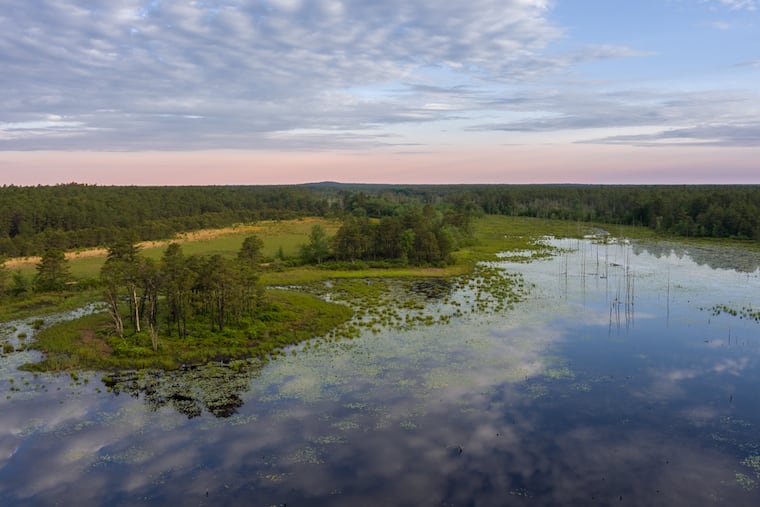
A large part of South Jersey’s sprawling Pine Barrens region will be the focus of a new climate change study.
The Burlington County Southwest Pinelands Regional Resiliency Study will assess the climate change threats facing Evesham, Medford, Medford Lakes, Shamong, and Tabernacle, and it will be led by the New Jersey Department of Environmental Protection (NJDEP) in partnership with Burlington County and the nonprofit Pinelands Alliance.
The study will also include suggestions for how these towns can better recover from future climate events such as wildfires, floods, heatwaves, and more.
“Climate change is no longer abstract or theoretical; it’s now a physical reality impacting our communities and infrastructure,” Burlington County Commissioner Deputy Director Allison Eckel said in a statement. “No part of Burlington County is immune, and Burlington County’s Pinelands towns are increasingly at risk from more frequent and intense wildfires, inland flooding, droughts, heatwaves, storms, and other impacts from climate change.”
Experts will utilize climate and environmental data, impacts from past weather events, and more to identify the region’s climate vulnerabilities and develop resiliency action plans, according to a statement from the county.
Burlington County and each of the participating towns will also be eligible for up to $350,000 in grant funding from the NJDEP to put the resiliency plans in place.
The county expects to begin work on the study in early 2027 and to conduct various workshops and surveys to get public input, said Burlington County spokesperson David Levinsky.
The Pinelands study comes not long after the county completed a similar climate change resiliency investigation of the Route 130 corridor stretching across 11 municipalities and along the Delaware River and its tributaries.
The previous study took a little more than a year to complete, Levinsky said, and officials predict that the timeline for the forthcoming work will be similar.
“The Route 130 Corridor Study generated substantial public input and engagement from our Delaware River communities and resulted in recommendations for each municipality to take to mitigate climate change threats,” Eckel said. “We’re excited to partner with the NJDEP again on this new study focused on our Pinelands towns and the climate challenges unique to them. We’re hoping to get the same kind of public engagement, and that the end result is an action plan that helps these communities become better prepared.”
Both studies are part of the agency’s Resilient NJ program, established in 2014 to help communities across the state plan for potential climate change impacts.
Enjoyed this story?
Get more South Jersey news on your homepage with one click.