Who killed the grande dame of Danville?
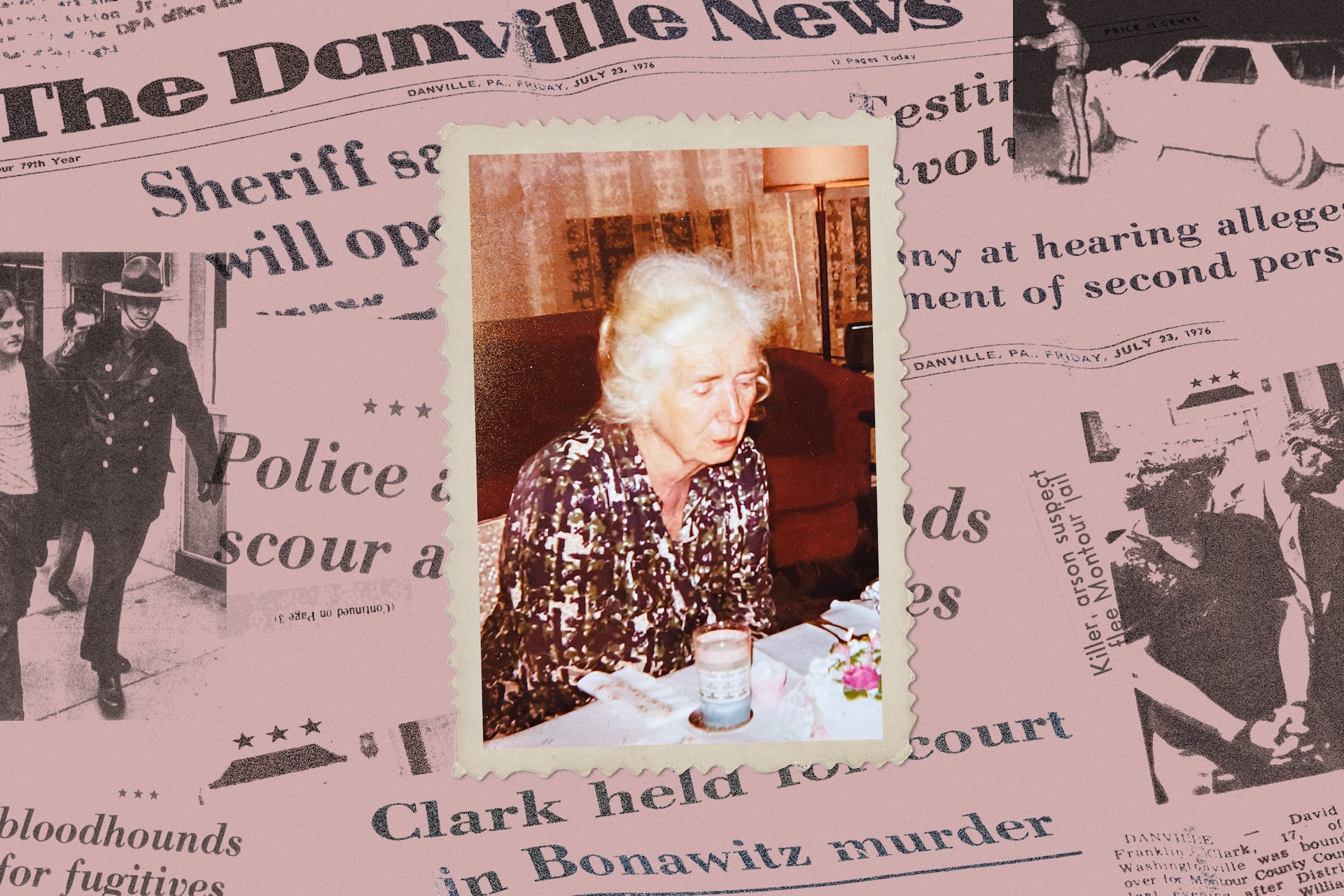
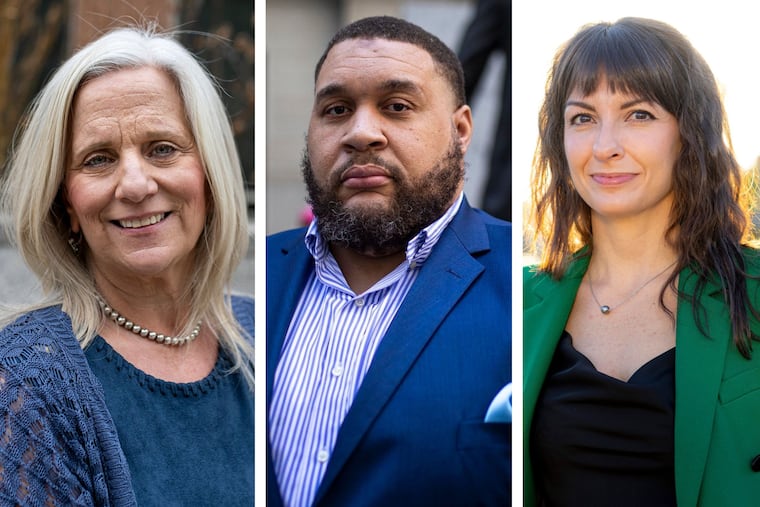
DANVILLE, Pa. — Every other week, the Friday Night Murder Club met at the Southside Fire Company’s social hall in this former iron ore mining town above the Susquehanna River’s north branch. They were six women in their 60s and 70s — retired nurses, X-ray techs, tax collectors, and homemakers — who loved digging through old newspaper clippings of grisly crimes and discussing fresh theories over wings and beer.
For their first case, they chose Montour County’s earliest scandal, which began with Catherine Ann Clark’s death in 1857 after a painful illness. Suspicions grew when it emerged that her husband had been carrying on with another man’s wife — and that the woman’s husband had also died recently under mysterious circumstances. The lovers were convicted of poisoning their spouses and hanged, though doubts about their guilt have lingered to this day.
When it came time for the Murder Club to select a second subject, there was no question what to investigate: the death of Dorothy Bonawitz, an unsolved case that has haunted Danville for 50 years.
Bonawitz, who was 75 when she was killed, never married, lived alone, and had no family. Yet to many Danvillians, young and old, she was the town matriarch, helping pay for Christmas tree drives and the town swimming pool, leading book clubs and women’s empowerment groups. Though she had earned a Ph.D. in English from Penn State, most people in town called her Miss Bonawitz.
As a teenager, the Murder Club’s Sylvia Knorr, now 80, used to serve Bonawitz at the Rea & Derrick drugstore’s soda fountain.
“She was just a very quiet, sweet lady — kind,” said Knorr, a retired nurse. “And she just had that aura about her.”
Bonawitz, for decades, ran the town’s welfare office, handing out cash to the county’s neediest. It was there, on Monday morning, April 26, 1976, that a coworker discovered Bonawitz’s body sprawled on the floor.
She had been raped, beaten, stabbed, and robbed. The crime so upset Danville’s residents that the trial four years later had to be moved to Harrisburg to find an impartial jury.
Prosecutors charged a local teenager, David Franklin Clark, with Bonawitz’s murder, robbery, and rape. But they contended that he had been the accomplice of a man who did the actual deeds. The prosecution’s plan was to convict Clark, and then get him to help them charge and convict the actual killer.
For four and a half days, the case against Clark — a recent high school grad who wrote poetry and loved to smoke pot — filled the cavernous, wood-paneled courtroom and the pages of local newspapers.
But the case had problems: a questionable interrogation, destroyed evidence, and a muddled timeline. A jury found Clark not guilty.
In the decades since, no one else has been charged with the killing.
But the murder ladies had a pretty good idea who was responsible for Danville’s most shocking crime.
“If you walked downtown and asked anybody on the street who killed Dorothy Bonawitz,” Knorr said, “they would say Harold Ashton.”
The Murder Club’s Valerie Evert remembers seeing the troubled youth in town. “He was someone you would avoid — especially as a woman,” said the former X-ray tech, now 70. “He’d follow you down the street just to scare you.”
For several months, the women in the Murder Club pored over the case, reading transcripts from the proceedings, following local coverage on Becky Steckley’s newspapers.com account.
They learned that Pennsylvania State Police had kept some of Bonawitz’s clothes from the crime scene. In 1976, DNA matching was not available to connect a suspect to a crime. But within a decade that started to change. So why not test the clothing?
Knorr, on behalf of the Murder Club, wrote a letter in March 2021 to Montour County District Attorney Angela Mattis. The women called on authorities to test Bonawitz’s garment for DNA.
“It is time to get justice for Miss Bonawitz,” the letter implored. “We ask that you take steps to get that justice for her.”
A few days later, Knorr took a call from a state police trooper who let her know the matter had fallen on the right desk.
They never heard from the state police again.
A patron saint
Four years ago, 4-year-old Lillian Wolfe asked her father who his favorite teacher was when he was growing up. Matthew Wolfe started thinking about kindergarten back in Danville.
He searched the internet for his teacher’s name and saw story after story about the murder of her best friend, Dorothy Bonawitz.
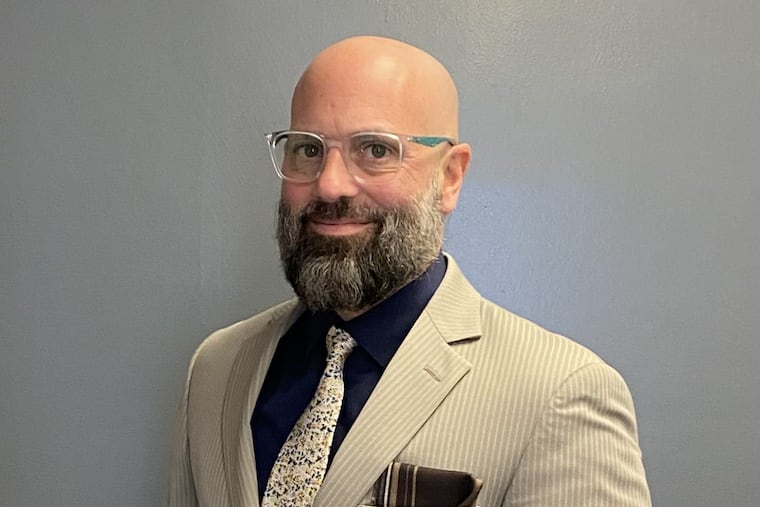
Wolfe had left Danville after going to college and now sells heavy-duty Freightliner trucks in Fayetteville, Ark. But nights and weekends, he works on his film projects. His first was semiautobiographical, called Left/Right (2008), and made with his brother, Todd, a Philadelphia filmmaker. The second was a documentary, The Identity Theft of Mitch Mustain (2013), a whatever-happened-to tale about a former Arkansas Razorback who once was the top-rated high school quarterback in the nation.
The more Wolfe read about Bonawitz, the more he wanted her story to be his next film.
Wolfe, 50, was born the month Bonawitz died. He was amazed by how much she had accomplished. When she was 19, at a time when women were getting the right to vote in Pennsylvania, she was earning her undergraduate degree at Shippensburg University. She earned a master’s degree at Bucknell. She was Montour County’s head of public welfare when she started on her Ph.D. in English at Penn State, earning the degree in 1934. Her thesis, on the Boston stage from colonial times until 1810, ran 349 pages.
“This woman was this patron saint that everybody knew of,” Wolfe said. He had majored in communications at Lycoming College, taking some journalism classes and every film course. He wasn’t a true-crime buff, but he read all the archival coverage and started interviewing defense lawyers and prosecutors.
There was a moment in Wolfe’s project when his desire to tell the story of Bonawitz’s life turned into his need to tell the story of her death.
He was talking to a friend’s mother back in Danville who was a local historian. He would be bringing a camera crew into town, he explained, and wanted to film their conversations.
The day he arrived, she backed out. She didn’t want to “tip the apple cart,” he recalled her saying. She had to do business with too many people in town.
“And I’m like, ‘Why are we burying her memory?’” Wolfe wondered.
‘It had everything’
Danville took its name from Daniel Montgomery, who opened a trading post on land owned by his father, Gen. William Montgomery, a Revolutionary War patriot originally from Chester. In 1792, the son laid out the street grid of what is now Danville’s historic district, anchored by the family’s stone homestead. Daniel Montgomery became the town’s most prosperous citizen as a miller, general store proprietor, landowner, militia leader, and member of the Pennsylvania House and Senate.
In a July 4, 1800, speech, his father foretold the day when the iron buried in the surrounding hills would fuel the community’s prosperity. He was right, and by the middle of the century, the Montour Iron Co. put as many as 2,000 men to work at a time.
By the latter part of the century, Danville was a rail center that had grown to over 8,000 residents, many of them English, Irish, and Welsh immigrants skilled in metal refinement. But the workers moved west as steel replaced iron, and the borough is half as populous today. Danville’s economy found new life from a hospital built in 1915 by Abigail Geisinger, widow of an iron magnate, and Geisinger Medical Center attracts more than 10,000 workers.
Murders are rare in Danville. The last time law enforcement activity made news here was in September, when ICE raided a construction site where Geisinger was building a towering addition and arrested what advocates said were nearly 50 Central American immigrant workers.
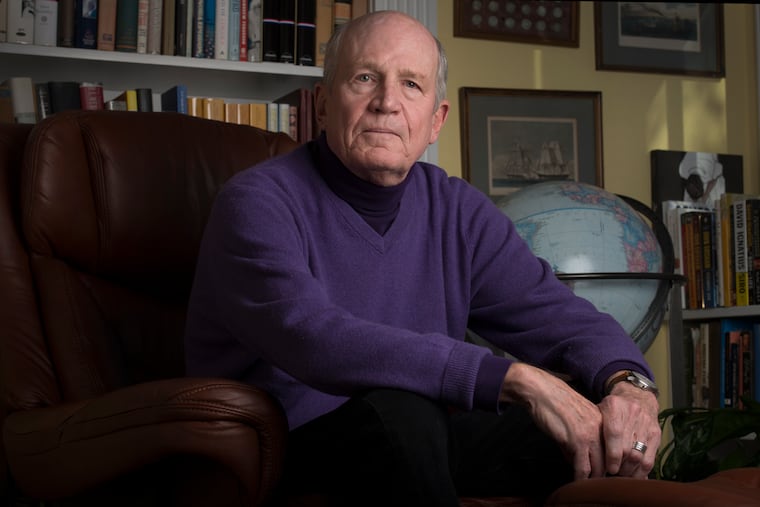
Thomas James, 78, has worked in the Columbia-Montour County courts for a half century, first as a lawyer fresh out of Dickinson School of Law and now as a senior Common Pleas Court judge. And to this day, the murder of Dorothy Bonawitz remains “the most fascinating case of my career.”
“It had everything,” he said over lunch at Rose Marie’s in nearby Bloomsburg, eating a turkey wrap and drinking unsweetened iced tea.
The state built its case around Clark’s confession. In it, he admitted sitting in an outer room at the welfare office that night while Ashton was inside, hoping to rob Bonawitz. Then, according to Clark’s statement, he heard her scream. Coverage of Clark’s six-hour preliminary hearing made the front pages of nearby papers, accompanied by a photo of the mop-haired defendant in a flowered shirt and handcuffs.
But before the trial began, James and his law partner got the confession thrown out. Clark’s mother had requested a lawyer for her 17-year-old son, but state police interrogated him before one arrived. Meanwhile, a psychiatrist who had administered sodium amytal, a depressant used as a “truth serum,” to Clark was working for the state, though Clark’s family didn’t realize that anything the teenager told the doctor could be used against him.
James said he had Robert Sadoff of the University of Pennsylvania testify at the trial. Sadoff, a forensic psychiatrist from Jenkintown, had previously examined two infamous defendants: Capt. Jeffrey MacDonald, the Army doctor charged with killing his wife and two young children, and John E. duPont, the chemical fortune heir who shot and killed an Olympic wrestler at his Newtown Square estate, Foxcatcher Farm.
Sadoff, who died in 2017, testified that the combination of sodium amytal and the investigators’ leading questions meant Clark’s confession had effectively been coerced.
Having lost the use of the confession, prosecutors hoped to link Clark to pubic hairs found on a chair in the room outside where Bonawitz was found dead. But the state forensic chemist, who in another case would be found to have “maliciously” misled the court, analyzed the hairs with a method that destroyed them. It was not determined that the hairs definitely were Clark’s. The knife was never found.
There were other problems, chief among them the prosecutors’ timeline. The case hinged on their insistence that Bonawitz was killed on a Saturday night. Clark said he had been partying with Ashton that night but never went with him to the welfare office. He slept in Danville, then spent the next day at home in Washingtonville watching television, an alibi his mother and sister backed up. Several other witnesses, including a bus driver and two hearing-impaired children, testified they saw Bonawitz alive that Sunday, traveling from Sunbury back to Danville.
For his documentary, Wolfe tracked down the one living juror to find out why they had acquitted Clark. The juror told him the panel believed the killing happened on Sunday, when Clark was at home.
The hitchhiker
A Danville Facebook group serves as a flawed compendium of the different theories about the Bonawitz murder. Many are just flatly wrong. The murderers were not proven to be two men from out of state. Clark was never found guilty. Neither was Ashton, who was never even charged — at least with that crime.
Despite his acquittal, Clark never could shake the suspicion of many in town who still believed that he had been responsible for the murder of Danville’s most beloved resident. He once walked into a bar and patrons threatened to lynch him.
Eventually, Clark just left town. The people Wolfe spoke with in Danville for his documentary assumed Clark was dead.
He isn’t. Wolfe tracked him down and interviewed him in California, where Clark had hitchhiked, then spent decades living on the streets. Clark again denied that he had been present at Bonawitz’s rape and murder, though his memory of that time is at best hazy.
During Wolfe’s recorded interview, Clark said the pubic hairs found in the welfare office waiting room were there because Ashton and his brother had previously threatened him at knifepoint to produce them. It was a setup. Clark said he thinks he remembers telling that to his attorneys.
James shakes his head at that story. As Clark’s lawyer, he would have seized upon it in court, he said. And it’s information that prosecutors could have used separately to try Ashton.
Unlike many people who have followed the case, James does not think prosecutors would have been able to convict Ashton after Clark’s confession was thrown out of court.
“They needed Clark to turn on him, and Clark would have gotten killed by a defense attorney if he’d flipped on Ashton,” James said. “He didn’t know any of the details.”
There was no physical evidence to make a case against Ashton. At least until the science of DNA testing emerged.
A deathbed confession
Finding Harold Ashton was harder for Wolfe. Ashton still had family scattered around Pennsylvania and the East Coast, and the filmmaker’s inquiries produced a particularly creepy anonymous phone message that warned him about “prying into people’s lives.” It ended with, “Have a nice day, asshole.”
Ashton had moved to Massachusetts, and news clippings showed he had been charged with raping an underage girl in 1987. He was convicted of indecent assault and battery of a girl under age 14, and sent to prison.
In February 2025, Wolfe received a letter from Ashton’s nephew, Jim Minicella, who was serving time in a Petersburg, Va., federal prison for heroin trafficking. Minicella told him that he had met his uncle once and that he was a sociopath. Ashton had killed a pet duck with scissors and would torture cats.
Talk to my father, Minicella wrote. You’ll want to hear what Ashton told him.
Wolfe flew into Pennsylvania from Arkansas and drove up to a trailer park outside Bloomsburg, where James Minicella Sr., then 73, lived alone. His artwork — dark drawings of anguished figures — lined the walls of his home.
Minicella Sr. showed Wolfe the location of his half brother, Harold Ashton: in an urn that contained his ashes. Ashton had died in Williamsport in 2020. But before he died, Ashton told Minicella what happened in Danville a half century before.
He confessed that he had raped and killed Bonawitz. And that he did it alone.
“He was by himself,” Minicella told Wolfe as his camera rolled. He said his brother’s only explanation was that “Something triggered me.”
“He didn’t just kill her,” Minicella said. “He killed the heart of a lot of people who knew her. They’re the ones that have to have the closure for it.”
Angela Mattis, 43, has been Montour County’s district attorney for 11 years. Her small office is in the county seat, Danville, her hometown. The Seton Hall law grad is a Republican who has never been opposed for election.
After the revelation from Ashton’s half brother, Wolfe called Mattis with the news. Closure seemed near.
Three days later, the state police retrieved from the evidence room two items that could hold microscopic clues about the identity of her killer. One was the undergarment that Bonawitz had been wearing that night. The other was a blackjack that a police chief had once given her for protection. She had a bruise on her forehead that could have come from a blackjack’s blow.
The evidence was swabbed, analyzed to identify the DNA profile, then uploaded into the Combined DNA Index System (CODIS), the national database maintained by the FBI. The database contains DNA samples of people who have been accused of crimes, as well as a smaller number of others whose evidence was swept up at crime scenes.
Wolfe enlisted the help of Michael Yoder, the father of an actor in his first film. Yoder spent his last eight years in the FBI at Quantico, Va., as a criminal profiler, and he agreed to review and explain the DNA results for Wolfe.
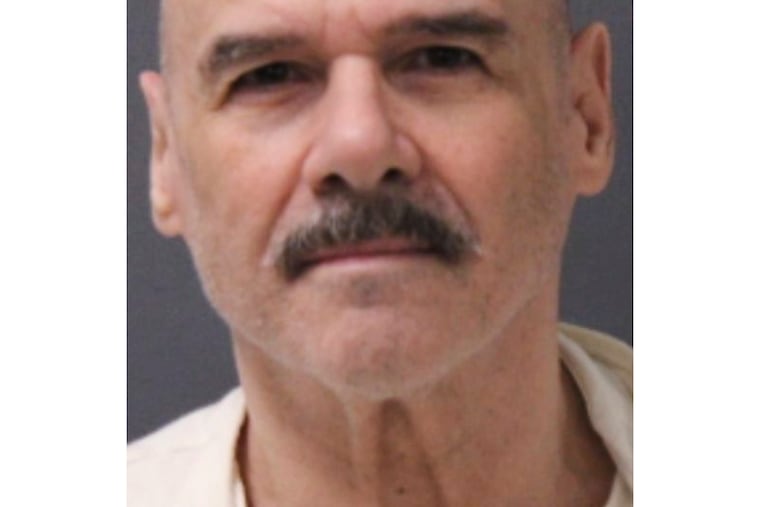
There was only one possible match: Harold Ashton, whose DNA profile had been added to the national database before his release from prison in 2009.
Pennsylvania State Police asked Clark to provide a sample of his DNA to authorities in Santa Barbara, Calif. Clark’s sample did not match what had been found at the Bonawitz crime scene.
Camera in tow, Wolfe headed back to Danville in August 2025. He’d had a conversation with Mattis, the district attorney, who led him to expect she would be making a big announcement. It seemed to be an ideal coda for his film project — and for the unsolved murder that has troubled Danville for generations.
But when he arrived, Mattis told Wolfe and his film crew that there would not be an announcement that day.
More than a year later, there still hasn’t been one.
Becky Steckley, of the Friday Night Murder Club, is among those waiting for Mattis to explain what happened.
“I’m sorry, but she is paid by the people who cared about Dorothy,” she said.
Yoder said the district attorney owes it to the community to announce the likely DNA match with Ashton.
“She doesn’t have to try this in a court of law,” he said. “Harold Ashton is dead. This is now in the court of public opinion.”
James, Clark’s defense attorney, said he sees in the actions of the current prosecutor and state police the same sort of problems he battled almost a half century ago.
“The only thing I can think of is this thin blue line that extends through the years,” James said. “I don’t get it. It bothers me a great deal. They have all the facts.”
State police declined to be interviewed for this story, saying the Bonawitz murder is still an open investigation.
In an interview with The Inquirer, Mattis described the DNA results that pointed to Ashton, and not Clark, as “a game changer.” But the trooper assigned to the case is still interviewing people, she said, and there are more tests to run on the DNA retrieved from the welfare office a half century ago.
“There are still leads worth pursuing,” Mattis said, adding that there could be other suspects.
“I would love to make an announcement and say we definitely know what happened to Dorothy Bonawitz and present a timeline, and that is what we’re hoping to get,” she said. “Whether we get there, I don’t know.”
In April, about 300 people showed up for a screening of Wolfe’s documentary at Bucknell University, where Dorothy Bonawitz had earned her master’s. It was just a rough cut. The film had no ending. It still doesn’t.

The Inquirer’s journalism is supported, in part, by the Lenfest Institute for Journalism and readers like you. News and editorial content are created independently of The Inquirer’s donors. Gifts to support The Inquirer’s high-impact journalism can be made at inquirer.com/donate. A list of Lenfest Institute donors can be found at lenfestinstitute.org/supporters.