Washington Township spent opioid settlement funds on license plate cams, police SUVs, according to NJ.com investigation
The Gloucester County township spent the dollars allocated for drug treatment, prevention, and education on Flock cameras and Chevrolet Tahoes.
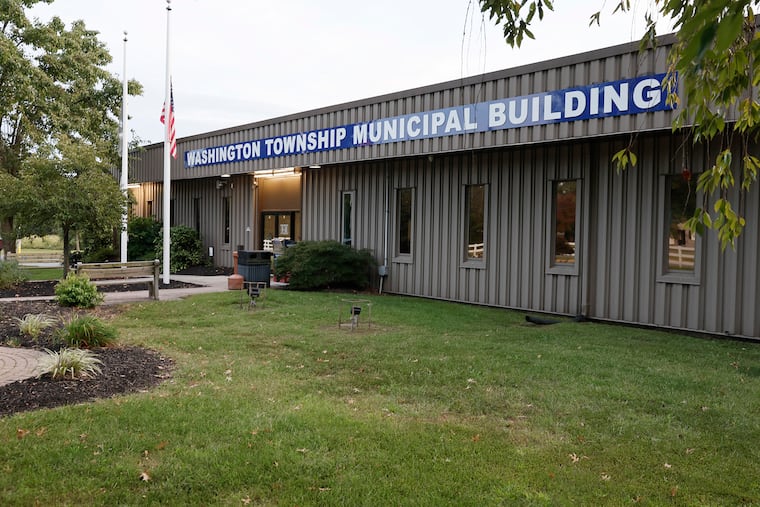
Washington Township didn’t spend any of its opioid settlement money on drug education programming in 2024 and 2025, after telling the state it was investing in “drug education,” NJ.com reported Friday.
Instead, the Gloucester County township bought SUVs and Flock surveillance cameras for its police department.
According to state data in the NJ.com report, Washington Township, the most populous municipality in Gloucester County, had the highest number of treatment admissions for heroin use in the county in 2025.
Plus, Washington Township “ranked among the worst 30% of municipalities” for heroin use treatment admissions per capita across the state during the peak of the opioid crisis, NJ.com reported.
Settlement money first came to New Jersey, its counties, and municipalities in 2022, after federal lawsuits against pharmaceutical giants and others implicated in the decades-long opioid epidemic gave officials across the U.S. access to funds earmarked for drug treatment, prevention, and education.
The New Jersey Office of the Comptroller reports that $1.1 billion will be distributed in the state by 2038, and about .25% of funds headed to New Jersey counties and municipalities has or will go to Washington Township.
In 2024 and 2025, Washington Township told the state that it spent $170,446.70 in settlement funds on a “school-based narcotics and education program” and “drug education,” according to documents NJ.com obtained through records requests and while analyzing the town’s “bill lists, meeting agendas, meeting minutes, audit reports, and social media.”
Township officials instead spent the money on “two 2024 Chevrolet Tahoe SUVs and 15 Flock surveillance cameras for its police department,” NJ.com reported. The township spent nearly $268,000 on the SUVs and cameras from November 2024 to April 2026, NJ.com reported, using the funding specifically allocated by the federal government for opioid remediation.
Currently, towns and counties self-report to the New Jersey Department of Human Services how they spend the settlement proceeds and are not required to routinely provide receipts or documentation. DHS told NJ.com that the department is not responsible for ensuring that municipalities spend the settlement funds appropriately.
There isn’t a clear process for tracking how municipalities spend opioid settlement dollars, NJ.com reported, or an accountability mechanism for when residents say their governments are spending the money wrong.
Sandy Gibson, an addiction researcher and counselor education professor, told NJ.com that the state should be held accountable for the township’s “egregious” spending habits, especially given the number of people admitted for opioid use treatment in Washington Township. In 2025, Washington Township saw 95 admissions for heroin treatment reported to DHS, but the state doesn’t say whether the people treated were residents of the 50,000-person township.
“I can’t see how there’s been no response or action taken to address that. Inaction at the level of the state is permission,” Gibson told NJ.com.
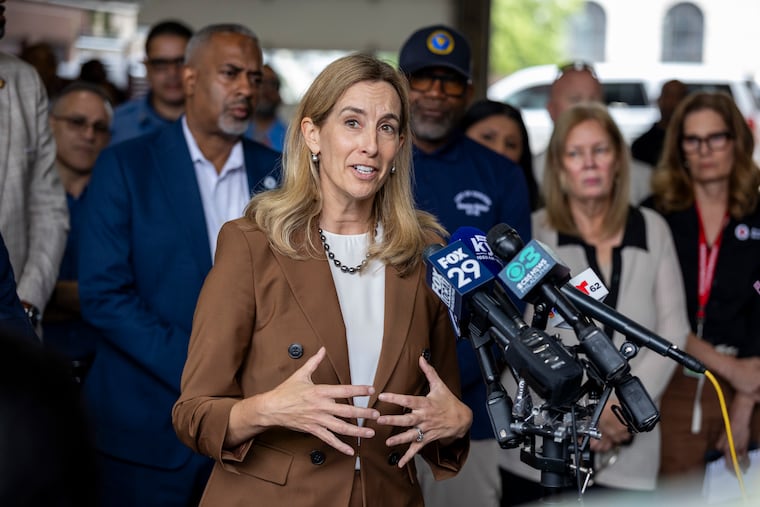
At a council meeting in September, Patrick Gurcsik, the township’s police chief, explained that the police department intended for the license plate readers to “play a role in breaking the cycle of addiction-related crime” in Washington Township. He said other states have also used the funds for the readers.
Local organizers across New Jersey have recently rallied against surveillance cameras, which track license plate data and store it for three years with state and local police departments.
“Moving forward, we are developing a master plan that will identify the needs of our community and establish clear priorities for future use of these settlement funds,” Gurcsik said.
On Sept. 23, the council passed a resolution, NJ.com reported, to advertise a request for proposals for “settlement fund consulting services.”
And on Monday, Cody Miller, a Democratic state assemblyman representing Gloucester County, introduced legislation to make state and local opioid settlement spending more transparent, including by educating counties and municipalities on the approved uses of the funds through a training program.
The state comptroller and Attorney General’s office reportedly declined to confirm to NJ.com whether Washington Township is under investigation for its spending.

Inquirer South Jersey