Cathy Engelbert did next to nothing to help the WNBA. Its next commissioner has to be a real leader.
The league has more talent than ever before. The games should matter most. But out of Engelbert’s lack of leadership, the WNBA has morphed into a cudgel in the culture war.
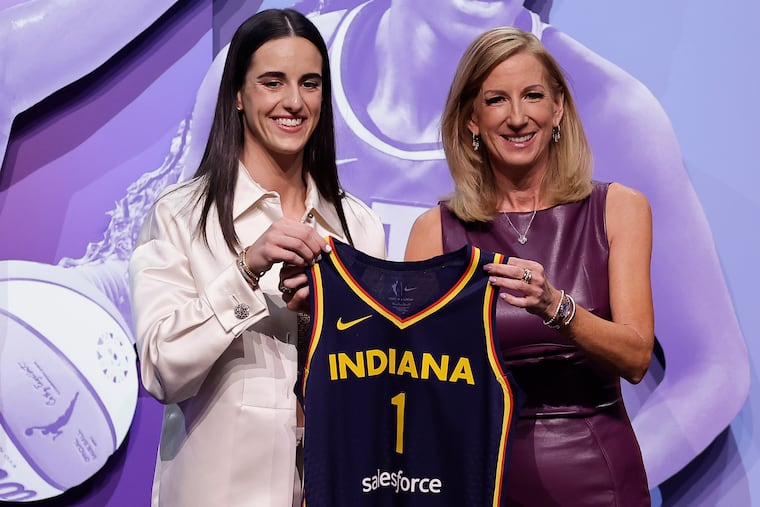
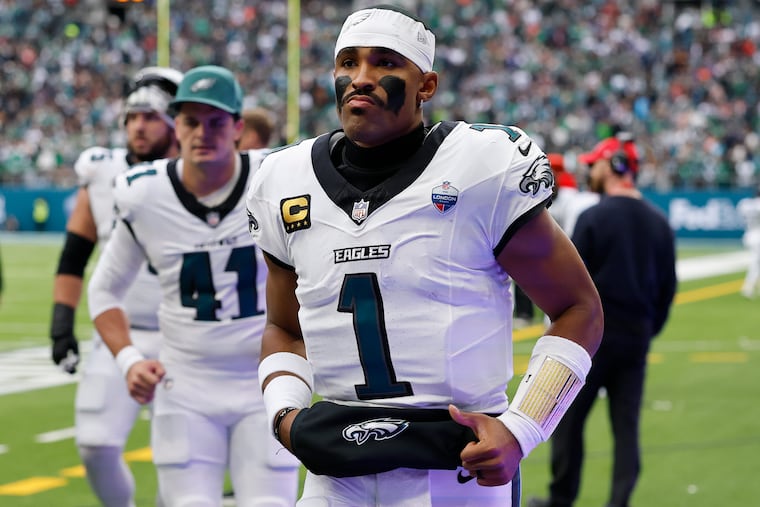
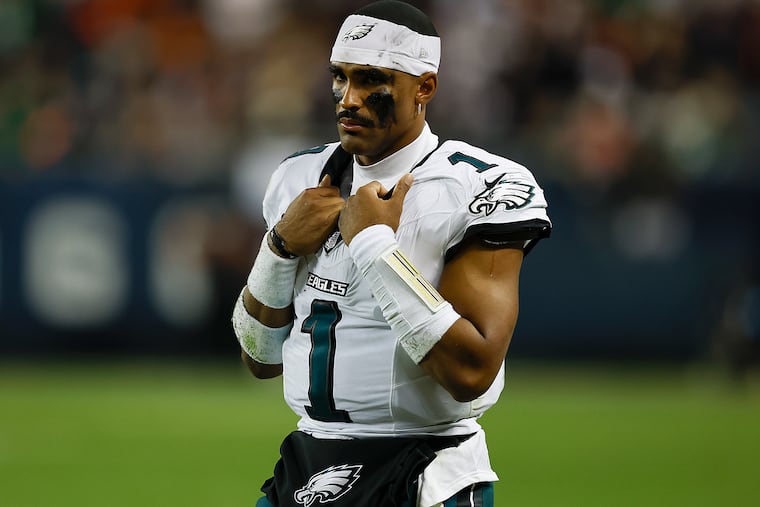
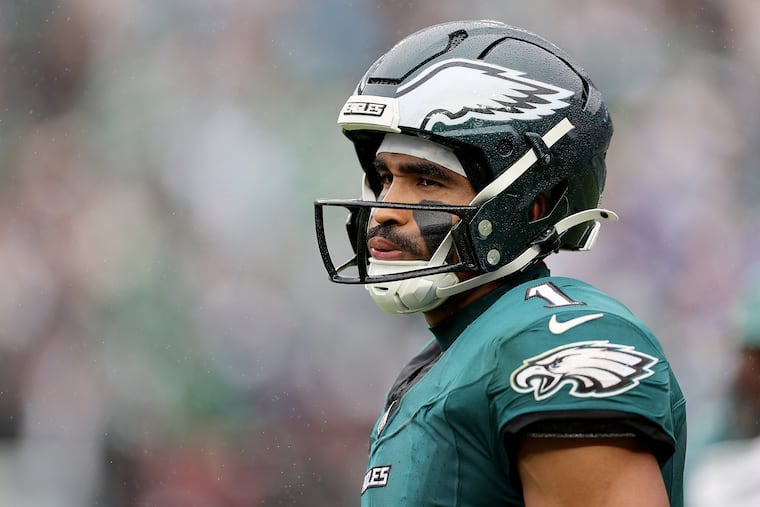
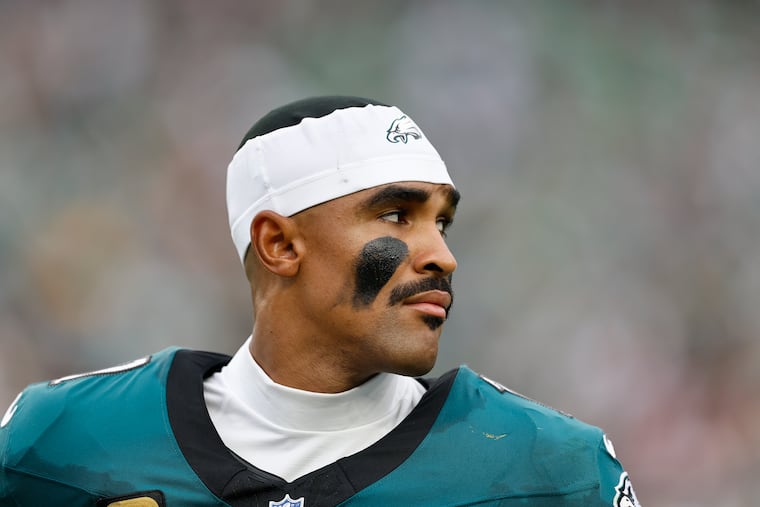
Cathy Engelbert was the Jalen Hurts of the WNBA, the subject of the same kind of questions about whether a prominent figure on a speeding ship was the captain or a passenger — except with her, the answers were more definitive and damning.
For these last few years, for the period in which the league has made its greatest gains in popularity, relevance, and quality of play, she was at best a nonfactor and at worst an impediment. The people behind those gains were the players, one in particular, and with the announcement Friday that Engelbert, a Collingswood native, was “retiring,” the WNBA has a better chance of accelerating its growth and calming the churning waters around it.
No one looks or will look at Engelbert’s tenure atop the WNBA and credit her for the league’s progress, and no one should. The rise of women’s sports in America, particularly of women’s basketball, already was a wind at her back when she became commissioner in 2019.
Title IX had been doing its good work on behalf of girls and young women for nearly two generations by then. Because the WNBA, founded in 1996, rarely has players to enter the league after leaving college early, women’s college basketball has been a fertile garden of talent and star power, feeding the league long before Engelbert oversaw it. UConn, Tennessee, Notre Dame, Baylor: These programs and others like them pumped out stars who had spent four years in school setting records and competing in Final Fours, whose names and games had become familiar before they’d ever signed their first professional contracts.
That tide turned into a wave that has crested with Caitlin Clark, with the woman who can lay claim to the title of the most popular and important female athlete in the United States. The NBA lifted off in the early 1980s — once talent poured in after the league merged with the ABA, once Magic Johnson and Larry Bird brought their rivalry to the Lakers and the Celtics — and the WNBA should be on its way to telling a similar story. It has Clark. It has A’ja Wilson and Paige Bueckers and Olivia Miles and Breanna Stewart. It has a depth and breadth of talent unmatched in its history. The games should matter more than they ever have. The games should matter most.
» READ MORE: Before she helped negotiate the WNBA’s ‘life-changing’ CBA, this Philly lawyer hooped at Lower Merion and Penn
Except … they don’t. Who wants to hear that story now? Out of Engelbert’s lack of leadership, out of her inability and unwillingness to speak simple truths in plain language or take strong stands to benefit it, the WNBA has morphed into a cudgel in the culture war.
On one side are the sexists and misogynists who don’t watch women’s basketball — and wouldn’t dare confess to tuning in even if they did — but whittle away their days complaining about the sport and attacking its athletes on Twitter/X. On the other are the activist players, coaches, fans and compliant media members so defensive and discomfited over the slightest criticism or question — about the inevitable byproducts of a major pro sport going mainstream and gaining a new audience — that they seem to wish that only people like them were permitted to play and watch and cover it.

Mike Sielski alerts
Engelbert let those sides squish her like a grape. It was bad enough for the league’s image, for its attempts to shake the perception that it was small-time in its operations and approach, that she botched the pronunciation of Golden State Valkyries coach Natalie Nakase’s last name when she presented Nakase (nuh-KAH-say) the WNBA Coach of the Year Award. That it took Clark’s presence and some timely social media posts before Engelbert stopped insisting teams fly commercial and instituted a charter flight program for the league. That her communication skills with the players were so poor that one, Napheesa Collier, felt emboldened enough to say that the league “had the worst leadership in the world.”
No, what has been worse is Engelbert’s cowing in the face of obvious problems with obvious solutions. The league should have started hunting for better, more qualified officials years ago, rather than waiting until May to … form a task force about the topic. Engelbert must have been living in a dream world when, according to Collier, she said that Clark and the WNBA’s other stars “should be on their knees” thanking the league for the prominence it has given them … when it’s actually the other way around.
But it’s the latest and silliest controversy — over the league’s policy, or lack thereof, on transgender athletes — that brought Engelbert’s weakness most clearly to bear.
» READ MORE: A.J. Brown and the Patriots vs. Jalen Hurts and the Eagles is the perfect rivalry for our hot-take age | Mike Sielski
Royce White and Enes Kanter Freedom are clowns for their publicity campaign to declare themselves to be women so they can join the league. A commissioner with any spine would have swatted them away like gnats simply by pointing out what everyone can already see: Royce, you’re 6-foot-8. Enes, you’re 6-10. You guys played in the NBA! Do you have any idea how pathetic you are for begging to be in our league?
A commissioner with any spine would have pointed out that FIBA, the IOC, and the USOPC already have policies that only biological females can compete in women’s sports, that the WNBA’s players follow those guidelines when they compete internationally — as they are right now, in the FIBA World Cup — and that the league’s policy reflects those policies. Instead, Engelbert has stayed silent, allowing the issue to fester, allowing this sideshow to dominate conversation about the sport.
This is a critical moment for women’s athletics and for the WNBA. The league is expanding, adding three more franchises in the next four years, including one here in Philadelphia. It has an opportunity both to solidify its existing fan base and build upon it. It has an opportunity to climb to a level that, just a decade ago, few would have thought reachable. It will need a new commissioner who can be more than the one Cathy Engelbert was, more than someone sitting on the deck, doing nothing to avoid the swells and crashes, more than someone just along for the ride.