One of the gloomier Septembers on record in Philly has come to a merciful end
September is usually one of the driest and sunniest months; better luck in October.
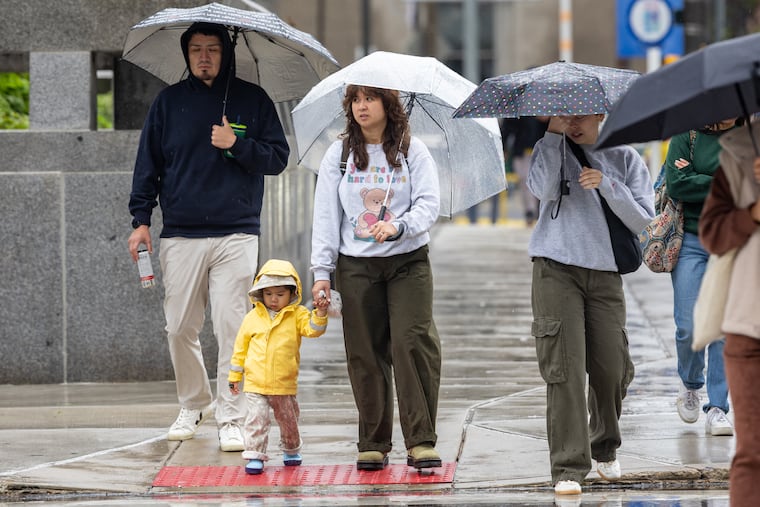
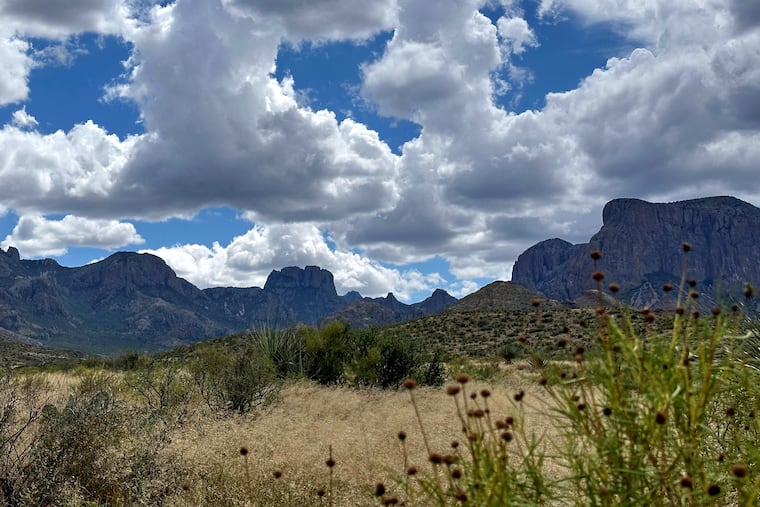
Given the remarkable gloominess of the last 30 days, it would be reasonable to believe that the sun had lost its will to shine.
It is due to make a comeback this month, at least for starters, but last month has entered the books as one of the wetter and cloudier Septembers in the period of available records.
Ordinarily, the September sun is some consolation for what is a month of rapidly shrinking daylight hours and lengthening nights. Not this time.
Officially, Philly had more than a half-foot of rain during a month when the daytime skies were more than 70% cloud-covered.
“Not your typical September,” said Ray Martin, lead meteorologist at the National Weather Service office in Mount Holly, who has his own hypothesis that includes an indirect connection with the burgeoning El Niño event in the equatorial Pacific.
For some folks, the gloominess is more than an aesthetic issue: It can have deleterious effects on mood and overall well-being, mental health experts advise.
“We’re losing daylight quite rapidly, and a stretch of cloudy weather like we’ve certainly had lately can make that change feel even more pronounced,” said Alan Jacobson, a psychologist practicing in northern New Jersey and a specialist in seasonal affective disorder, known as SAD.
What’s going on up there in the skies over Philly?
Perhaps both the sun and moon, whose fullness last weekend also was obscured by the clouds, had spent so much time out of the public eye they developed a certain shyness.
For the month, 18 days came close to or exceeded the criteria for “cloudy,” according to the weather service.
Unfortunately, sky-cover records are wanting since the agency radically changed the observation protocols — replacing humans with a sky-scanning machine — in the mid-1990s.
However, this September by far was the gloomiest since September of 2018, when close to 10 inches of rain was measured at Philadelphia International Airport. The 6.61 inches of September 2026 was the highest total since then.
As to why it has been so cloudy: “We’ve definitely had a lot of systems move through, a lot of moisture,” Martin said.
And why might that be?
This has become the longest wait on record for the first hurricane of the season in the Atlantic basin, as the warming of waters in the equatorial Pacific has interacted with the atmosphere to generate powerful storm-shearing winds from the West. It is at least possible that what’s not happening in the Atlantic has been a factor in the clouds over Philly.
“You could almost argue that the energy that normally would be expended in the tropics by hurricanes … maybe kind of worked its way north,” Martin said, but added: “That’s pure speculation.”
Whatever the cause, the lack of sun has not been exactly an energizer.
The effects of the lack of sunlight
To feel enervated and melancholy at times as the days shorten is a sure sign of normality, Phyllis Zee, a circadian and sleep-medicine specialist with the Northwestern University Medical Center, has observed.
The sunrise-to-sunset periods are shrinking by more than 2½ minutes daily in the Philadelphia region.
Plus, the sun is losing radiative power daily, and clouds dilute whatever reaches the surface.
Less light affects people in a variety of ways.
“For some people, reduced light can affect sleep, energy, concentration, and mood,” Jacobson said.
An estimated 5% of people experience serious symptoms of seasonal affective disorder, which is a form of depression, and 10% to 20% are affected by mild versions.
For those who do not require clinical intervention, Jacobson and other specialists advise that an excellent remedy would be to spend time in the sun (assuming it returns), especially in the morning
“Get outside and move your body daily,” said Tonya Ladipo, a Philadelphia therapist and founder of the Ladipo Group counseling service. “Even if it’s dark and cloudy, you’ll get some natural vitamin D in addition to the mood and energy boost that comes with being outside in fresh air.”
The sun is making a comeback
And the sun is due to dawn on the first day of October on Thursday, and it is at least possible that it will reappear every day for the next week as a weekend rain threat appeared to be backing off.
Showers are possible Friday night and Sunday night, but conditions certainly should not approach anything like last weekend’s.