Chester’s historic bankruptcy has no ‘deadline’ after 4 years and $19.3 million in state dollars
And the legal battle over water assets rages on.
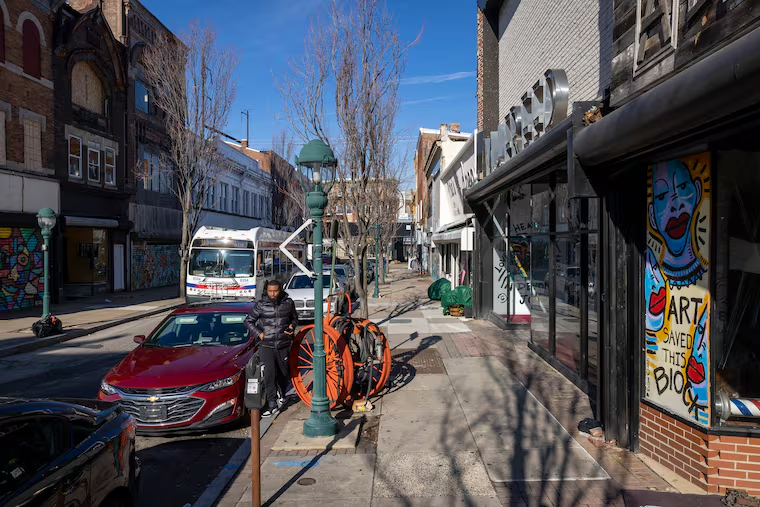
Entering year five of its rare and historic bankruptcy, at least the City of Chester no longer has to worry about retirees’ pension checks bouncing.
Chester’s fiscal condition has improved markedly since it entered receivership two years before the bankruptcy, as the state has spent $19.3 million in assorted administrative and legal fees.
But with an all-time logjam of litigation making the sale of valuable water assets more and more contentious, the city has marked another bankruptcy anniversary with no end imminent.
And legal experts advise that given the paucity of precedents, the outcome for the erstwhile industrial powerhouse is about as certain as the average seasonal weather forecast.
An analysis presented at a bankruptcy committee meeting Tuesday — coincidentally the fourth anniversary of the bankruptcy filing — concluded it would take $45.7 million to cover ”funding needs” in 2027. About 90% of that would be used for continued coverage of pension deficits. The police fund, for example, while far from fully funded, now has enough money to make payments for the next five years.
And given projected costs and the current state of revenue sources, even if it erased the pension shortfalls, the city would continue to run ever-increasing annual budget deficits that would grow to $36.8 million in the next decade, according to the analysis presented by Gordon Mann, managing director of Public Financial Management Group Consulting. About 20% of the town’s revenues come from a casino and an incinerator, and Chester’s 3.75% earned-income tax is Pennsylvania’s highest.
“This is the gap the city must address to exit bankruptcy,” Mann said.
Now, with those calculations, Chester is “ready to begin discussions with stakeholders,” including creditors and pensioners, said state-appointed receiver Vijay Kapoor.
» READ MORE: A brief history of Chester’s fall, rise, and fall
The bankruptcy’s end has no ‘deadline’
As for when the bankruptcy might end, Kapoor said, “I am moving with due speed to get things wrapped up as quickly as possible. … I don’t have a deadline in mind.”
Regarding potential money sources, it is at least possible the blue wave that gave Democrats control of the Pennsylvania legislature may work in Chester’s favor by making more funding available, said John Caskey, a Swarthmore College economics professor who is on the board of directors of the Chester Community Improvement Project. Michigan kicked in money to get Detroit out of bankruptcy, he noted.
“I think there’s a social justice argument for that,” he said. Chester, a predominantly Black city, hosts more subsidized-housing units than the rest of Delaware County combined.
Said Kapoor: “I am open to any solution, other than the privatization of the water assets.”
Liquid assets and the future of Chester
Kapoor’s comment was the session’s first and only reference to what has been an acrimonious dispute between the city and the Chester Water Authority over the control of water assets that are projected to generate more than $60 million in revenue next year. At one time, Aqua Pennsylvania had offered Chester $410 million for the authority.
The receiver’s office contends the city lost control of the authority, which it had created in 1939, by a legislative sleight-of-hand, which it has challenged in court.
The receiver’s office has said repeatedly it wants to sell the authority to a “public entity” that would not be beholden to investors.
“Back in my world, that is what we call magical thinking,” said Noel Brandon, chair of the water authority board.
He said the receiver wants the water authority’s 45,000 customers, most of whom are located outside Chester, to subsidize the fiscal problems of a city that has been in a state-designated distressed status for 31 years.
“You can’t loot an entity that had nothing to do with it,” Brandon said.
Chester’s history of distress
Chester’s situation has followed the arcs of other postindustrial cities that watched economies collapse, populations decline, poverty rates increase, and tax bases erode.
“Chester is not unique,” Caskey has said. “It’s just more extreme.”
The city entered distressed status in 1995 and receivership in 2020. The pension deficits mutated into a crisis.
The situation was so ominous, Mann said, that at one point the police fund had only two months’ worth of payments available and the city feared some checks might bounce.
The receiver took the city into the rare Chapter 9 bankruptcy in 2022.
“Chapter 9 is used so little, there’s a lot of uncertainty that comes along with it,” said Laura Coordes, an Arizona State University law professor who specializes in municipal bankruptcy. She said Chester’s choice was exceptional, in that most towns “would rather not go through the expense of a process where the results are hard to determine.”
The future of Chester
Barring resolution of the water-asset dispute or intervention by state government, reductions in pensions and retiree health benefits are likely.
Gov. Josh Shapiro sees “a long road ahead” for Chester’s bankruptcy, said spokesperson Rosie Lapowsky, but he “has confidence in Chester’s recovery.”
A fundamental issue in Chester is the need for more taxable real estate, Caskey said, but “I don’t think big taxable businesses are seeking to locate in Chester,“ nor are average incomes likely to increase in the near future.
Chester could use another entity to generate generous host fees, “a new version of the casino, or something like that,” he said.
On the plus side, the market value of city real estate has increased about 45%, adjusted for inflation in the last 20 years, according to state figures.
And one asset the city has is the mayor, Stefan Roots, along with a fiscally responsible administration, Caskey said.
Roots said bankruptcy overall has yielded benefits to the city.
“Four years ago, people talked about Chester problems,” he said. “Today, people are talking about Chester possibilities. Four years ago, the question was whether Chester could survive. Today, the question is how far Chester can go.”