Center City has more stores — but not all the ones shoppers say they’re looking for
A look at what Center City residents buy in their neighborhood and what they leave the area for.
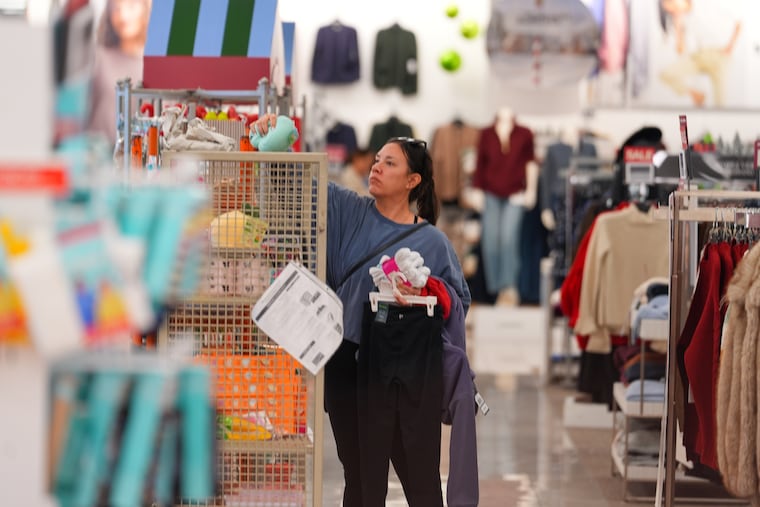
Retail occupancy in Center City is at its highest level since 2019, but shoppers say some of their favorite stores are missing.
According to a new survey from the Center City District, 72% of respondents said they leave Center City to shop at their preferred stores.
The lack of specific stores is “a key reason that they take their money elsewhere,” said Clint Randall, vice president of economic development at the business advocacy group.
Another reason for shopping outside Center City cited by 36% of respondents is that it’s easier to make larger shopping purchases with a car, and 22% said they leave the area for more affordable prices.
The survey, which garnered 400 responses in the last year from Center City residents and nonresidents, includes insight on locals’ shopping habits as well as the businesses shoppers most want to see in Center City.
Randall acknowledged that some categories of goods are hard to find in the area. Only 11% of survey respondents said they didn’t leave Center City for shopping.
“If I’m trying to run a quick errand at lunch, there are things like sportswear or bath towels — there are certain items where I think, ‘Where would I get that?’ and I actually have a hard time answering the question,” said Randall.
The aim of the survey was to gather insight on what kinds of things people feel are missing, he said.
“We were sort of trying to understand how strong of a draw is Center City for shoppers, and then also, what do the people who shop in Center City think is missing?” Randall said. ”At the end of the day, we want Center City to be the most appealing.”
What do shoppers want in Center City?
Roughly half of survey respondents said they want more department stores. Among other desired kinds of businesses are local boutiques, grocers and supermarkets, home and furniture stores, and fast fashion retailers.
Things that Center City residents do purchase in their neighborhood are health and beauty supplies, clothing, groceries, and books and media. And respondents were more likely to shop in Center City than a regional mall for items such as clothing, health and beauty supplies, and hardware and home improvement supplies.
But residents said they also leave the area to shop for home goods and furniture, appliances, and sporting goods.
Shoppers aren’t just going elsewhere in the region; many Center City residents shop online. Fifty-eight percent said they went online to buy home goods and furniture, while only 16% said they went to Center City for these items, and 20% reported going to regional malls. Just as many residents reported buying clothing in Center City than did so online.
Throughout the last two years, Center City District has also been gathering information about which specific companies shoppers want to see in the area. Atop the list are Zara, Nordstrom, Gap, Mango, and HomeGoods.
Among the 75 top businesses respondents want in Center City, 18 have had a location in the area and have since closed. Those include Williams Sonoma, Gap, and Macy’s, which shuttered last year.
“It is striking to me that a lot of the most requested stores are stores that actually used to be in Center City,” Randall said. “It’s not a question of attracting them here in the first place. It’s a question of how do you get them to consider coming back.”
Where have businesses been moving in?
The new insight on shopping habits in Center City comes as retail occupancy in the area has been inching up since the pandemic.
Today, 84.4% of Center City District stores are occupied, CCD noted in its report this week. That’s up from 82.5% in 2023. Still, that’s off from the high of 88.7% occupancy in 2019. (All counts are for the Center City District area, which is not the full expanse of Center City.)
Center City has experienced a net gain of 52 new storefronts, according to the report. Brands already in the area are also doubling down on their presence, with Lululemon and Mitchell & Ness moving into larger retail spaces recently and New Balance opening up in a new location as it modernizes its store.
But occupancy growth has been unequal across different streets. West Walnut Street, which has little retail space left, has led the rise. Chestnut Street East saw a slight dip in occupancy in the last year and has a lower occupancy of 69%.
“Brands are expanding, upgrading, and competing for the last open storefronts on our busiest blocks,” Prema Katari Gupta, CCD president and CEO, said in a statement. “The next challenge is helping that demand spill over to Chestnut, Market, and east of Broad, where large floorplates, easy transit access, and hundreds of new apartments provide opportunities to attract retailers Center City is missing and shoppers want.”
Not all new retailers can find a spot within a block of Rittenhouse Square, said Randall, adding that the area is “perceived as the most desirable within the market.” The hope is that retailers will consider opening along Market, Chestnut or Locust Streets or some of the numbered streets in the area, he says.
“We can establish new epicenters and new anchors in places that maybe don’t have the reputation of being big retail hot spots today, and hopefully we can start to see the retail environment continue to expand,” he said.