Permanent paid family leave is a boon for employees and employers | Expert opinion
Small businesses can get help from the federal government to bring this policy to their employees.
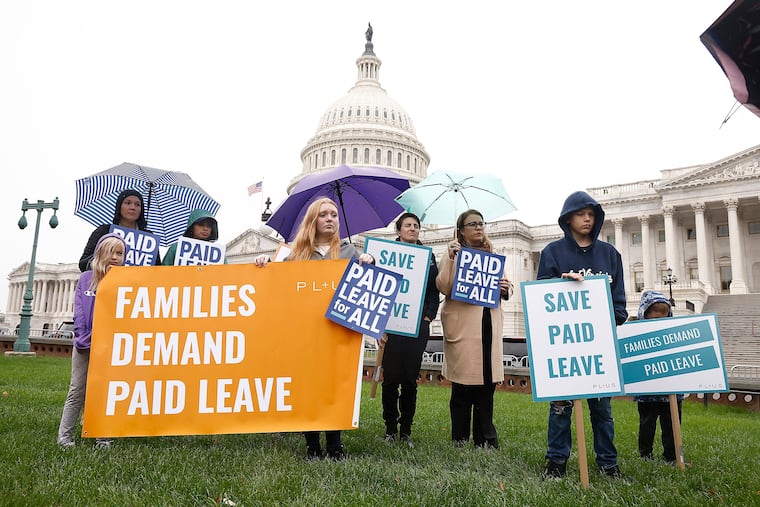
Emily Wielk, a senior policy analyst for working families at the Bipartisan Policy Center, says that she “hears consistently” that paid family and medical leave is a benefit that workers want and need to continue working.
“It is also a benefit that many businesses want to offer, but they are trying to determine the best way to manage the financial, compliance and administrative burdens,” she said.
It doesn’t matter how big or small your business is. Providing this benefit has become increasingly important for recruiting and retaining talent. The good news is that the federal government can help, and thanks to 2025’s One Big Beautiful Bill Act, more support is available.
Employer tax credit
Since 2018 there has been a generous tax credit available for employers who want to voluntarily provide some sort of compensation to their employees taking leave. It’s called the Employer Credit for Paid Family and Medical Leave under Internal Revenue Code Section 45S.
As long as you pay your employee a minimum of 50% of their normal wages while they are on leave, you can take a 12.5% tax credit on what you pay. The credit then increases by 0.25% for each additional percentage point of wages paid.
“If you offer the leave, you have greater certainty that the employee is coming back, and you can determine how to manage the gap in the interim,” said Wielk. “If you lose the worker, you will spend more time, money, and energy recruiting and trying to replace that employee.”
For example, if an employee normally earns $15,000 over 12 weeks and you pay the employee $7,500 while on qualifying leave, your business may receive a federal income-tax credit of $937.50. The more of the employee’s normal wages you replace, the larger the potential credit — up to 25% of the qualifying wages paid. So if you paid the full $15,000, your credit would be $3,750.
To claim the credit, you must have a written policy and provide two weeks of paid leave (not vacation or sick time).
If you own a pass-through business, like an S corporation or partnership, you can still claim the credit against the taxes you owe. If the credit is larger than the taxes you owe, you can carry it forward for up to 20 years. Highly compensated employees — those making $96,000 or more per year — are excluded.
“One specific thing the Section 45S credit does is encourage businesses to offer the benefit specifically to lower- and moderate-wage workers — not just necessarily to their C-suite or higher-wage earners,” said Wielk. “It is designed to ensure that workers who typically don’t have access to the benefit are getting access.”
Updated guidance
Earlier this month, the Treasury Department and Internal Revenue Service provided interim guidance on the expanded credit (more comprehensive proposed regulations are expected.)
Among these changes: Employers who purchase insurance providing paid family and medical leave benefits may now calculate the credit using qualifying premiums rather than wages actually paid during leave. It also potentially allows certain employers to use the credit where leave is required by a state or local government (such as New Jersey and soon in Delaware).
Previously, only wages paid to employees who worked for a company for a year were eligible, but that requirement was relaxed to six months. For 2026, employees who earned more than $96,000 are excluded. Most importantly, the credit has now been made permanent. Previously it came up for renewal every few years.
Stability promises
Wielk says that for Section 45S in particular, the fact that it was a pilot program created uncertainty. She believes that even when businesses knew the credit existed, they couldn’t be sure it would still be there four, five, or six years down the road.
“Many businesses were hesitant to use it for a few years and then have to assume the entire financial burden if the credit expired,” she said. “I think that uncertainty deterred some businesses from utilizing the credit.”
According to Wielk, the data “is very clear” that when workers have access to paid family leave, it boosts employee morale and increases loyalty to the business.
“It allows employees to take the time they genuinely need away from work with the knowledge and security that they can come back,” she said. “That has ripple effects on their ability to return and be productive.”