Could EVs be on the rebound after the post-rebate cliff?
While U.S. sales are down from 2025, there’s been growth in 2026. Add in higher gas prices, more models from trusted brands, and more charging at a leading retailer, and a bright spot is emerging.
Followers of automotive industry news would think the end of electric vehicles is at hand.
Honda has dropped its Prologue and taken a huge hit financially. Hyundai, Kia, and Volvo have also dropped models or EV trim levels from their lineups.
The cancellation of $7,500 federal tax credits and the subsequent nosedive in sales last October made the automakers’ choices and the conventional wisdom seem sound.
But even in the darkness, some glimmers of hope shine through for EVs: Sales have rebounded slightly; two popular brands have added models; used EV prices are experiencing a surprising change, and the largest retail chain in the U.S. is adding more EV chargers across many locations.
“Now we’re starting to see the demand pick back up,” said Sam Fiorani, vice president of global vehicle forecasting for AutoForecast Solutions in Chester Springs. Shoppers are “finding the prices aren’t going to be that much different than they were even with the incentives a year ago.”
‘Underlying demand’ for electric cars
EVs numbered just under a quarter-million units in the second quarter of 2026, according to Kelley Blue Book, compared to 3.5 million or so combustion-engine cars and hybrids.
EV sales volume was down 20.5% year-over-year. But second-quarter sales rose 14.7% over the first quarter.
Even working with small numbers, that’s a hefty rise in demand.
“There’s still an underlying demand for EVs,” Fiorani said. “It’s just that we pulled ahead six months’ worth of sales [right before rebates ended] and now the market is right-sizing itself and balancing out in the post-incentive world.”
In the Philadelphia region, EV sales dropped 28% from the first half of 2025 to the first half of 2026, mimicking the national trend. The market share of EVs went from 5.2% in the first quarter of 2026 to 6.3% in the second. But that’s down from a high of 9% in Q3 2025.
“The driving force now behind electric vehicles is more economy,” said Mike Gempp, executive director of the Auto Dealers Association of Greater Philadelphia. “Whenever gas prices get high, people start to look at alternatives to try to not tap into the pump as much.”
Stephanie Valdez Streaty of Cox Automotive said she expects 2026 to end with a 6% national market share for EVs.
“The next phase of EV growth will likely be driven not only by advances in the technology itself, but by how effectively automakers translate those advances into products that meet consumer expectations for affordability, utility, performance, and ownership experience,” Valdez Streaty, a director of industry insights, wrote in a recent Cox report.
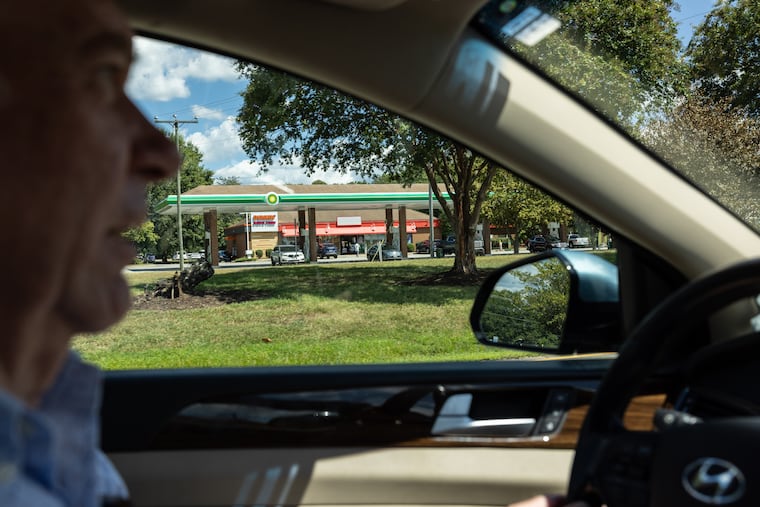
Add in rising prices at the pump after the Iran war started in February, and consumers are starting to consider alternative modes of power.
Gasoline prices in Pennsylvania averaged $4.45 per gallon on Sept. 10 and $4.36 per gallon in New Jersey, AAA reports. That’s up from $3.36 and $3.17, respectively, one year ago.
Which hybrids and EVs are drivers buying?
Analysts agree and the numbers show that people have been turning more toward hybrids these days.
Hybrid vehicles, which feature a battery and motor recharged and powered by the engine, regenerative braking, and other features, can stretch gasoline usage by 20% or more.
In the Philadelphia region, hybrid sales were up 13% in the first half of 2026, comprising 18.1% of new vehicles sold, according to Gempp.
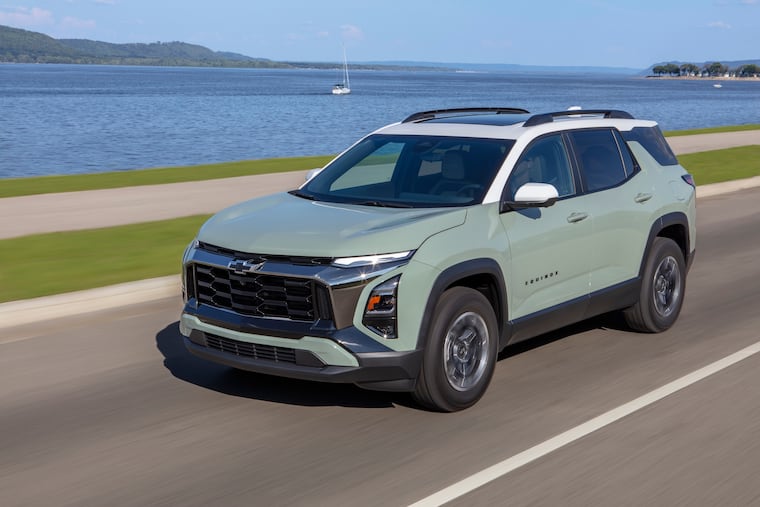
But EVs have another factor going for them in 2026: Two of the most trusted brands have gotten into the EV market in a big way this year.
Toyota and Subaru have teamed up to make four shared EVs for each brand. The small Toyota CH-R and Subaru Uncharted; midsize Toyota bZ, Subaru Solterra, and Lexus RZ; and Toyota bZ Woodland and Subaru Trailseeker SUVs are on showroom floors now. The three-row Toyota Highlander and Subaru Getaway SUVs are scheduled to arrive in the fall.
This shows through in market share, Valdez Streaty points out: Toyota’s EV sales are up 124% year over year.
Toyota and its luxury marquee, Lexus, have been showing up as the most reliable brands in surveys for years. Toyota also has a lot of experience in electrification with hybrids, as a pioneer when it brought the Prius to the United States in 2000.
Subaru has developed its own niche among outdoorsy, eco-conscious buyers (with a fondness for dogs) and reached number two on a recent Consumer Reports reliability survey of new vehicle brands, between Lexus and Toyota.
“Subaru has a standard clientele that would be very easily added to the EV market,” Fiorani said. “They’re typically a little more eco-friendly. They like the idea of going outdoors but not rock crawling, but the products that Subaru and Toyota have come out with fit into that mold perfectly.”
Subaru dealers are seeing that interest in EVs and hybrids.
“Although we are seeing a very slight uptick in EV interest with Subaru, I don’t necessarily credit that to increased market demand for EV as a whole,” said Jeff Glanzmann, general manager of Glanzmann Subaru in Willow Grove.
The real surge in demand has been for the new Subaru hybrid models, now offered in the Forester and Crosstrek, Glanzmann said.
Yet more evidence of the interest is reflected in used EV prices.
Used EV prices — which generally experience a horrendous depreciation over new prices — are up 7% for the year through mid-July, CNBC reports.
Increasing convenience for EV drivers
And in a final piece of the EV positive news puzzle, charging may get a little more reliable outside of metro areas.
In Pennsylvania, Gov. Josh Shapiro’s administration announced this week that $11 million of federal funding through the National Electric Vehicle Infrastructure (NEVI) program will be used to add EV chargers in the central region of the state, filling in a real gap for EV drivers. The state has already built 50 chargers under the NEVI program, more than twice any other state, and has 41 more under construction, according to the Pennsylvania Department of Transportation.
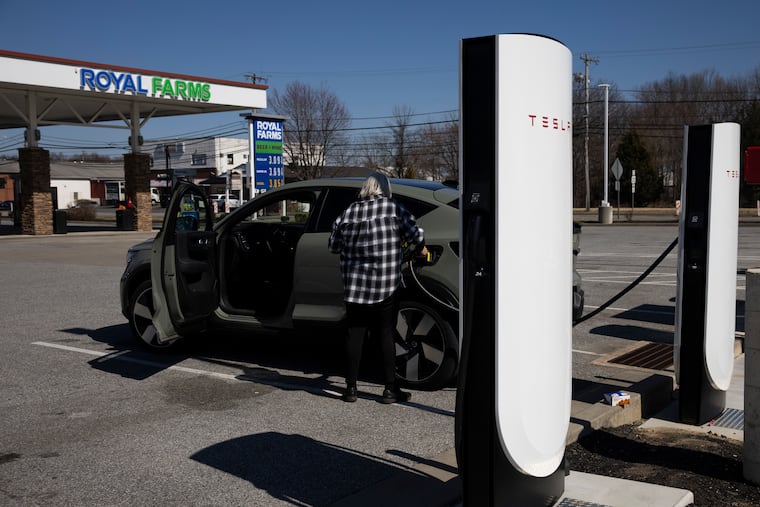
Other charger changes are also afoot. While Tesla has long been the charging leader in the U.S., Walmart is now number two, according to Bloomberg. Between January and June, Walmart added 46 public charging stations with 380 plugs.
A Walmart spokesperson said via email that it has chargers at more than 75 stores and plans to continue expanding, noting that many sites will feature eight to 16 fast-charging stalls.
Though Walmart declined to elaborate on its plans, automotive industry publication Jalopnik reports 145 new charging locations are coming soon. The greatest expansion will be in Texas with 37 new locations, Florida with 15, Illinois with 14, and North Carolina with 13.
Currently, the only Walmart in Pennsylvania with charging is in Cranberry Township, outside Pittsburgh. In New Jersey, the sole location is in Freehold.
Gempp sees how charging speeds — usually requiring 20 minutes to an hour depending on the charger and the vehicle — could be a win-win for consumers an Walmart, though he wondered if the company had outlined its EV charging strategy when more EVs were selling.
“Inherently it’s a smart idea, but the investment to get those charging stations installed in a market that is shrinking or has shrunk is one that I’m sure that Walmart is reassessing,” Gempp said.
But on a planet where 25% of new car sales are EVs, the United States’ 5% is an outlier.
Fiorani is not an EV owner but is a fan, having tested so many in his role as reviewer for AutoForecast Solutions that he has installed a 240-volt charger in his garage.
“The more experience people get with an electric vehicle, the more they’re going to realize that it fits into their lifestyle and that it’s not that inconvenient for them,” Fiorani said. “The conveniences outweigh the inconveniences by a long margin.”