Philadelphia gained tens of thousands of degree-holding residents in the last decade — but office jobs aren’t growing
Mid-career residents aged 35 to 44 years are leading the growth amid Philadelphia’s talent pool of degree-holders.

Philadelphia has added tens of thousands of degree-holding residents to its talent pool in the last decade — and mid-career workers are leading that growth. But the expanding educated talent pool isn’t growing Philadelphia’s office sector, a new report indicates.
Philadelphia gained over 41,000 residents aged 35 to 44 years old between 2014 and 2024 with at least a bachelor’s degree, according to a new report from the Center City District, a business advocacy group. In that age group, Philadelphia ranks first for growth amid the 25 largest U.S. counties, the report indicates.
This new insight “challenges the outdated notion that Philadelphia is a great place to be young, but somewhere you eventually have to leave to establish a career or family,” said Jennifer Kebea, president at Campus Philly, which works to retain graduates in the Philadelphia region. “We are increasingly a place where people see a future for themselves.”
The report looked at the number of Philadelphia County residents who had at least a bachelor’s degree between 2014 and 2024, the latest year available from the U.S. Census Bureau American Community Survey five-year estimates.
Degree holders aged 25 to 44 years old grew 62% in Philadelphia in the past decade, landing the county second among the 25 largest counties nationwide, behind Austin.
The talent pool of 18- to 24-year-olds with a degree grew 11% over a decade. Those aged 35 to 44 who have at least a bachelor’s degree grew nearly 87%, according to the report.
» READ MORE: Gen Zers like what Philly has to offer, but they want better pay and more work opportunities, survey says
The fact that recent graduates aren’t the main drivers of the talent pool growth with college degrees echoes a report released earlier this year by the Pew Charitable Trusts. In it, researchers highlighted how some Gen Zers in Philadelphia feel like jobs in the medical sector abound, but they need to look beyond the city for jobs in tech, finance, and the arts.
Still, more of these young people are staying in Philadelphia compared to decades ago, says Kebea. In the last 20 years, her organization has mapped how Philadelphia has gone from retaining one in four graduates to over 50% of them.
“We’ve been intentionally working to attract, engage, and retain college students and graduates, and this research just reinforces that we’ve made real progress,” said Kebea. “Our higher education institutions are just extraordinary economic assets, and the region has become increasingly successful at converting that talent pipeline into residents who choose to build their lives here.”
No office-sector job growth
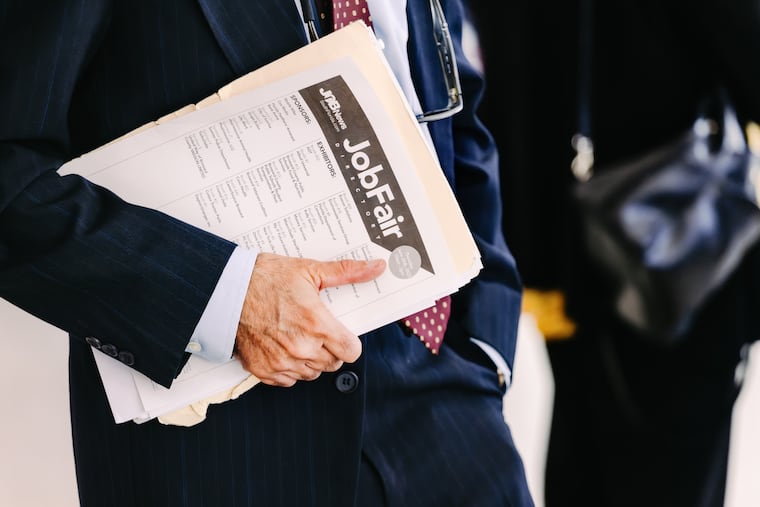
As Philadelphia has added degree-holding workers to the region, office jobs haven’t kept pace, the report highlights.
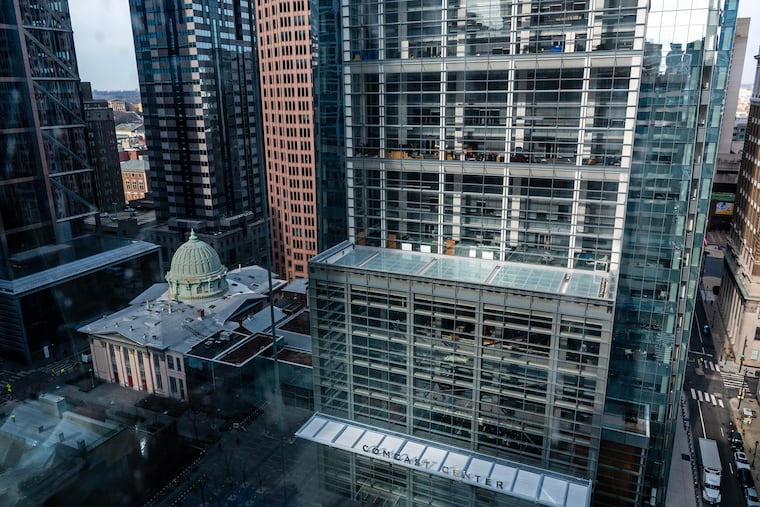
Philadelphia had nearly 119,000 office sector workers in 2025 — roughly the same amount as in 2019. Those jobs include positions in industries such as finance, information, real estate, and professional services.
The report points to healthcare and social assistance being the main drivers of job growth in Philadelphia, adding some 33,540 jobs since 2019.
“With talent booming, there needs to be more jobs,” said Clint Randall, vice president of economic development at the Center City District, who sees room for growth for local office jobs.
» READ MORE: Philadelphia has strong job growth – but not in industries that help fill office vacancies
“I don’t think that people recognize just how good a job Philadelphia has done attracting highly educated younger people,” he said. “One of the reasons there’s maybe not great awareness of that is you would expect there to be more of a response from the job market in terms of companies wanting to locate here, grow here, establish some kind of presence here.”
Still, the office sector has seen some recent successes in Philadelphia, Randall said. He pointed to Burlington Stores relocating its headquarters from South Jersey and JPMorgan Chase & Co. expanding into 2400 Market St.
Some offices in Center City are converting into residential units, which Randall says is “actually a fine idea” given “a lot of antiquated and essentially unusable office space in Philadelphia.”
“The buildings that are getting taken offline for conversions, even in a booming office economy, they would not be strong contenders for new tenants looking to have a presence in Center City,” he said.
The city doesn’t have a lot of “really high quality office space,” Randall said, so if office sector jobs see growth in the future, new office space will need to be built.
“If we are successful in attracting more office jobs, we would find ourselves with a different problem, which is a great problem to have,” he said.