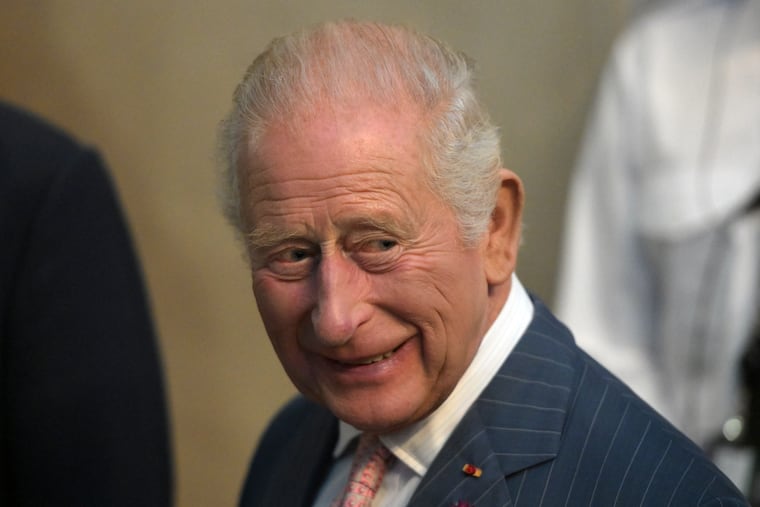
Is Bradley Cooper really from Jenkintown? We investigate.
Many people think Bradley Cooper is from Jenkintown. But like many Abingtonians, he's living a lie.
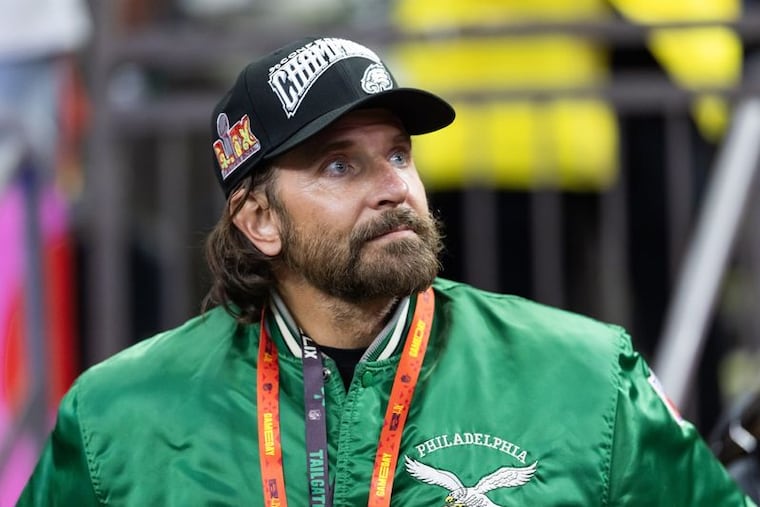
Unlike Philadelphia — a city, county, and school district all in one — the collar counties are a mesh of townships, boroughs, and informal neighborhoods.
That geographical maze, along with the centuries-long evolution of the U.S. Postal Service, means some suburbanites are not even sure what town they live in.
Which may explain why one of Montgomery County’s most famous sons, former Daily News contributor Bradley Cooper, is often reported to be from Jenkintown, but he is not.
He is from Abington Township and, like many Abingtonians, he has been living a lie.
Where is Bradley Cooper from?
Cooper grew up not in Jenkintown, but a mile away in the unincorporated Abington community of Rydal, in a house his parents bought before he was born, property records show.
In the 1980s, he attended Rydal Elementary, where he played a mime, according to a playbill shared on social media.
The Oscar-nominated actor later enrolled at Germantown Academy, a private school in Whitemarsh Township whose reunions he still attends.
Cooper is known to call nearby Jenkintown his hometown from time to time — maybe because the borough is more well-known, and because that is what his childhood mailing address was. His reps did not return a request for comment this week.
Some Abingtonians don’t know where they live
But unlike people who grew up in the tiny enclave, Cooper could not have attended Jenkintown School District or participated in its National Geographic-famous Color Day.
“As someone who grew up in Jenkintown and loved cute boys and is about the same age as Bradley Cooper, I can tell you he is not from the Borough of Jenkintown,” writer Lauren McCutcheon said.
Many Abingtonians think they live in J-town, borough manager George Locke has said — so much so that his staff starts resident service calls by asking for an address. Otherwise they could spend 45 minutes on the phone, Locke said, before realizing the caller is in Abington.
Residents of unofficial neighborhoods like Glenside, or towns that span counties like Telford, may be more aware of their official designation. Some Glensiders attend school in Cheltenham, while others attend Abington School District.
For people without a kid in public school, an invisible municipal boundary may not matter much day to day. But it matters for local elections and during tax season.
Nye Stevens, a longtime Postal Service expert for the U.S. Government Accountability Office and the Congressional Research Service, said mailing addresses can also affect people’s insurance rates, which are often based on zip code instead of municipality.
And a zip code across two towns is nothing, Stevens added — some people get their mail from another state.
Bob O’Brien of Wyncote used to think his practice, Relief Counseling & Art Therapy, was located in Jenkintown — until the tax bill from Abington arrived.
“It was confusing,” O’Brien said — especially since there is a Jenkintown post office in the same building.
“How it got this way, I’m not sure,” he added.
The demands of mail delivery
U.S. post offices began primarily as a pickup service in cities until the agency introduced home delivery in the late 1800s.
Then cars expanded the suburbs, townships shifted, and assigned post office locations grew increasingly messy.
“As townships grow, post offices seem farther away,” a New York Times headline about South Jersey observed in 1997.
The U.S. has also closed tens of thousands of post offices in the last several decades, Stevens said, which may mean losing a mailing city that reflects where people actually live.
Around 1990, some in Congress tried to fix the issue with a bill requiring the Postal Service make zip codes match municipal boundaries if towns request it.
But such a change would “absolutely ruin the postal system,” Stevens said. “You can’t have a post office for every little borough.”
The bill failed, and years later, the Postal Service was routinely rejecting zip code change requests, Stevens wrote in a 2006 Congressional Research Service report.
“Some communities that lack delivery post offices complain that the need to use mailing addresses of adjacent areas robs them of a community identity,” he noted in the report.
But at the end of the day, “zip codes are basically a delivery system. They’re not a neighborhood recognition system,” Stevens said this week.
As for Bradley Cooper, the confusion around his addresses in the Philly suburbs has not ended.
He supposedly owns an estate in New Hope. But he really lives in Solebury Township.

Inquirer Greater Abington
This suburban content is produced with support from the Leslie Miller and Richard Worley Foundation and The Lenfest Institute for Journalism. Editorial content is created independently of the project donors. Gifts to support The Inquirer’s high-impact journalism can be made at inquirer.com/donate. A list of Lenfest Institute donors can be found at lenfestinstitute.org/supporters.