How an Edgar Allan Poe manuscript survived fires and trash heaps to end up in the Free Library’s rare books collection
“The Murders in the Rue Morgue,” considered the world’s first work of detective fiction, has a preservation history that is just as fascinating as its plot.
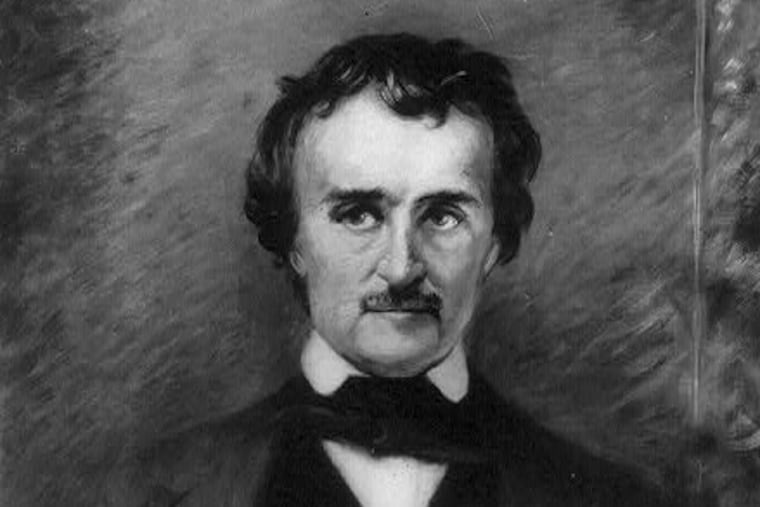
Edgar Allan Poe moved from New York to Philadelphia with his teenage wife, Virginia, and mother-in-law, Maria, in 1838.
He had already published his first book, Tamerlane and Other Poems, in 1827, but was yet to write a commercially successful novel. So he moved to Philadelphia, then the heart of the publishing industry, for a fresh start.
Poe found work as an editor at Burton’s Gentleman’s Magazine in 1839. In 1840, Saturday Evening Post’s editor George Graham bought Burton’s and the literary magazine Atkinson’s Casket, merged them, and formed Graham’s Magazine. Poe was hired as editor of Graham’s in February 1841 and was paid an annual salary of $800. Under his leadership, the publication became the largest literary magazine of its era, with a readership of 35,000.
On April 20, 1841, Poe, who had since turned his literary focus to short stories, published “The Murders in the Rue Morgue,” considered the world’s first work of detective fiction. Its protagonist, the nosey C. Auguste Dupin, was a figment of Poe’s imagination before detectives even existed.
The Philadelphia Historic District will celebrate Poe’s macabre short story this Saturday, from 11 a.m. to 1 p.m. at the Edgar Allan Poe National Historic Site. The three-story brick building, which was closed two years ago for safety upgrades, is being reopened for Saturday’s “Firstival” festivities.
Firstivals are weekly parties honoring important people, places, and events with Philadelphia roots.
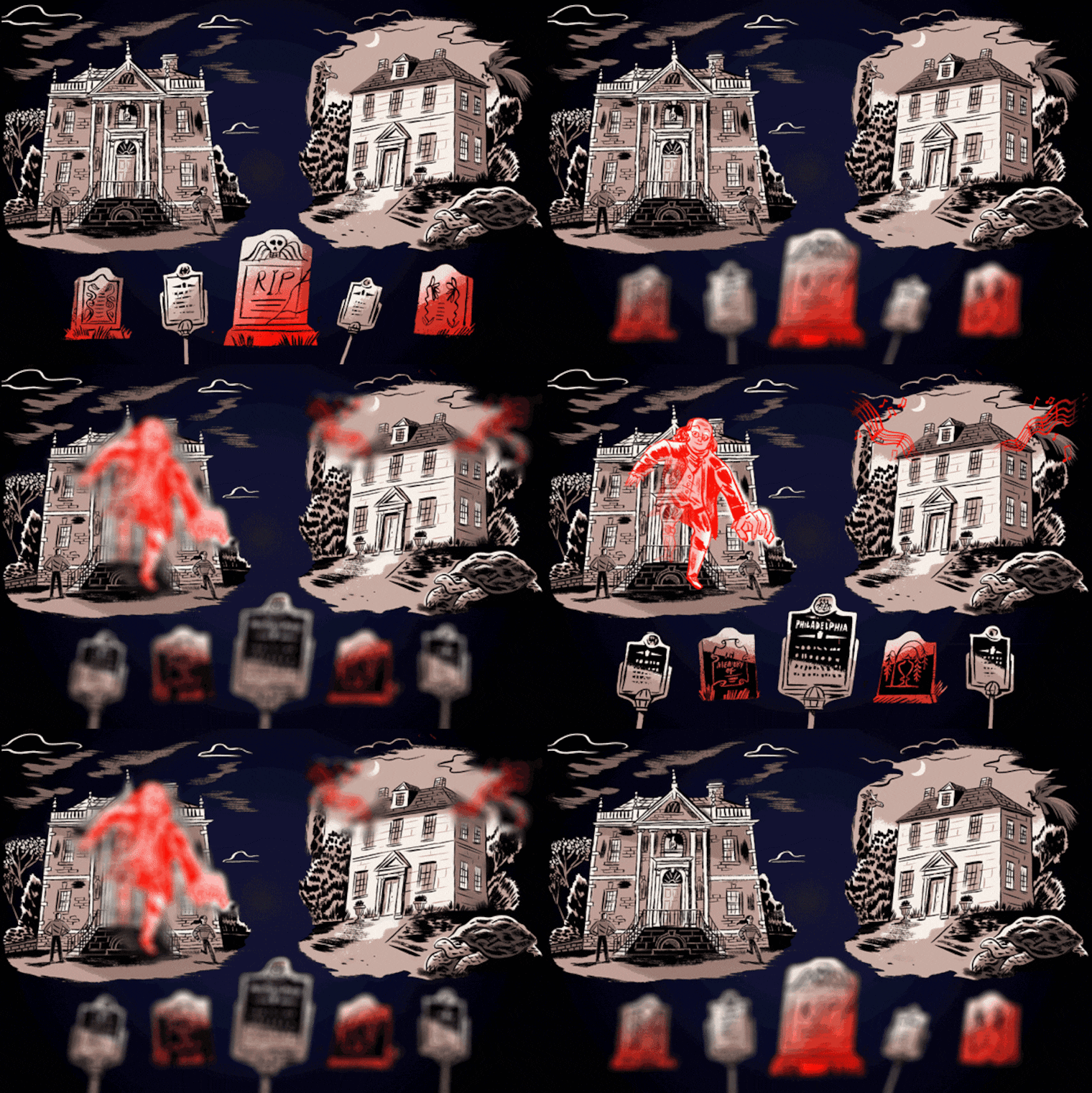
For years, the Spring Garden site hosted popular Halloween parties as a nod to Poe’s knack for chilling and spooky works like “The Raven.” The dark, 18-stanza poem was published in the New York Evening Mirror in 1845, a year after Poe moved back to New York City.
Historians speculate it was written when he still lived in Philadelphia, in his 19th-century home at 532 N. Seventh St., now designated as an historic site.
Poe, who also rented homes in today’s Old City, Rittenhouse Square, and the Art Museum neighborhoods, was most prolific during the eight years he lived in Philadelphia, says Michael Carbonaro, the park ranger at the Edgar Allan Poe National Historic Site.
Here, Poe penned several of his most popular works, including “The Black Cat,” “The Gold Bug,” “The Tell-Tale Heart,” and “The Pit and the Pendulum.” He also published two additional Dupin detective stories: “The Mystery of Rogêt” and “The Purloined Letter.”
“‘Murders’ is so masterfully done,” Carbonaro said. “And it’s the very beginning of a beloved literary genre. Sir Arthur Conan Doyle freely admits Dupin is the inspiration for Sherlock Holmes.”
And Columbo. And Matlock. And Nancy Drew. And Jessica Fletcher. And so on.
“The Murders of the Rue Morgue” is set in Paris, but historians agree Philadelphia inspires the plot with the kind of ghastly crime that was on the rise in the city in the 1800s.
In the story, the disfigured corpse of a mother and daughter are found in a French flat. Dupin learns of the killings from newspaper accounts, visits the scene with the anonymous narrator, and determines the murderer is an orangutan gone wild, outwitting the police.
An orangutan was featured in an exhibit on Penn’s Landing in 1839, capturing the city’s attention decades before the Philadelphia Zoo opened in 1874.
Also, while Poe lived in Philadelphia, his wife suffered a ruptured blood vessel while singing. Blood gushed from her mouth, inspiring Poe’s descriptions of one victim’s severed head in “Murders.”
The short story went on to be adapted for the stage and movie and TV screens. The first movie version, in 1932, starred Bella Lugosi as the sailor responsible for the orangutan.
The cause of Poe’s death on Oct. 7, 1849, in Baltimore remains a mystery. He was first buried in the back of Baltimore’s Westminster Hall and Burial Ground in an unmarked grave and then in 1875, was moved to the front of the cemetery under a monumental headstone.
Thanks to America’s love for Poe’s ghost stories, the manuscript of the written-in-Philadelphia “Murders” took on a life of its own.
After the story was published in 1841, printer’s apprentice and Poe aficionado J.M. Johnston rescued the original manuscript, written in Poe’s delicate cursive, from the trash, took it home, and stashed it in a book. The manuscript survived several house fires and got accidentally thrown away before it was yet again rescued from a trash heap.
Johnston had the manuscript bound in 1869, according to a 1944 article in The Philadelphia Inquirer. Philanthropist and newspaper owner George W. Childs purchased the manuscript from Johnston for $200 in 1881. (About $4,995 in today’s money.)
Childs died in 1894 and bequeathed a bevy of literary works, including the handwritten manuscript of “Murders” as well as Poe’s acquaintance Charles Dickens’ final novel, Our Mutual Friend, to Drexel Institute. The two met when Dickens was in Philadelphia visiting Eastern State Penitentiary. Childs was a lifelong friend of A.J. Drexel.
For 50 years, the manuscripts were stored in a vault at Centennial National Bank, which is now Drexel’s Paul Peck Alumni Center at 32nd and Market Streets.
In 1944, Richard Gimbel, grandson of Adam Gimbel, who founded Gimbels department store, purchased the manuscript of “Murders” through Philadelphia-based collector and dealer Charles Sessler. (Financier J.P. Morgan bought the Dickens’ manuscript at the same 1944 sale.)
Gimbel, the foremost collector of Poe memorabilia, bought Poe’s house in 1937 for $7,000, according to his 1970 obituary in the Philadelphia Daily News. Gimbel amassed more than 20,000 of Poe’s original items and turned the house on Seventh Street into a memorial to Poe before willing it to the city upon his death.
Today, the “Murders” manuscript is housed in the Free Library of Philadelphia’s Rare Book Collection.
This week’s Firstival is Saturday, Oct. 31, from 11 a.m.-1 p.m., at the Edgar Allan Poe National Historic Site, 532 N. Seventh St.
Each week, The Inquirer is highlighting a “first” from the Philadelphia Historic District’s 52 Weeks of Firsts. A “52 Weeks of Firsts” podcast, produced by All That’s Good Productions, drops every Tuesday.