Security chief to run schools like a police department
A new safety plan aimed at improving the climate in some of the most troubled campuses in the School District of Philadelphia will seek to reduce truancy and improve how incidents are reported, the district's new safety chief said yesterday.
A new safety plan aimed at improving the climate in some of the most troubled campuses in the School District of Philadelphia will seek to reduce truancy and improve how incidents are reported, the district's new safety chief said yesterday.
Under the plan, dubbed "Project Safe Schools," the district intends to target so-called Focus 46 Schools, where most of the district's reported violent incidents occur, officials said.
Twenty of the schools are "persistently dangerous schools," as designated by the state, said Deputy Superintendent Leroy Nunery. The remaining were once on the list or have met the criteria set by the district.
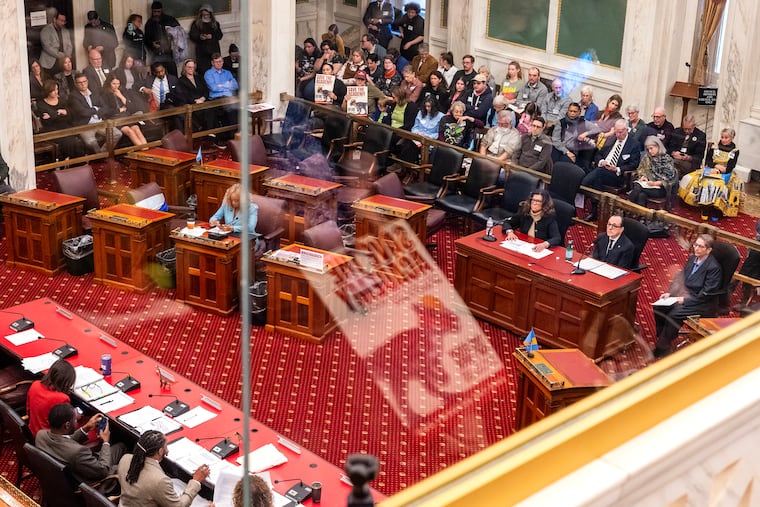
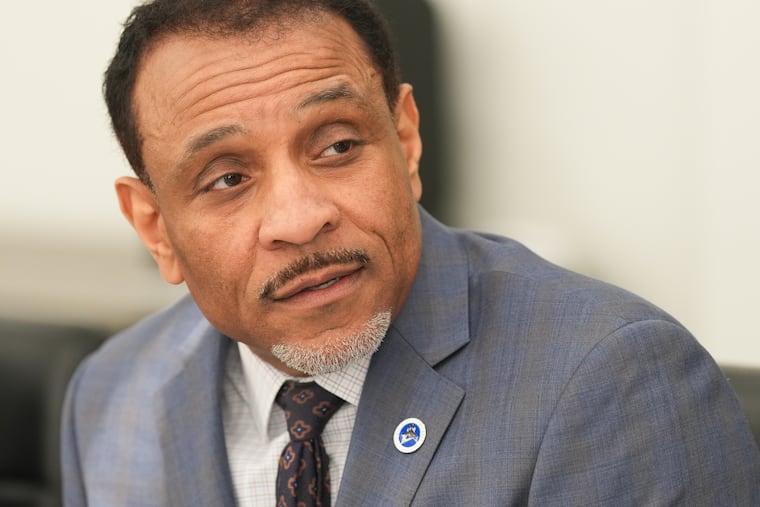
The district's new safety executive, Chief Inspector Myron Patterson, a 25-year Philadelphia Police Department veteran, revealed his plan to run the district not unlike his former gig. He made his presentation along with Nunery before the School Reform Commission yesterday.
Patterson said school police commanders, who will be assigned regionally to each of the Focus 46 Schools, will use Compstat, a system used by many police departments to map crime and identify problems.
Daily deployment plans and additional surveillance cameras will go up at the schools, he said.
Officials will also focus on middle schools that feed into the persistently dangerous schools.
To be designated a Focus 46 School, a campus must have an average daily attendance of under 90 percent, more than 40 percent of the school's population must be chronically truant with 10 or more unexcused absences, or the school must have five or more violent incidents per 100 students, including other criteria, Nunery said.
Those campuses, which represent 17 percent of all district schools, enroll just under 37,000 of the district's 160,000 students, but account for nearly half of the district's suspensions, Nunery said. Forty percent of violent incidents reported and 63 percent of chronically truant students come from these schools, he added.
"That critically affects learning, it affects school climate, it affects how students progress through the system," he said.
Under the directive, each of the 46 schools has until Nov. 1 to detail "corrective strategies incorporating anti-violence, truancy, attendance and anti-bullying tactics," the report said.
A soon-to-be-formed School Climate Action Team, chaired by Nunery and comprising principals, teachers and other staffers, will monitor schools' progress.
Other plans in the works for this year include a districtwide standard for reporting incidents and taking attendance, formation of an appeals board, institution of a delinquency log and policy changes to the SRC on how to properly record dangerous incidents.
Dressed in his police uniform - he remains on the city police force - Patterson reiterated his commitment to making changes.
"We're serious about what we're doing here," he said. "It's about certain cultural changes going on in the different departments within the school district. Everybody's on board. If they're not, they better hurry up and get on board."