The Athletic says Diana Russini’s relationship with Patriots coach Mike Vrabel was a ‘clear violation’ of its standards
Russini resigned from The Athletic in April, a week after images of her with Vrabel were published by the New York Post.
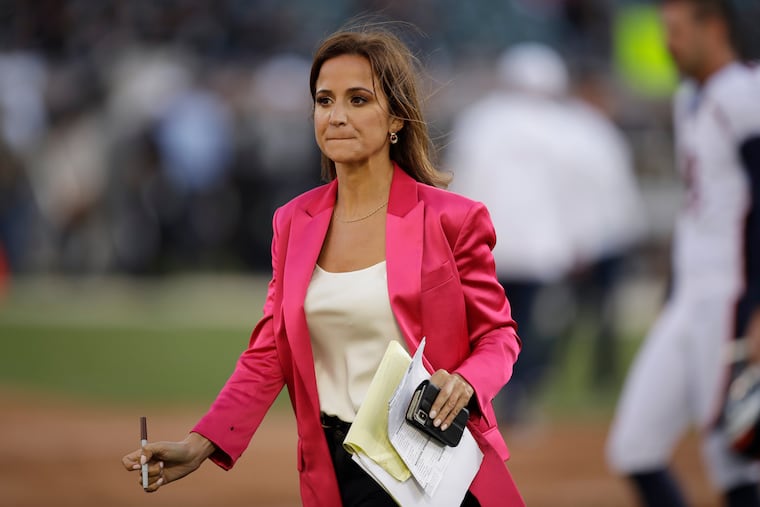
An internal investigation by The Athletic found that the relationship between Dianna Russini, its former senior NFL reporter, and Mike Vrabel, the coach of the New England Patriots, was a “clear violation” of the company’s standards.
In a report released Thursday detailing findings of its monthslong investigation, The Athletic said that it was unable to determine the “nature of their full relationship” but that it gave the appearance of a conflict of interest.
“Regardless of whether the relationship was romantic,” The Athletic said in the report, “it was a breach and should have been disclosed.” The Athletic is owned by The New York Times Co.
The Times Co. and The Athletic declined to comment beyond what is in its investigation. A Patriots spokesperson did not immediately respond to a request for a comment from the team or Vrabel. Russini did not immediately respond to a request for comment.
Revelations about Russini’s relationship with Vrabel emerged nearly five months ago and ricocheted around the sports and media worlds, raising questions about the journalistic ethics of a prominent NFL reporter. The controversy also highlighted Russini’s role as an NFL insider, a type of reporter hyperfocused on getting scoops about players and coaches.
The investigation was prompted by photographs published in the New York Post on April 7 showing Russini and Vrabel together at an exclusive resort in Sedona, Ariz.
Russini, according to the report, told her editors at The Athletic that the relationship was “close” but “strictly professional.”
Initially, The Athletic publicly defended Russini. But days after the photographs were published, the company began an investigation into her work. On April 14, Russini resigned from The Athletic, saying in a letter to the company, “I have built a body of work I am proud of.”
In its report, The Athletic said it had not “reached any conclusion about the nature of the full relationship between Vrabel and Russini, but the totality of the public photographs are enough to conclude a violation of company policy.”
Specifically, The Athletic said Russini had failed to comply with its policy that requires its journalists to “reveal those sources or affiliations that may put into question our ability to be credible.”
The report also noted, without elaborating, that Russini had shared with them “a story to explain the photos that did not align with facts, raising issues of trust.”
After she resigned, more photos of Russini and Vrabel emerged, including images of the pair at a New York bar in March 2020.
After she stepped down, The Athletic stopped its look into her personal conduct, the report said, “but continued its investigation into her journalism.”
Mike Semel, The Athletic’s editorial director for standards and editorial quality, conducted the company’s review of Russini’s work.
As part of the process, the report said, Semel looked into 903 articles, 77 videos, 204 episodes of the podcast she hosted, and about two dozen appearances she made on other platforms. He also interviewed Athletic employees who worked with her.
The review found that 5% of her work product included mention of Vrabel or his teams — and that none carried inaccuracies. It also said her professional relationships were numerous: “It was clear Russini was sourced up around the NFL, not just with Vrabel or the Patriots.”
Semel recommended that The Athletic include an editors’ note on one of her columns and three of her videos. In one of the videos, Russini described how Vrabel intervened in a fight between players on the Patriots and the Washington Commanders. “He comes out as somewhat heroic,” the report said of Vrabel.
The report also described the tone of some of her work about the Patriots coach as “gushing” and “effusive” and provided examples of Russini “writing glowingly of Vrabel that in hindsight are awkward or even uncomfortable.”
The report does not mention a widely publicized incident in which Russini used her position as an Athletic reporter to avoid a speeding ticket and then bragged about it on a podcast, saying she had a video call with the police officer’s favorite head coach in her successful attempt to win the officer over. Body camera footage later revealed she never called the coach. This spring, a Times spokesperson called her behavior “unacceptable conduct.”
In its report, The Athletic recommended a series of steps the publication should take to “safeguard the confidence of our audience,” including requiring that all new newsroom employees meet with the standards editor.
The report also recommended that “editors should stay vigilant about their reporters’ sourcing.”
“Recurring use of the same sources should spark additional conversation between reporter and editor about the nature of the source relationship,” the report said.