Mortgage rates will rise even higher if bond market continues to choke | Expert Opinion
The bond market is being asked to swallow a tsunami of new government debt, a Federal Reserve gone mum, and a war with no clear end.
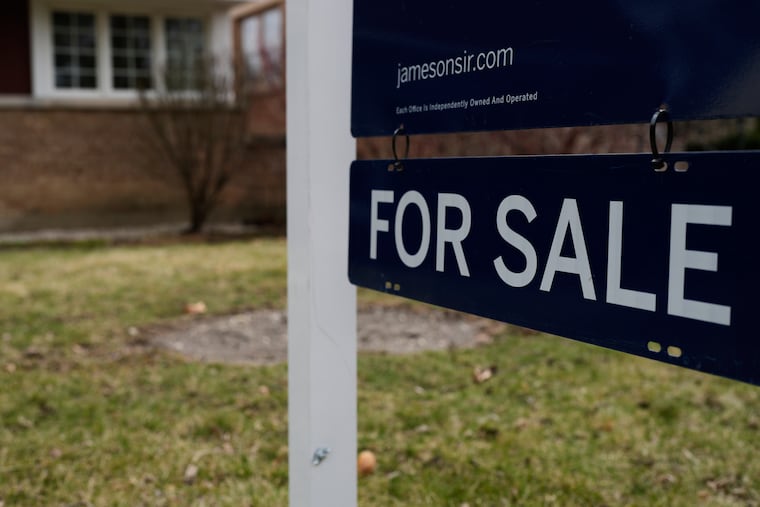
If you’ve shopped for a home in the Philadelphia region lately, you’ve met the villain of this story.
Before the Iran war began in late February, the 30-year fixed mortgage rate was dipping below 6%. Now, it is nearly 7%. On a $320,000 mortgage, approximately what it takes to buy the typical area home, that adds about $210 to the monthly payment, or more than $2,500 a year. That’s not for a bigger house, but the same house.
Behind the mortgage rate stands the bond market. The 10-year Treasury yield, which sets the tone for mortgage rates, is near 4.75%, up more than three-quarters of a percentage point since before the war. The bond market is being asked to swallow a tsunami of new government debt, a Federal Reserve gone mum, and a war with no clear end. And it is choking.
The Iran war has severely disrupted global oil supplies, pushing inflation to near 4% — double the Federal Reserve’s target — and flipping expectations for the Fed from cutting interest rates to raising them. That accounts for a bit more than half the run-up in rates. The good news is that bond investors’ expectations for future inflation have settled back near the Fed’s target. Investors still believe the Fed will do its job.
However, new Fed Chair Kevin Warsh has long believed central bankers talk too much. Forward guidance on rates is gone, and communication is sparse, so investors are left guessing at what the Fed will do next — and they charge for guessing. That extra charge is called the term premium. Think of it as a nervousness fee for lending money over a long period. For a decade, it was pinned near zero. No longer.
But what worries the bond market the most is the nation’s runaway debt. This year’s budget deficit will be more than $2 trillion, equal to more than 6% of GDP. It’s a stunning figure. And the government has been spilling red ink like this since the pandemic hit in 2020.
Meanwhile, there are fewer buyers of the government’s debt. Foreign investors, who held about half our debt a decade ago, now hold closer to a third. The nation’s banks have become more circumspect bondholders after suffering big losses on their holdings when the Fed jacked up interest rates coming out of the pandemic. Highly leveraged hedge funds — fast money, but also the quickest out the door when trouble hits — filled the void.
The Trump administration is trying hard to hold rates down. The Treasury doubled its bond buybacks, but this amounts to billions of dollars, a rounding error compared with the $32 trillion of debt outstanding. It facilitated Japan’s recent effort to rescue the weak yen, so our largest foreign creditor wouldn’t dump Treasurys and push rates higher. And it requires Fannie Mae and Freddie Mac to buy mortgage-backed securities to help pull down mortgage rates.
Each move worked for a day or two, then quickly faded. More telling is the jump in gold and bitcoin prices and the lower value of the U.S. dollar. These are telltale signs that global investors are unsure about the safe-haven status of Treasury bonds. That is, during difficult times, money flows here because investors know they will get their money back on time. A Treasury bond is still the safest place on the planet to put your money, but it’s just a little less safe.
The Treasury’s moves also risk what economists call fiscal dominance, a situation in which a government is so deep in debt that its borrowing needs pressure the central bank to keep interest rates artificially low to make the government’s debt easier to finance. We aren’t there, but we appear headed that way. The Treasury is increasingly doing what looks like the Fed’s job, and history is clear on how that ends: higher inflation and, eventually, higher — not lower — interest rates. The same problem this is meant to solve.
It does not have to end that way. The most likely future is that the 10-year yield falls back this fall, and mortgage rates ease back toward 6%. Of course, this happens only if oil flows reliably through the Strait of Hormuz again, so inflation recedes, and Warsh gives investors some sense of how the Fed will set interest rates.
But that’s a lot of ifs, and lawmakers are unlikely to address the nation’s disconcerting fiscal situation until the bond market forces them to. That could be in next year’s fight over increasing the Treasury debt limit, or early next decade, when the Social Security and Medicare trust funds run dry. The risk of a serious sell-off in the bond market that pushes the 10-year yield toward 6% and mortgage rates toward 8% is real: I would put the odds at about 1-in-5 over the coming year.
A war, a Fed gone mum, yawning deficits — none of these is an act of nature. They are choices. Here’s hoping we start making better choices before the bond market chooses for us.