Philly-based AI medical analysis startup to be acquired for up to $270 million
Healthcare-analysis giant Agilent Technologies is buying Philly-based Proscia to speed its AI-based pathology records search and analysis.
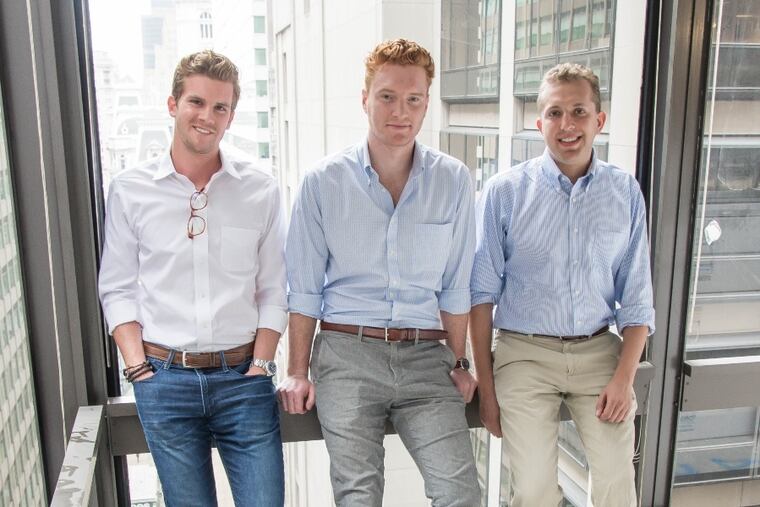
Agilent Technologies Inc., a California-based lab equipment maker, says it has agreed to pay $240 million cash for Proscia, a 10-year-old, Philadelphia-based developer of AI-based pathology-records search and diagnosis systems.
Agilent will add up to $30 million in performance incentives if the business goes well after the merger, the buyer said in a statement.
With sales of over $18 million over the past year, Proscia claims more than 4,000 clients, including hospitals, labs, clinics, and 16 of the 20 largest drug companies. The founders have said they intend to improve pathologists’ speed and accuracy, not replace them.
Philadelphia-based investor group Robin Hood Ventures was an early Proscia backer alongside state-backed Ben Franklin Technology Partners.
“I’m so excited” about the acquisition, said Robin Hood executive director Ellen Weber. She noted that when she met Proscia cofounders David West and Nathan Buchbinder, “they were kids” just out of school.
That was in 2016, two years after Proscia’s founding, Weber added. “It’s been a long journey. This is good for Philadelphia.”
For West and the third cofounder, Coleman Stavish, moving their start-up to Philly was a homecoming. They were classmates at St. Joseph’s Prep. Stavish went on to study at the University of Pittsburgh and West went to Johns Hopkins, where Buchbinder studied, too.
Their goal in founding Proscia while still in school: “To rewire pathology for precision medicine and help change the way we fight diseases like cancer,” West recounted in a blog post explaining the Agilent deal. “The case for digital pathology is now clear in a way that it wasn’t when we started Proscia,” and its models have gained “integration, validation, and trust,” as shown by increased sales.
He called Agilent, with annual sales of $7 billion, an obvious acquirer and trusted partner, given its large size and years spent building and acquiring “global reach, a broad installed base, and long-standing relationships across leading laboratories, health systems, and pharmaceutical companies.”
“Proscia brings software speed, product velocity, and AI; Agilent brings the scale and scientific infrastructure to amplify it,” West added.
The federal Joint Pathology Center, University of Pennsylvania, and Johns Hopkins were early users of Proscia technology, which have included DermAI skin-cancer detection and the Concentriq digital-pathology platform.
Proscia has raised around $130 million from investors in the decade since its founding, including $50 million last year from a group led by New York investor Insight Partners.
Proscia focuses on speeding pathologists’ painstaking individual review of microscopic cells by adding detailed computer and video images. These are scanned for irregularities that suggest cancer and other diseases, using artificial intelligence queries to improve diagnosis as many more images are scanned.
Proscia reviews can consume up to 20 gigabytes of data into large, high-resolution files that allow pathologists to view cell structures.
Drugmakers also use the company’s platform to analyze clinical trials and patients’ response to treatment.
Agilent says Proscia will be the base of a new product line in its own pathology business.
Proscia’s staff of over 100 and its market-leading digital platform will make Agilent “better equipped to help laboratories and biopharma customers manage and derive insights from pathology data,” CEO Padraig McDonnell said in a statement. “Digital pathology is quickly becoming the foundation for pathology data generation, analysis, and application across biopharmaceutical research, clinical development, and diagnostics.”
West called the sale “an exciting milestone for Proscia,” in a statement and said he expects the Proscia team to continue developing its business within Agilent “as the market embraces digitalization and AI.”
Agilent’s assets include an FDA approval for making primary diagnoses. The company in its statement said Proscia has accumulated case data that Agilent can use to boost its own diagnostics business, making those services more valuable to doctors and hospitals.
After the deal closes, Proscia will become part of Agilent’s Life Sciences and Diagnostics Markets Group.