Inflation is a policy choice | Expert opinion
There’s no easy fix to the damage done to family budgets, writes economist Mark Zandi.
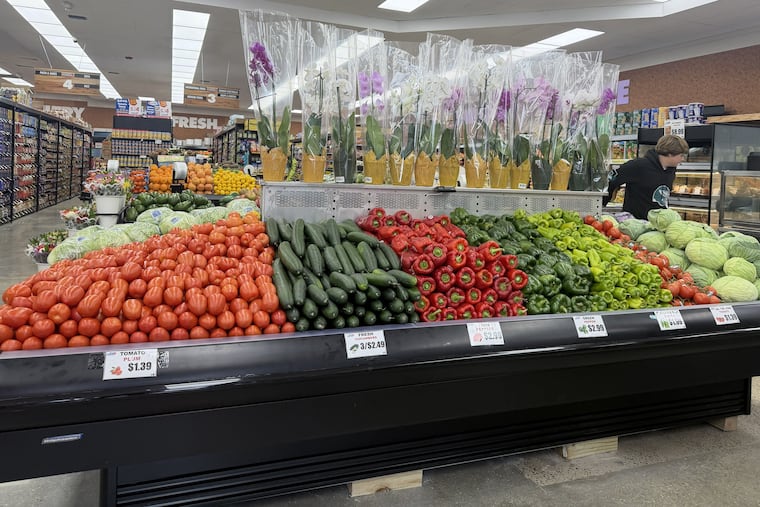
Ask most Americans to name their number-one financial problem, and you’ll get the same answer: the high and rising cost of living.
Consumers have rarely been as glum, with the collective psyche weighed down by higher prices for gasoline, groceries, and other goods and services. Voters also appear to be in a bad mood in the lead-up to the midterm election, as most polls show they aren’t happy about having to pay so much more for nearly everything.
The frustration is well-founded. Inflation has now exceeded the Federal Reserve’s 2% target for five years running. It is currently roughly double that, depending on the measure. And even if inflation fell back to target tomorrow, prices aren’t rolling back. There’s no easy fix to the damage done to family budgets.
So, which way is inflation going from here? To answer that, it helps to be clear-eyed about what is driving it. And the uncomfortable truth is that it is mostly about economic and foreign policy.
Start with tariffs. The effective tariff rate on goods coming into the country has more than tripled since the trade war began just over a year ago. And they may go higher, given the recently announced tariff hikes on goods imported from Brazil and Canada. By my calculation, the higher tariffs added nearly half a percentage point to inflation last year and will add at least a couple of tenths more this year, as businesses pass the costs along to you. That is a policy choice.
Then there is immigration. Net foreign immigration into the U.S. has collapsed to less than half its historical norm, and the foreign-born workforce is shrinking outright. Fewer workers in construction, agriculture, food processing, and elder care mean higher costs in exactly the industries where affordability problems bite hardest. That, too, is a policy choice.
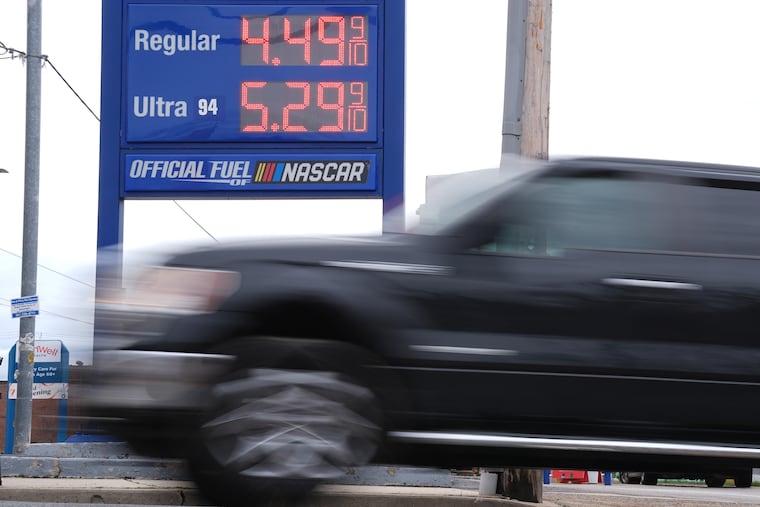
And then there is the Iran war. Iran’s closure of the Strait of Hormuz produced the largest disruption to global oil production in history, and the price of a gallon of regular at my local Wawa jumped from less than $3 before the war to as much as $4.50. All told, the war has cost the U.S. economy over $150 billion — upward of $1,100 per household. That is foreign policy showing up at the gas pump and grocery store.
What makes this so frustrating is that without the higher tariffs, the severe immigration restrictions, and the war, inflation would be a little over 2% — essentially at the Fed’s target. We are suffering uncomfortably high inflation due to the policy choices we are making.
The good news is that, beneath the policy shocks, disinflation (slowing inflation) is already at work. The job market is soft — painful if you’re looking for work, but it means wage growth has moderated and there is no 1970s-style wage-price spiral brewing. Landlords are cutting deals on new leases as vacancies rise, signaling slower rent increases. Vehicle prices are also going nowhere, as the run-up in prices during the pandemic has made buying a car unaffordable for many.
Even here in the Philadelphia region, where eds and meds keep the job market steadier than elsewhere in the country, paychecks are barely keeping up with prices. Not the stuff of an inflationary spiral.
Bond investors, who put their money where their mouths are on the inflation outlook, agree. Their inflation expectations, after spiking when the war broke out, have settled back to levels consistent with the Fed’s target. If investors, businesspeople, and consumers believe that inflation will not be a problem down the road, they will behave accordingly, and it is less likely to be.
And as I wrote in my Inquirer column in May, the Kevin Warsh-led Fed appears committed to doing whatever it takes should that change. Worries that the Fed would lose its independence from the President and lower interest rates for political and not economic reasons have eased.
So, which way inflation? It has likely peaked. If the Iran war continues to wind down, tariffs do not rise materially further, and no other geopolitical hot spot boils over, inflation should moderate back toward the Fed’s target over the next year or two, without the Fed having to raise interest rates.
But notice how much work “if” is doing in that sentence. In a world where the U.S. is pulling away from its trading partners and allies — and they are pulling away from us — disputes that drive higher inflation will become more commonplace. Adding to the concern is that the global institutions used to resolve those differences, ranging from the World Trade Organization to NATO, have been marginalized.
And that is the point. The high inflation began because of the unavoidable. Think the pandemic. But increasingly, it is something we are doing to ourselves. High inflation is a policy choice. So, as it turns out, is low inflation.