Silicon Valley’s big money is about to get a lot bigger
Ahead of their IPOs, Anthropic has raised more than $130 billion from roughly 300 investors, and OpenAI has raised more than $180 billion from roughly 230 investors.
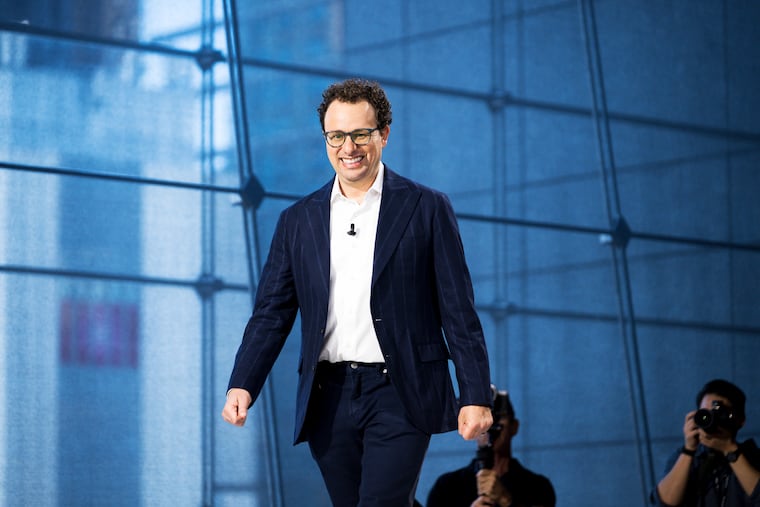
SAN FRANCISCO — As artificial intelligence companies Anthropic and OpenAI prepare to go public, the question around Silicon Valley is which investors will win big.
The answer, it turns out, is just about everyone.
At least 95 investors have put money into both Anthropic and OpenAI, according to a tally on PitchBook, which tracks private investment. Sequoia Capital, a marquee venture capital firm, invested in both start-ups. So did Founders Fund, Coatue Management, and Altimeter Capital Management.
That’s highly unusual. In the past, venture capital firms that invest in young start-ups typically backed just one company in a fast-growing new technology category. Putting money into direct competitors was considered a conflict of interest.
But the AI boom has changed nearly everything around Silicon Valley, and the way that investors nurture start-ups is no exception. Top firms on Sand Hill Road — the famous stretch in Menlo Park, Calif., that remains the nexus of venture capital firms — have shifted their norms and adapted their strategies so that they do not miss out on investing in the AI companies that could be the next $2 trillion winner.
Few large investment funds want to say, “We missed both” OpenAI and Anthropic, said Karan Mehandru, an investor at Madrona Venture Group.
Just how much of Silicon Valley is tied up in the success or failure of Anthropic and OpenAI is evident from the amount of money that the two privately held companies have accumulated.
Anthropic has raised more than $130 billion from roughly 300 investors, according to PitchBook, including venture capital firms, hedge funds, Big Tech companies, and Middle Eastern sovereign wealth funds. OpenAI has raised more than $180 billion from roughly 230 investors, such as Big Tech companies and Joshua Kushner’s investment firm, Thrive Capital.
In contrast, Facebook (before it became Meta) raised $2.4 billion before going public in 2012, and Uber raised roughly $20 billion before reaching the stock market in 2019.
Not all of the investors named as Anthropic and OpenAI shareholders by PitchBook got their shares through traditional venture funding rounds; the list includes some who bought indirectly via private share sales on the “secondary market,” which is when investors obtain stock from existing shareholders like employees or early investors.
SpaceX’s successful $1.7 trillion initial public offering in June has further fueled investor excitement for Anthropic and OpenAI. Anthropic is heading toward a public offering this year that could value it at $2 trillion and become the biggest listing ever. OpenAI may go public next year, and its offering is also expected to be enormous.
For investors, that means “all the numbers are bigger, including the entry price and the exit price,” said Sohail Prasad, CEO of Destiny100, a firm that bought shares of OpenAI and Anthropic on the secondary market.
Anthropic and OpenAI declined to comment. (The New York Times has sued OpenAI and Microsoft, claiming copyright infringement of news content related to AI systems. The two companies have denied those claims.)
For years, venture capital investors followed similar rules. Their idea was to take a big stake in a young company and help it with advice. The investor would take a seat on the start-up’s board.
When Facebook went public, venture firm Accel Partners owned 11.4% of the company’s stock. Jim Breyer, a partner at the firm, sat on Facebook’s board alongside Marc Andreessen and Peter Thiel, two other venture capital investors.
And when Uber went public, venture firm Benchmark Capital Partners owned 11% of the company. One of Benchmark’s investors, Matt Cohler, sat on the board.
But Anthropic, which was founded five years ago, looks very different. That’s partly because venture firms initially dismissed the company as a science project. More than 20 firms rejected the start-up’s pitch, Anjney Midha, an Anthropic investor, said on a recent podcast. Instead, people in effective altruism circles, the philanthropic movement that prioritizes data and analysis for social causes, first invested in Anthropic.
Spark Capital, a Silicon Valley venture capital firm, eventually led a round of funding in Anthropic in 2023. Yasmin Razavi, a Spark Capital investor, joined Anthropic’s board.
Around that time, Dario Amodei, Anthropic’s CEO, and Neerav Kingsland, an Anthropic executive, visited the home of Guy Oseary, a Hollywood talent manager who invests in tech through his firm, Sound Ventures. Oseary was impressed by Anthropic’s pitch, said a person familiar with the matter who, like others interviewed for this article, spoke on the condition of anonymity because the discussions were private. But Sound Ventures had already invested in OpenAI.
So the firm got permission from Sam Altman, OpenAI’s CEO, and Amodei to invest in both companies, the person familiar with the matter said. That made Sound Ventures one of the first firms to put money into both competitors.
Soon after, Oseary raised a new fund dedicated to AI. “We believed this would be the most important technology of our lifetime,” he said in a statement.
As Anthropic and OpenAI grew, their need for capital outpaced backing from many venture firms, which were not set up to write checks that big. Menlo Ventures, a Silicon Valley firm known for backing Uber, engineered a workaround. To further invest in Anthropic, the firm in 2024 created a “special purpose vehicle,” a fund that rounded up many small investors into one $750 million entity controlled by Menlo.
Thrive Capital created a similar vehicle to invest in OpenAI in 2024.
Google, Amazon, Microsoft, and Nvidia also took stakes in both Anthropic and OpenAI and have signed large contracts to provide cloud computing services or chips to them. Some of these giants are now the biggest shareholders of the start-ups.
This article originally appeared in the New York Times.