Doctors found blood clots in Jalen Hurts' lungs. Here's what that means.
Hurts will probably need to be on blood thinners for at least three months, local experts say. People on these medicines generally cannot play contact sports because the risk of bleeding is high.
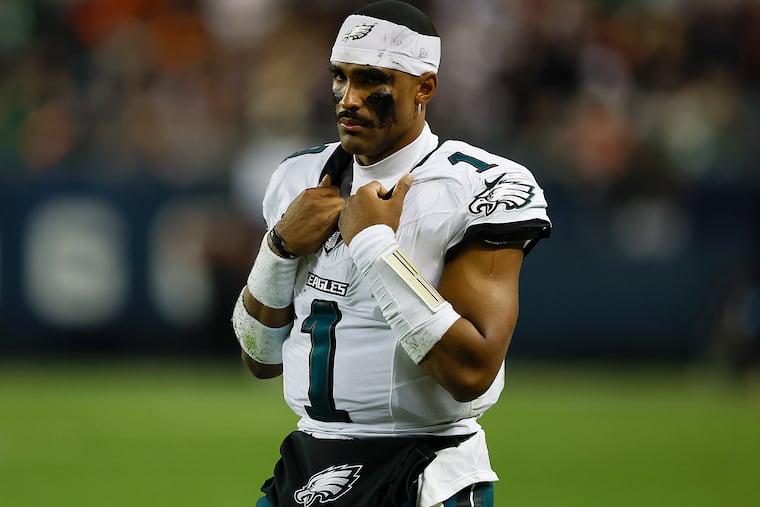
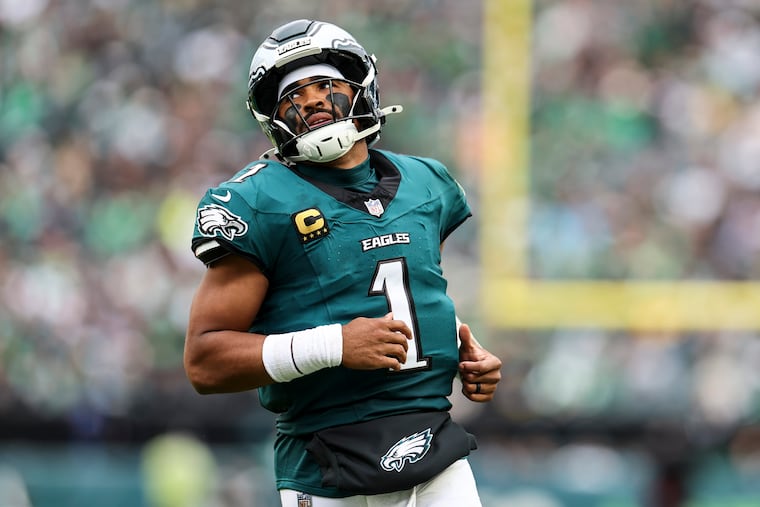
Jalen Hurts is sidelined with blood clots in his lungs, a serious condition that could require at least three months of blood thinners to treat.
And no football or contact sports will be allowed during treatment, local doctors not involved in his care say.
Why the Eagles quarterback flew internationally from London — having played there after minimal sleep related to an earlier blood-clot diagnosis — drew scrutiny Monday after his medical status was disclosed.
The Eagles quarterback was diagnosed with deep vein thrombosis and blood clots in both his lungs — a more serious diagnosis than the superficial clot in his calf initially announced last week.
Now Hurts is out indefinitely and possibly set to miss the remainder of the 2026 season, according to a statement released Monday morning by the Eagles and his agent, Nicole Lynn.
Eagles head coach Nick Sirianni did not answer questions seeking specifics on the decision-making around Hurts’ care at a Monday afternoon news conference, but he noted the team’s medical experts were closely involved.
“We get medical information from our guys, and we always put the players’ health first and foremost in every situation,” Sirianni said.
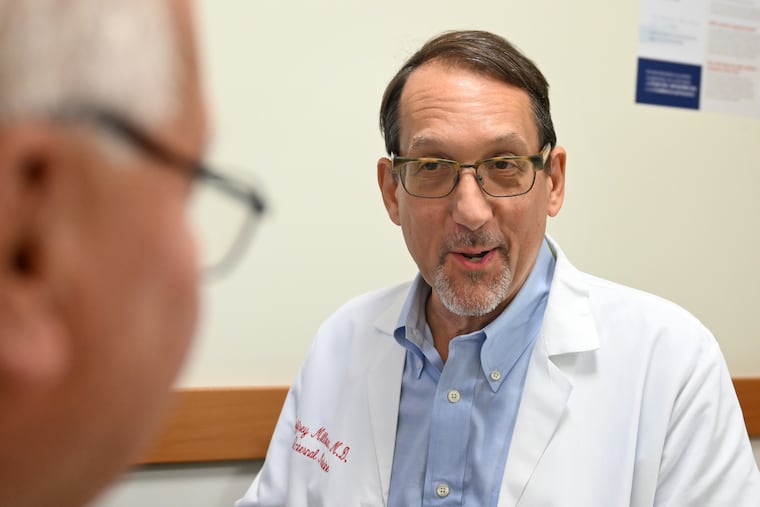
Blood clots can be of different sizes and severities. However, the clots in Hurts’ lungs are probably small, said Thomas Meyer, system chief of pulmonary and critical care medicine at Main Line Health, who is not his doctor.
He based that on the team’s statement, which said Hurts is clinically stable with no significant functional limitations.
“He’s lucky it wasn’t more significant than that,” he said.
A pulmonary embolism can be deadly if left untreated and allowed to block blood flow to the lungs.
The real question, Meyer said, is why these clots formed.
According to team statements, doctors initially found a superficial blood clot — a clump of blood that forms in a vein close to the skin surface — in Hurts’ calf during an ultrasound on Oct. 10, following the team’s flight to London.
» READ MORE: A full timeline of Jalen Hurts' blood clot diagnosis
It’s possible an earlier injury — Hurts had taken a cleat to the calf during the Eagles’ Week 4 loss to the Los Angeles Rams — could have contributed to the clot, Meyer said.
Immobility during Hurts’ international flights — a known risk factor for clots — may have also played a role.
“Could it be immobility plus trauma resulted in the formation of a clot?” Meyer said.
Here’s what to know about Hurts’ diagnoses and outlook.
What is deep vein thrombosis?
Deep vein thrombosis, or DVT, is a serious condition that involves blood clots in veins deep within the body.
The legs have two primary vein systems: superficial and deep. The superficial veins connect to the deep system, and together they carry blood back to the heart.
It’s possible the superficial blood clot could have migrated into a deep vein, resulting in DVT. The Eagles had ruled him out last Wednesday for Sunday’s game, after finding “movement in the small blood clot,” according to an earlier statement.
Once in the deep vein system, a piece of the clot could have broken loose and traveled through the heart.
“From the heart, it’s a free highway to the lung,” said Parth Rali, who directs the pulmonary embolism response team at Temple Health and is not Hurts’ doctor.
What is a pulmonary embolism?
A pulmonary embolism occurs when a blood clot becomes lodged in an artery in the lungs, blocking blood flow.
In Hurts’ case, doctors have diagnosed “bilateral pulmonary emboli,” according to the team statement. That means he has blood clots in both lungs, likely stemming from the clot in his leg.
“It’s the same clot which has kind of distributed into multiple tiny fragments,” Rali said.
Both Rali and Meyer said Hurts will probably need to be on blood thinners for at least three months.
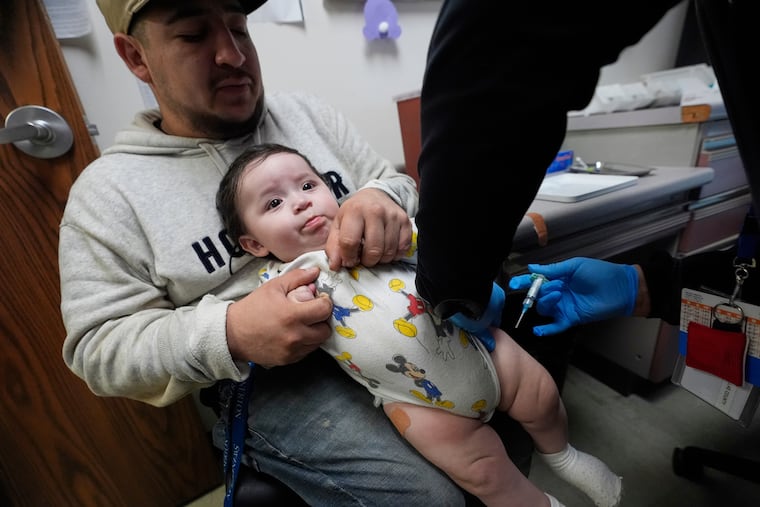
People on blood-thinning medicines generally cannot play contact sports because the risk of bleeding while taking these drugs is high.
Doctors will need to monitor Hurts to make sure the clots in his lungs and leg resolve, and that new ones don’t form.
From the statement, it sounds like Hurts hasn’t felt any symptoms, Meyer speculated, which would typically include shortness of breath and chest pain.
“He’s lucky his doctors found it while it was still small and easily treatable,” he said.
When could Hurts return?
The Eagles’ statement said Hurts should not suffer any long-term effects, an assessment local experts agreed with.
Patients typically start feeling better within four to six weeks of starting blood thinners, said Rali, who described the process as a “gradual recovery.”
Blood thinners help prevent new clots from forming.
“As the injury recovers, it is very likely that he may be able to come off the blood thinners. But three months is the minimum time,” he said.
Doctors initially diagnosed Hurts with a superficial blood clot in his calf in London, before the Eagles’ Week 5 loss to the Jaguars. As a precaution, they told him not to sleep before the game. Initial reports indicated that Hurts had been awake for roughly 36 hours when he took the field, but Lynn clarified Monday that Hurts did sleep in the hours leading up to the game.
Rali said he does not know why a recommendation to avoid sleep would have been made, emphasizing that sleep is important for rest and recovery.
“I struggle to find any connection with avoiding sleep in the setting of a blood clot,” Rali said.
He also pointed out that Hurts took back-to-back flights to and from London. It is generally considered low risk to fly with a superficial blood clot, compared to deep vein thrombosis. However, long-haul flights can still raise the risk of clots forming.
Rali said he assumes Hurts’ medical team had valid reasons for that decision, adding that it is difficult to assess the situation without him knowing the location or characteristics of Hurts’ original clot.
“That is something that, in hindsight, makes you wonder: was it an appropriate decision or not?” Rali said.
“As an Eagles fan, I wish him nothing but the best,” he added.