Nearly 30 dead sharks washed ashore in Sea Isle City
A researcher was confident it could be traced back to a fairly common occurrence.
It was a startling sight, to be sure.
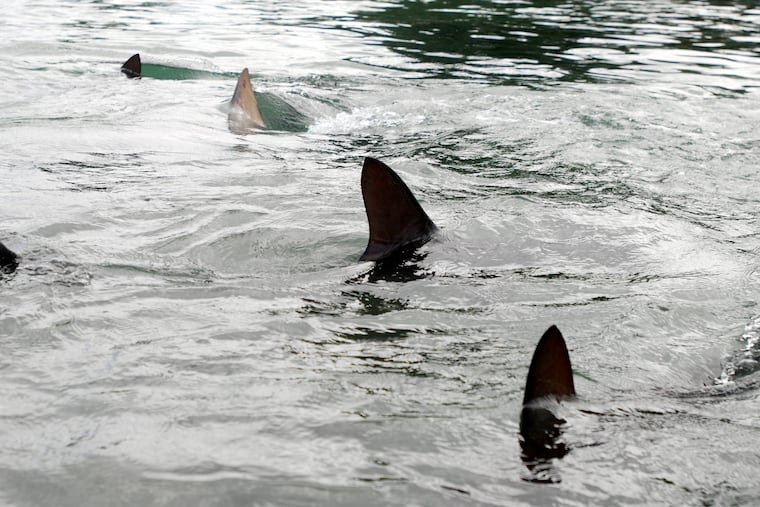
While walking along a stretch of beach in Sea Isle City earlier this week, a woman reported coming upon something you don’t often see in the South Jersey locale: Nearly 30 small dogfish sharks, all dead, washed up on shore.
They were small — maybe a foot in length. And some had small red marks on their bellies, according to reports.
Was this the result of something deadly in the water? Some new kind of apex predator? The approaching apocalypse?
Probably not, it turns out.
Michelle Greenling made the discovery on Wednesday morning, she told CBS Philadelphia, as she walked a 10-block stretch of the town’s beach. The first couple shark corpses weren’t particularly surprising, she said.
“But when I saw three and four and five,” she told the outlet, “I knew something was up.”
Greenling was initially worried that the sharks had been affected by something in the water.
But that does not appear to be the case, experts said.
Having examined photos of the dead sharks, Thomas Grothues, director of the Rutgers University Marine Field Station in Tuckerton, was confident they could be traced back to a fairly common occurrence.
Basically, when commercial fishing boats inadvertently scoop up fish that its crew is not actively targeting, workers are required to release them back into the water.
“This is super consistent with a commercial bycatch of fish,” said Grothues. “You can get 200 in a trawl [net] easy, and most of them will live — they’re pretty tough. But if a catch is huge and they’re sorting it, then sometimes the weight itself can kill sharks that wouldn’t normally die.”
Lawrence Hajna, media director for the New Jersey Department of Environmental Protection, offered a similar explanation.
“These occurrences are not uncommon in the summer when these fish forage near the shore and sometimes get caught inside sandbars as the tides goes out,” Hajna said in an email Thursday. “It is also possible they were discarded as bycatch from a commercial or recreational fishing trip.”
As for whether the curious incident requires any investigative follow-up?
Hajna said that the agency is not investigating the situation, “as this does not appear to be an unusual event.”