Wawa fired Phil. Flourtown took it personally.
When a beloved Wawa employee was fired after 21 years, his neighbors organized a campaign to bring him back. But Phil Dougherty may have other plans.
“We want Phil! We want Phil!” chanted the crowd. It was the morning after Halloween, and they were gathered in the parking lot of the Flourtown Wawa. A kid in a gray sweatshirt raised a handmade sign over his head. It said “OUR Wawa OUR Phil!” with a little heart in place of the exclamation point’s dot.
Beside him, a man with a gray beard turned his sign toward Bethlehem Pike. It read, “HONK if you want Phil back!” Drivers leaned on their horns as they drove by and rolled down their windows. “Bring back Phil! Bring back Phil!” they shouted, their fists in the air.
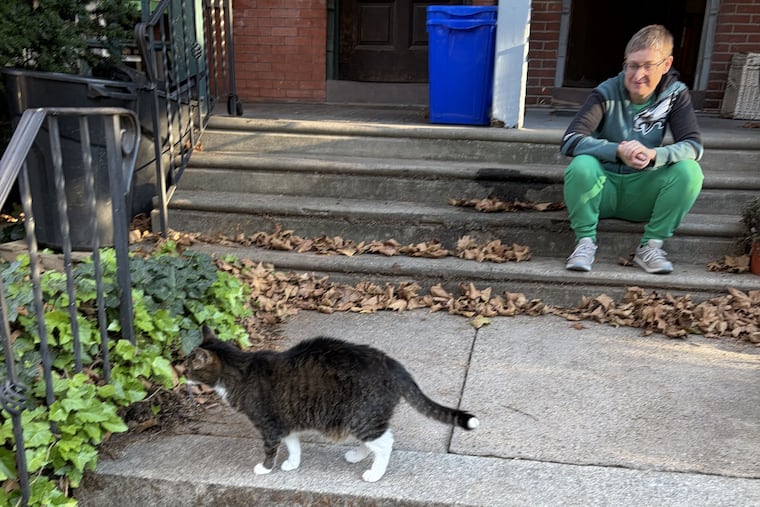
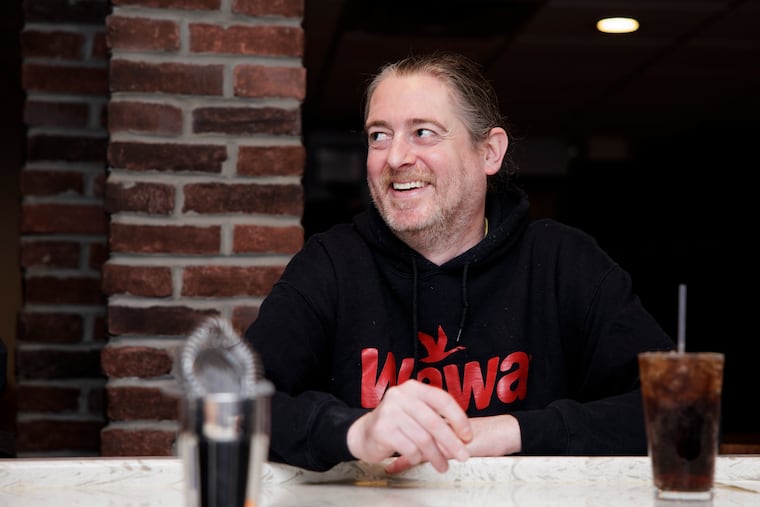
The man they wanted back was the guy who made their hoagies. His name is Philip Dougherty, 45, but around town, he was known as Wawa Phil, and he’d worked at that location since 2005. A lifelong Springfield Township resident, he knew the store and the community it served better than just about anybody. He knew the regulars by name. He knew the building inside and out. He even knew what time the high school prom let out and when to expect a rush of kids at the deli.
He also knew the office door was usually left open. That’s why, when he walked into work on Wednesday, Oct. 8, he was surprised to see it closed. He figured someone must be getting fired. A few minutes later, his boss called him into the office. “Wawa,” he recalled her saying, “was separating itself from him.” After 21 years on the job, Wawa Phil was out.
It was a remarkable turn of events for a guy who, just three years earlier, was one of only 10 employees out of nearly 100,000 to be featured in Wawa ’s “Daybrightener” videos. The series celebrates people who go out of their way to do something nice for someone else.
“Phil really is a part of the community,” said Flourtown’s fire station captain in the video.
After the firing
One of the first people to hear the news about Phil was Rafael Villamil, an Erdenheim resident who ran into him in the Wawa parking lot shortly after his dismissal. Phil was visibly upset, Villamil recalled, and told him what had happened.
Phil said he’d jokingly given the customer service manager on duty the middle finger after she asked him to do something. Phil said he’d already been having problems with one of the general managers and that she was looking for a reason to fire him. According to Phil, this was it. The general manager and representatives from Wawa declined to comment about the incident.
Villamil was stunned. To him, Phil was “the face of this place.” He decided to tell his neighbors what had happened, posting about the firing on Nextdoor. He wasn’t trying to start a campaign, he later explained. He just thought people should know.
But Villamil wasn’t the only one talking. News of Phil’s firing spread across Nextdoor and Facebook, where posts drew hundreds of comments from angry customers, many demanding that Wawa give him his job back. Others called the company directly to complain. To many, the punishment seemed wildly out of proportion to the alleged offense. “You don’t get fired for giving the middle finger, you get a warning,” one supporter said.
On Friday, a Facebook post calling for a rally outside the Flourtown Wawa to show support for Phil began making the rounds. A woman named Bonny offered to make #savePhil T-shirts. The next day, the outrage escaped the comment sections and found its way into Halloween costumes. Someone dressed up as Wawa Phil, complete with a Wawa jacket, a Phil name tag, and a middle finger raised for the occasion.
By the time the rally rolled around on Sunday, Nov. 1, even local establishments had joined in. Across the street from Wawa, the fire station’s sign flashed “FLOURTOWN STANDS WITH PHIL” against an American flag. Next door, Halligan’s Pub had posted its own appeal to Phil’s former employer: “Wawa, bring back Phil.”
It was clear whose side Flourtown was on.
‘He’s like Wawa’s mascot’
Among those demanding Phil’s return was Kara Kaminski, 36, who first met him in college, when she’d swing by Wawa for a late-night hoagie after work. At first, they just exchanged hellos. But over time, those brief conversations grew longer and more meaningful. Eventually, Phil became a close family friend. He even served as the best man at Kaminski’s wedding. News of Phil’s firing floored Kaminski. “Everybody loves Phil,” she said. “He’s like Wawa’s mascot here in Flourtown.”
Amanda Helwig was directing the protesters’ chants near the curb. She’d known Phil for more than 20 years and, until his firing, saw him walking to work along Bethlehem Pike almost every day, rain or shine.
Helwig had plenty of stories about the ways Phil looked after people, both at Wawa and around town. There were the free summer pig roasts he hosted for the local police officers and firefighters. And that one time when a pregnant woman was too sick to leave her house, so Phil walked her order over. And Helwig felt safer stopping in late at night when she knew Phil was working.
“That’s the kind of employee you want to keep in a community,” Helwig said, sounding like a politician endorsing a candidate.
There was also what Fran O’Donnell, who’d known Phil since high school, called “Wawa therapy.” Customers brought their troubles to the deli counter, where Phil listened as he made their sandwiches.
“He wasn’t putting in hours,” O’Donnell said, “he was putting in love.”
Phil even had the teenage crowd in his corner. Lucas Flood, 15, said Phil always made him feel welcome. He’d come to the rally for one simple reason: “I just want to walk into Wawa and see my man Phil,” he said.
‘I could just go and be myself’
To hear him tell it, Phil was just as happy to see the customers as they were to see him. He loved his job. He loved the people and looking out for them. Like the firefighters across the street. From behind the counter at Wawa, Phil had a clear view of the station, so he knew when they left and came back from a job. “Sometimes they’d be gone for six or seven hours,” he recalled.
On long days like that, Phil would bring the crew hoagies and meatball sandwiches, or hot chocolate and coffee. Whatever helped. Wawa, said Phil, gave him the freedom to take care of people. He could comp a quesadilla for a boy who couldn’t afford one on his birthday, and he wouldn’t be penalized.
They gave him the freedom to take care of himself, too.
“You don’t have to hide,” Phil said. It wasn’t like Chick-fil-A, where employees are required to say ‘my pleasure’ with a smile. You could have a bad day at Wawa." For Phil, that meant being able to talk to customers, many of whom he knew from growing up in the area, about his son’s cancer treatment or his father’s Alzheimer’s.
“That was a big part of me connecting with the community,” Phil said. “I could go in and not have to have a happy face. I could say, ‘Hey, today sucks because my dad has no idea who I am, or my kid’s down at CHOP.’”
“I could just go and be myself,” he added.
So, of course, Phil was upset when, a couple of years ago, he felt like things started changing, “getting more corporate,” as he put it. Management became less flexible. All of a sudden, he was required to work overnight shifts to keep his supervisor position. But he’d already spent 13 years working overnights and, being older and achier, he wasn’t willing to go back. So he stepped down instead.
Then, according to Phil, Wawa introduced a points system that penalized employees for things like lateness and absences. He never really could figure out exactly why points were doled out. He just knew he started racking them up, and once you reached a certain number, you could be fired.
In response, a representative from Wawa said, “As with many companies, Wawa has policies and procedures for our associates and unfortunately has to take disciplinary action from time to time when violated.”
To Phil, Wawa seemed to be losing the community-minded spirit he’d valued for so long.
“I just feel like it’s getting further and further away from that,” he said.
Phil’s next move
The community clearly wants Phil back at Wawa. They’ve posted. They’ve rallied. They’ve called Wawa headquarters. God knows they’ve sent emails. Getting Phil back behind the deli counter is their top priority. But is it Phil’s?
Several people at the rally were certain it was. “Phil wants his job back,” Helwig said.
But Phil says he would only go back if he didn’t have to deal with his general manager. And even then, he’s not sure. Because, as he put it, “I don’t actually need to go back.”
No, Wawa Phil is not independently wealthy. He doesn’t have a trust fund. For 21 years, he made an hourly wage at Wawa, living paycheck to paycheck and, at times, struggling to get by. But all the while, thanks to the company’s employee stock ownership plan, or ESOP, Phil was also accumulating shares in Wawa. Each year, eligible employees receive a little more stock in the privately held company. And as Wawa grew, so did the value of Phil’s shares. “I just kept seeing my stock go up,” he said. It’s why he never left.
Despite getting fired, Phil gets to keep his stock. And after 21 years, his shares are worth enough to support him for several years without another paycheck. Is he a millionaire? “Close to it,” he said, with a laugh that suggested he was still getting used to the idea.
As for what he’ll do with all that money, Phil has a plan. Actually, he’s had it for years, but until recently, he figured he’d be working at Wawa for the rest of his life. Now, at 45, he suddenly has the time to do whatever he wants.
And what exactly does Wawa Phil want to do?
“I’ve always wanted to open up a sandwich shop,” he said.