At Feria del Barrio, Philadelphia’s Puerto Rican community celebrates its culture and claims its space
La Feria del Barrio returns, bringing a sense of resiliency and pride for the community.
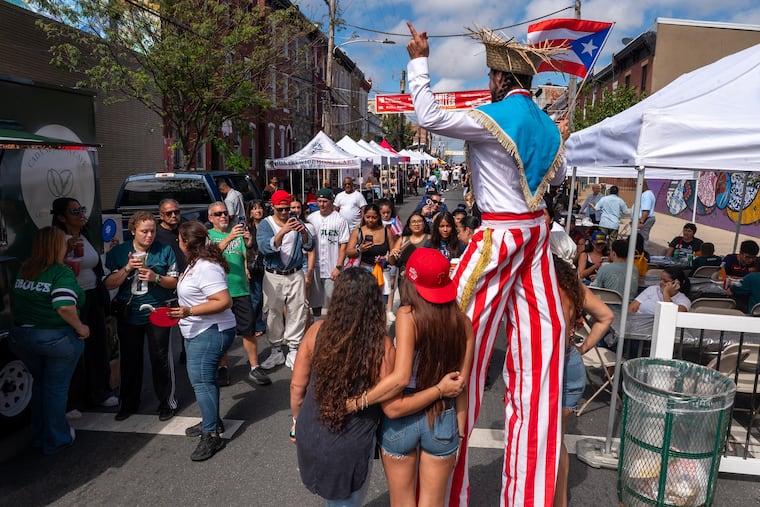
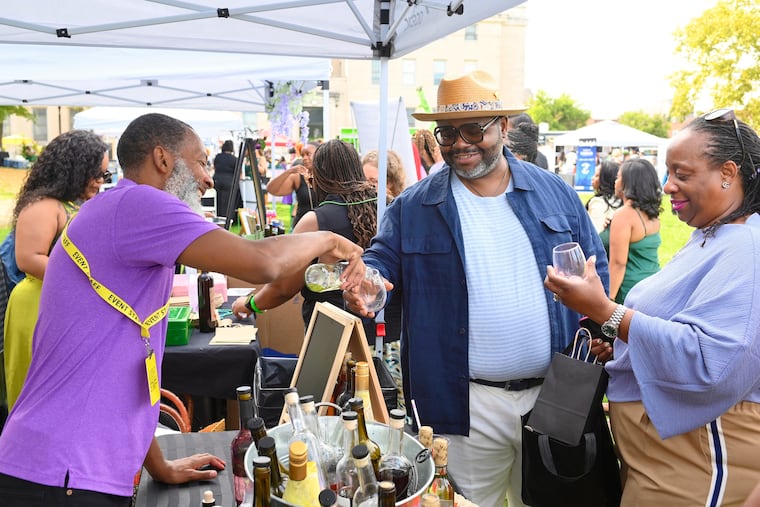
To the sound of bomba, the storm parted ways on Sunday, making way for the 42nd Feria del Barrio celebrations in Fairhill.
The annual event honors El Bloque de Oro and Puerto Rican culture, bringing hundreds of people to North Fifth Street, between Huntingdon and Lehigh Somerset Streets.
“There is this bad, negative connotation with El Bloque de Oro, where we are considered the Badlands of Philadelphia,” said Annais Delgado Sánchez, Taller Puertorriqueño visual communications manager. “But it’s called El Bloque de Oro for a reason: There is true community here.”
In the ’80s, during the crack epidemic, the media labeled some of the heavily Latino areas in North Philly as “Badlands,” Delgado Sánchez said.
For people living here, however, this is the “golden block,” she said, a place they call the heart of the Latino, particularly Puerto Rican, community in Philadelphia.
On Sunday, as the live music pulled the crowd around the stage at Fifth and Lehigh, Sonia Lopez, 77, gathered in the corner with her sister and daughter ready to spend the day at the festival.
Lopez has lived in the neighborhood since before the first Feria del Barrio. She said the celebrations fill her with pride.
“Every year the artists get better; there is more food, and music,” Lopez said, sitting on a folding chair, surrounded by bags full of umbrellas, hand sanitizers, towels, aspirin, and even toilet paper.
“She only lives three blocks away, but once Feria starts, she’s not going anywhere,” her daughter, Eneida Martinez, said.
Martinez, 56, moved to Colombia a couple of years ago but came back to town to enjoy Feria with her mom.
“Growing up here was a bit frightening, but things have changed so much,” Martinez said. “And that’s not due to the new people moving in; that’s a product of the Puerto Rican resiliency. Without us in these blocks, this would no longer be El Bloque de Oro.”
Economic downturns, gentrification, and the COVID-19 pandemic have forced the neighborhood to reshape itself, but residents and community organizations continue to center their culture and traditions, Delgado Sánchez said.
The festival has allowed the community to hold on to its identity, she said.
“It’s a way for us to fight back and show that we are here and we are here to stay, and we are here to make sure our culture is preserved and celebrated,” Delgado Sánchez said.
That feeling is what keeps Leida Garcia, 76, at every Feria del Barrio.
“Back in my day, it truly felt like the block was made out of gold, there were so many stores open, and people in and out shopping, the neighborhood felt alive,” Garcia said. “Things have changed, but when the Feria takes the streets, it’s like happiness is back; any sadness or concern is left behind, that’s why I never miss it.”
The Feria, the retiree said, gives her a break from worrying about keeping her home in the neighborhood amid rising property taxes.
“They can try, but I will only be leaving this block if they take me out of my home and into the grave,” Garcia added.
Reinaldo Melendez, owner of Centro Musical, said the festival is meaningful for him and his family, especially now when the Latino community seems to feel more vulnerable amid the political climate.
“Just take a look around; La Feria is a reminder for us to be proud of being Latino, especially with everything going on right now,” Melendez said. “We are proud people, and we fight to be here; we fight for our rights; we stand firm here, and we are alive and relevant.”