Swarthmore College says U.S. Supreme Court ruling on trans athletes dealt blow to alum’s lawsuit
The lawsuit brought by Evie Parts, a transgender athlete and former Swarthmore College track captain, represents a new frontier in the legal fight over trans women’s participation in college sports.

The U.S. Supreme Court ruling that held states can ban trans women and girls from women’s college sports teams shut the door on a lawsuit filed by a Swarthmore College alum, the university said in a court filing.
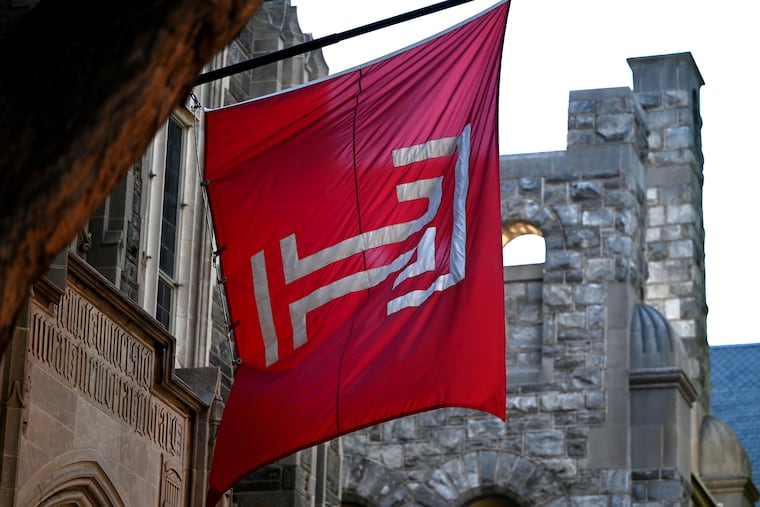
The Delaware County liberal arts school asked a federal judge to toss out a lawsuit brought by Evie Parts, a trans student who was temporarily removed from the college’s track team in her senior year.
Parts was removed from the college’s varsity teams in February 2025 following an NCAA policy that banned transgender women from competing on women’s teams. After graduating that May she sued the school, its athletic officials, and the NCAA. The federal lawsuit accused Swarthmore of violating Title IX, a landmark antidiscrimination law, and Pennsylvania laws that protect college students based on gender identity.
But a Supreme Court case over the constitutionality of state laws that ban trans women from participating in college sports loomed over the lawsuit.
The high court’s ruling in essence nullifies Pennsylvania’s antidiscrimination protections, which include gender identity, Swarthmore said in a court filing, because state protections should be consistent with federal ones.
A Swarthmore spokesperson said the college values its transgender community members, and offers “numerous resources to create a welcoming, supportive, and inclusive environment for transgender individuals.”
“But the Supreme Court made clear that the NCAA’s policy does not violate Title IX,” the spokesperson’s statement said. “Given that, and the fact that courts in the Commonwealth have routinely held that Pennsylvania law should follow and be consistent with federal law, the case should be dismissed.”
Parts’ case represents a new frontier in the legal fight over trans women’s participation in college sports. The question of whether states can impose bans is settled, but the outcomes of lawsuits such as Parts’ will shape the strength of existing protections enacted by states.
Susie Cirilli, the lawyer representing Parts, said she stands by “every single allegation” in the amended lawsuit, which was filed after the Supreme Court’s June ruling.
The NCAA did not respond to a request for comment.
Parts joined the Swarthmore track and cross-country teams as a freshman in fall 2020. Following COVID-19 restrictions and medical leave, she returned to the team in fall 2023 and was named a captain the following year.
Then, in February 2025, a day after President Donald Trump signed an executive order titled “keeping men out of women’s sports,” the NCAA issued a policy that restricted participation in women’s sports to “student-athletes assigned female at birth.”
After assessing the new policy, the suit says, Swarthmore told Parts there was no law in Pennsylvania “that might supersede the new NCAA policy.
Swarthmore officials told Parts they “vehemently disagree with this transgender ban,” the lawsuit says.
The college told Parts she could compete on the men’s team or run as an unattached athlete, meaning Swarthmore would not provide race-related expenses, transportation, or medical and training support, the suit says.
The news was devastating, according to the complaint, and the athlete began harming herself and contemplating suicide
The college reinstated Parts to the women’s team in April 2025, and she participated in three competitions before graduating.
Parts sued Swarthmore, college officials, and the NCAA in August 2025, accusing the college of violating Title IX and Pennsylvania laws.
But the litigation took a complicated turn when the Supreme Court agreed consider the constitutionality of Idaho’s and West Virginia’s bans on trans athletes’ participation in girl’s and women’s sports.
Lawyers for Parts, Swarthmore, and the NCAA agreed to pause the litigation until the justices ruled on the issue. And in a unanimous ruling, the justices upheld the bans, finding the prohibition did not violate Title IX.
Undeterred by the ruling, Parts filed an updated complaint to her lawsuit in September. She still says the college violated Title IX, Pennsylvania Human Relations Act, and the Pennsylvania Fair Educational Opportunities Act.
The latest version of the complaint says Swarthmore engaged in a “campaign to coerce Evie into believing that there was no law in the state of Pennsylvania that protected against discrimination based on gender identity.”
But the college said in a filing this month that the Supreme Court ruling changes the equation, and settled the matter.
Swarthmore’s motion to dismiss cites Justice Brett Kavnaugh’s majority opinion: “The question is whether Title IX permits schools to maintain women’s and girls’ sports teams for biological females. The answer is yes.”
As for the question of Pennsylvania’s protections, the college says, “it is well established” that these laws “are to be interpreted consistently with federal anti-discrimination laws.”
In other words, the college argues, if sex-based protections in Title IX are limited to biological sex gender-identity, the same is true for Pennsylvania law.
Not everyone agrees with Swarthmore’s interpretation. The Women’s Law Project, for example, said in a blog post about the Supreme Court ruling that “Pennsylvania still requires inclusion in sports.”
Parts’ attorney has until next month to respond to Swarthmore’s claims, which U.S. District Judge Cynthia M. Rufe will rule on in the future.