Sheriff Rochelle Bilal ordered to appear in court for contempt hearing over property auctions
Rochelle Bilal is due to appear in court Thursday over her handling of sheriff sales. Her office recently found $20 million in undisbursed proceeds and backed out of an earlier oversight agreement.
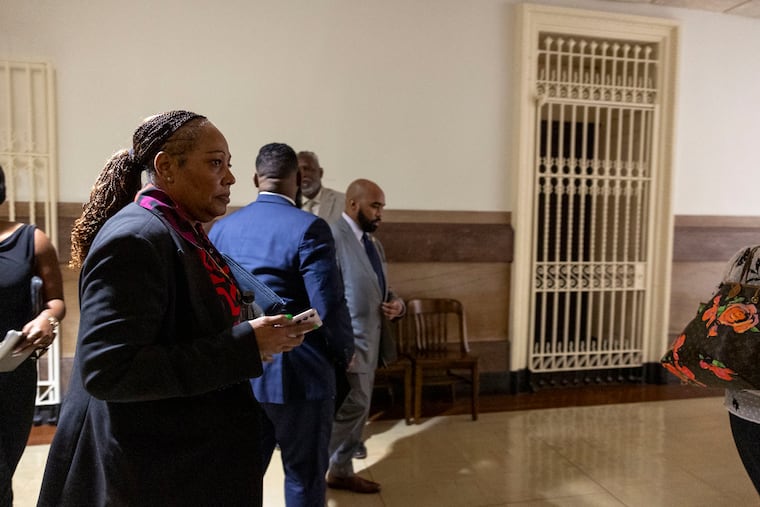
A Philadelphia judge is threatening to hold Sheriff Rochelle Bilal in contempt of court, a dramatic escalation in a monthslong legal saga stemming from her failure to promptly distribute funds and deeds from property auctions.
Bilal is due to again appear before Common Pleas Court Judge Paula Patrick on Thursday morning, this time to explain why she should not be held in contempt for failing to turn over financial records and otherwise comply with state rules and a previous consent order pertaining to the auctions.
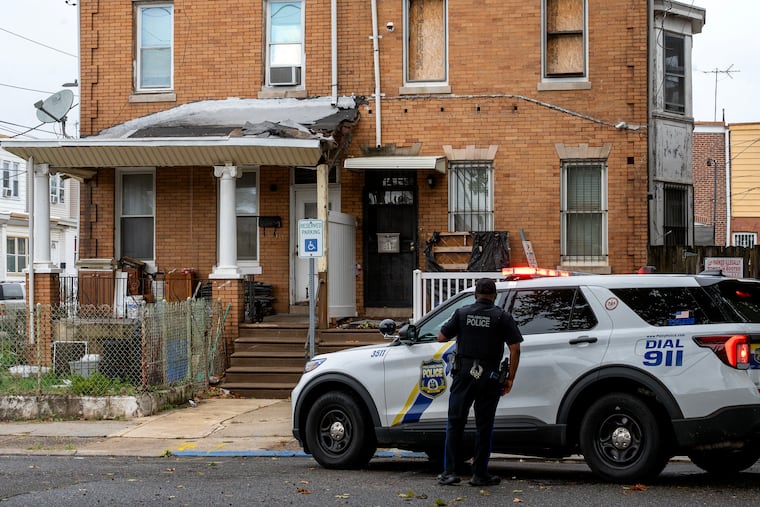
Judge Patrick, supervisor of the court’s commerce division, has in recent months been closely examining the city’s troubled sheriff-sale process, which since 2023 has been dogged by post-auction delays and litigation from angry buyers. Some buyers have waited a year or more to receive deeds to properties. The delays were first reported by The Inquirer in 2024.
A previous hearing revealed that the sheriff’s office failed to disburse millions of dollars in sales proceeds — including tax revenue and utility payments owed to the city — and raised questions about the office’s record-keeping abilities.
In August, following a hearing in Judge Patrick’s courtroom, Bilal agreed to six months of court-appointed supervision of the auctions.
But last month, the sheriff backed out of that deal, with her lawyer arguing that the judge lacked the authority to impose “open-ended structural oversight.”
Judge Patrick responded on Oct. 16 with a terse order scheduling Thursday’s contempt hearing. In a footnote, Patrick clarified that the order is “not an accusation of criminal conduct.”
“This is not a criminal proceeding, and Philadelphia Sheriff Rochelle Bilal is not charged with any crime,” the footnote reads.
Bilal and her spokesperson did not respond to a request for comment on the hearing.
Jonathan Rardin, an attorney hired by the city to represent Bilal, filed a request for a protective order on Tuesday seeking to keep Bilal off the stand Thursday.
“Sheriff Bilal is a high public official who has already spent hours testifying in this matter over the course of two days,” Rardin wrote. “[C]ompelling her testimony would impose an unreasonable burden and oppression.”
Rardin filed a similar request over the summer, arguing that Bilal had “limited personal knowledge” of the real estate transactions she oversees. Judge Patrick rejected that motion.
The legal proceedings began in May, when Judge Patrick ordered Bilal to hand over records from every real estate sale since she took office in 2020. The court’s intervention has forced the sheriff to publicly acknowledge the office’s shortcomings under her watch, while also prying loose financial information that likely would have never become public.
At a hearing last month, Steven Wakefield, Bilal’s newly hired senior deputy undersheriff, told Judge Patrick that an ongoing audit had recently turned up about $20 million in sheriff sale proceeds that had not been disbursed, including tax revenue and utility payments that should have gone to the city.
The $20 million disclosure alarmed City Council members, including longtime Bilal allies who have steadfastly defended her in the face of other controversies. Some council members are now calling for changes in the sheriff’s office and more transparency in how it handles the sale of tax-delinquent and foreclosed properties.
Thomas Wilkinson, an attorney at Cozen O’Connor, said a civil contempt hearing is typically aimed at encouraging voluntary compliance with a judge’s order, but could lead to more serious repercussions, like financial penalties.
“Simply changing one’s mind after a court directive is not typically going to be deemed adequate,” Wilkinson said, referring to Bilal backing out of the earlier agreement to allow outside supervision. “The trial court has the inherent authority to ensure that parties abide by its orders.”
In her order scheduling Thursday’s hearing, Judge Patrick said one possible penalty for a contempt finding would be requiring the sheriff’s office to pay for a “forensic audit” of the office’s property auctions. The auditor, in that case, would be selected by the court.
“It’s likely there will be an additional directive and additional time to fully comply,” Wilkinson speculated.
Judge Patrick has, at times, appeared visibly frustrated by Bilal’s office.
In her May court order, she noted that administrative problems with sheriff sales are tying up the courts and hurting taxpayers by “delaying the productive return of distressed properties to lawful and economically beneficial use.”
The judge has also scolded Bilal’s staff for failing to produce requested records, including a detailed accounting of all sheriff sales.
At the August hearing, Wakefield, the deputy undersheriff, acknowledged that thousands of records had been mistakenly withheld from the court. The office turned over another 5,000 pages of documents the night before that hearing.
Wakefield said those records were found days before the hearing, after The Inquirer asked Bilal and her staff why none of the records of sheriff sale proceeds extended beyond 2023. That year coincided with Bilal signing a contract to have Tyler Technologies replace the office’s existing database software.
Even after the second document dump, Judge Patrick questioned whether all the records she requested had, in fact, been turned over.
“I ordered a very specific spreadsheet as to the transactions and things like that, and even that was not filed,” Patrick said at that hearing.
Bilal’s attorney acknowledged in court that some of the requested records had gone missing.
“The information available to us was all filed,” Rardin said. “Some of the information the court requested didn’t exist within the sheriff’s own documents.”
Daniel Bernheim, a lawyer for JSB Property Group, whose lawsuit in March led Judge Patrick to launch the deeper probe of Bilal’s office, has been filing court motions for additional records, such as bank statements and information about how the $20 million was distributed.
Bilal’s attorney has fought those requests.
“While the sheriff advertises transparency, she demonstrates a policy of hide-and-seek,” Bernheim said Wednesday. “These materials should be readily available, so we can understand what money was held and to whom it was distributed.”
Staff writer Anna Orso contributed to this article.

The Inquirer’s journalism is supported, in part, by the Lenfest Institute for Journalism and readers like you. News and editorial content are created independently of The Inquirer’s donors. Gifts to support The Inquirer’s high-impact journalism can be made at inquirer.com/donate. A list of Lenfest Institute donors can be found at lenfestinstitute.org/supporters.