U.S. forces launch new ‘defensive’ strikes in Iran on eve of election
It was the latest instance of U.S. forces conducting airstrikes in recent weeks without disclosing them publicly, officials said, a notable break with what had been routine practice earlier in the war
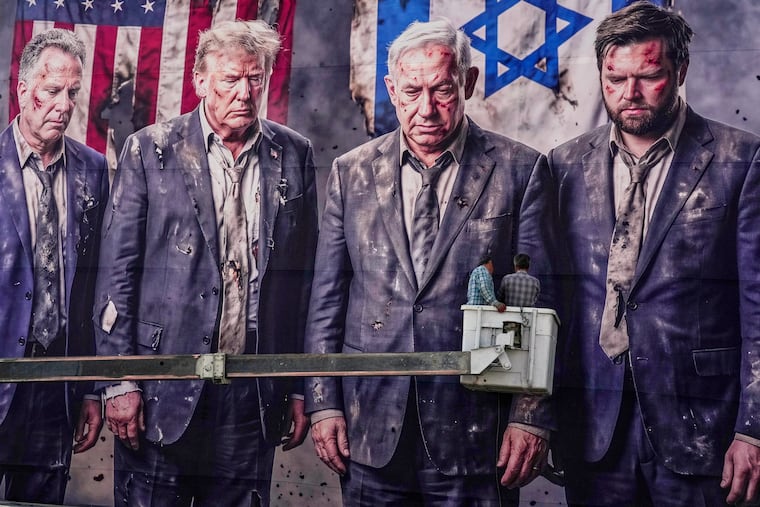
U.S. forces on Monday launched a new round of airstrikes on Iran, the latest in a series of American assaults carried out without public disclosure in the run-up to the midterm elections, officials said.
The most recent strikes targeted Qeshm Island, Iranian territory at the northern entrance of the Strait of Hormuz, officials said, speaking on the condition of anonymity to discuss the operation.
One U.S. official described Monday’s military action as a “defensive measure” intended to protect U.S. troops from Iranian forces using surface-to-air missiles. Another said the strikes hit Iranian missile launchers.
It was the latest instance of U.S. forces conducting airstrikes in recent weeks without disclosing them publicly, officials said, a notable break with what had been routine practice earlier in the Iran war. It’s also the latest example of the Pentagon under Defense Secretary Pete Hegseth withholding information that could be politically damaging to him, President Donald Trump, or the Republican Party.
Speaking Tuesday to reporters about the Qeshm Island attack, Iranian Deputy Foreign Minister Kazem Gharibabadi accused the U.S. of ongoing aggression but expressed commitment to diplomatic negotiations continuing through Qatari mediators. He said Tehran retains the right to self-defense and “is prepared for any scenario,” the semiofficial Tasnim News Agency reported.
U.S. Central Command, which oversees military operations in the Middle East, last disclosed having carried out airstrikes in September, after U.S. forces attacked five Iranian tanker ships in response to Iranian attacks on a U.S. military vessel. Iran responded a day later by launching a wave of missiles at the Muwaffaq Salti Air Base in Jordan, where U.S. troops are based.
U.S. forces continued to secretly carry out airstrikes over the past few weeks, officials said, a revelation reported earlier Monday by the Wall Street Journal. The strikes have been defensive in nature and generally focused on targeting Iran’s ability to launch attacks on ships in the Persian Gulf region, the officials said.
Spokespeople at the Pentagon referred questions to Central Command, which declined to respond to questions Monday night.
The secrecy underscores the balancing act for U.S. officials as the Trump administration pursued a negotiated end to the conflict with Tuesday’s midterm elections looming.
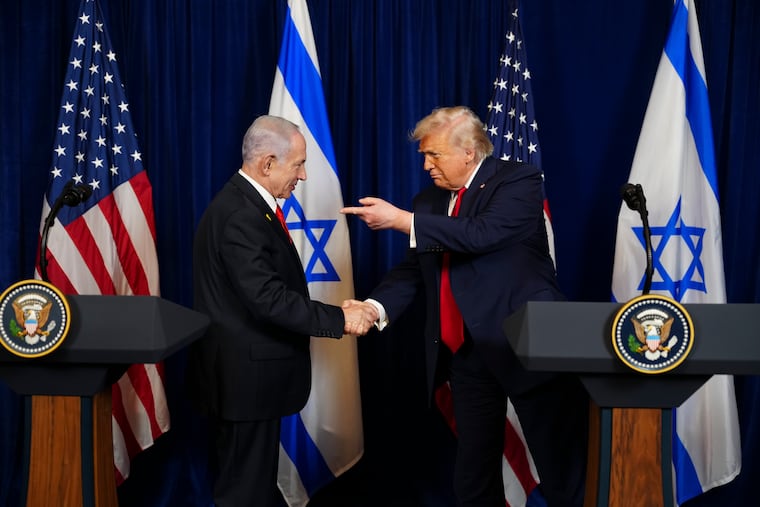
Trump had said in a post on social media last month that the United States would “not be attacking Iran at any time prior to the Midterm Elections” while keeping in place a U.S. naval blockade meant to stymie Iran’s oil-based economy.
For months, Trump and his senior advisers have vacillated between declaring the war over and threatening to dramatically escalate hostilities. The mixed messaging has occurred as the conflict, which the Trump administration initiated along with Israel in late February, has become deeply unpopular with American voters, polling shows.
A Washington Post-ABC News-Ipsos poll last month found that the president’s approval rating had fallen to a new low, 33%, with 65% of respondents saying it was a mistake for Trump to take military action against Iran. The poll raised several issues related to the war as political problems for the president, including the price of gasoline — an average of $4.17 on Monday, according to AAA Fuel Prices — and inflation.
Trump, who campaigned on a pledge to launch no new wars, claimed initially that fighting with Iran would be over within weeks. The conflict has instead lasted more than eight months, with the president insisting it was necessary to ensure than Iran never builds a nuclear weapon.
Trump, speaking Monday, raised questions about whether he’ll launch renewed military action against Iran after the midterms. He described the war in the past tense, saying the U.S. has “done very little fighting” recently after significant fighting in the spring.
Later in the day, in a phone interview with Fox News, the president said it “was time for us to stop them” when he launched the war and called the conflict a “detour.”
He left open the possibility of more significant action, saying that the U.S. may still “have to go after Pickaxe,” a reference to the Pickaxe Mountain facility at which Iran has some nuclear facilities.
“It’s not a big deal,” Trump said. “We can do that in literally one hour, as soon as we want, at any time that we want.”
Despite continued attacks by Iranian forces, Trump told Fox News that Iran’s military is “gone.”
He has accused Iranian officials of attempting to influence the U.S. midterms with their actions, saying after the attack on the air base in Jordan in September that the war would end “immediately after the election” because Iranian officials would “like to have it that way.”
Iran has launched attacks on commercial vessels in the Strait of Hormuz in recent weeks, after the Trump administration earlier touted an effort to guide those ships to safety with the help of the U.S. military.
The UK Maritime Trade Operations (UKMTO), a British Royal Navy organization that coordinates with civilian mariners, has reported numerous attacks in recent days, including an incident Friday in which a tanker called the RITI was struck with an unknown projectile or mine and caught fire near Oman’s Musandam Peninsula. Twenty-five mariners were evacuated by the Omani navy, officials said.