Google will turn off search for schools that reject AI
The company’s new strategy underscores Google’s powerful role in American education. If school leaders want continued student access to search, they will be forced to embrace Google's AI.
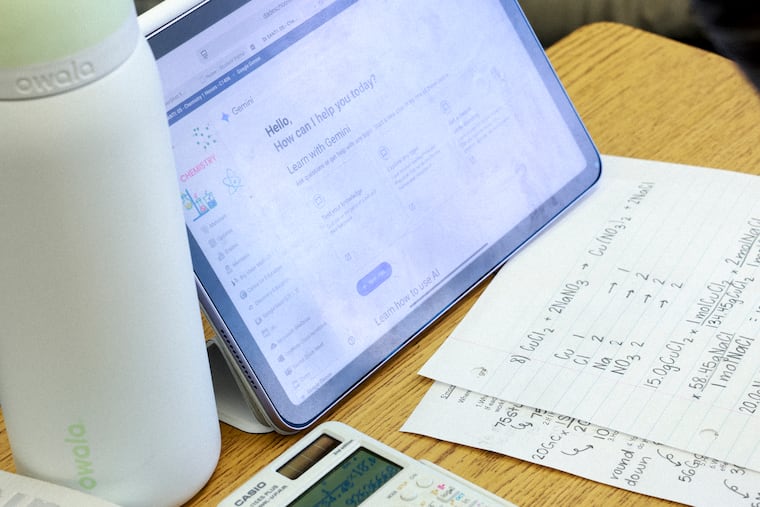
Google announced Tuesday that early next year it would turn off artificial intelligence tools in its popular software for K-12 students, unless school administrators explicitly choose to make such tools available.
Executives at the tech giant said they wanted to be responsive to educators and parents who have asked for more control in how children interact with AI.
But there is a catch: Schools that choose to restrict AI entirely will also lose access to Google search.
AI features are now a standard part of Google’s commercially available search engine. “Search and AI are deeply integrated,” said Chris Phillips, vice president for education at Google. If a school has banned AI, he added, students “will not have access to search, and they’ll see a message from their school that indicates it’s not available.”
Google is by far the dominant technology player in K-12 classrooms. Google’s suite of education apps — including Gmail, Docs, and an assignment platform called Classroom — is ubiquitous. Google Chromebooks, low-cost laptops, are the most widely issued student devices in U.S. schools. And Google is synonymous with internet search, a crucial tool for students across the globe.
The company’s new strategy underscores Google’s powerful role in American education. If school leaders want continued student access to search within the company’s ecosystem, they will be forced to embrace Google’s AI.
In recent months, Google has been promoting its Gemini chatbot as a valuable educational tool, saying it can aid teachers in planning lessons and serve as a personalized tutor for students. A new student version of Gemini, Guided Learning, is supposed to make it harder for students to use AI to cheat.
“We’re evolving our approach,” Phillips said. He promised tools that would “support the productive struggle” of learning and tamp down on students turning to AI for easy answers.
In August, Google turned on AI features as the default option inside its Classroom app for K-12 schools that had allowed students separate access to the company’s Gemini chatbot. The move upset some school leaders, who felt schools should be able to decide how and when students used Google’s AI.
Google’s August change will now be reversed.
A parent movement has been pushing back against the use of AI in schools and against screen time more generally. While AI chatbots can be useful tools for research and coding, they can also easily be used to cheat on school assignments and can provide false information. Research shows chatbots can also hinder critical thinking and ensnare adolescents in emotional dependency.
Last week, New York state passed a chatbot safety law that would prohibit companies from providing a variety of AI features for minors. And in September, the nation’s two largest school districts, in New York City and Los Angeles — both Google clients — broadly restricted student access to generative artificial intelligence on school devices.
Officials in the Los Angeles Unified School District said at the time that they were hoping students would be able to conduct Google searches with AI overviews turned off. The overviews are AI-generated summaries that appear at the top of searches. They can dissuade students from seeking out multiple sources of information.
On Monday, Google executives said that for districts that choose to allow AI, there will be two options for search inside school-issued accounts, beginning in early 2027. One option will be search with AI overviews and AI chats turned on, similar to the current consumer experience. The other will be search using Guided Learning, the student version of Google’s Gemini chatbot.
Guided Learning is intended to guide students through a topic step-by-step without providing them with answers that could short-circuit learning. It is supposed to offer an experience modeled on one-to-one tutoring.
The consumer version of Guided Learning is already available within Gemini and can enable cheating. In a reporter’s test, it produced a detailed essay in response to an Advanced Placement history prompt.
There are greater restrictions in the school version that is currently being piloted, according to Brit Mennuti, product lead for Google Classroom. She said teachers would be able to review students’ chatbot transcripts, among other capabilities.
This article originally appeared in the New York Times.