Trump administration said to plan rolling back pregnancy-related job protections
It is of a piece with a suite of executive actions that are remaking the American workplace by halting enforcement of sexual harassment rules and encouraging fewer mothers to work outside the home.
WASHINGTON — The Trump administration is preparing to scale back workplace accommodations for women related to pregnancy and reproductive health, seven people with knowledge of discussions of the plans said.
The moves will limit the impact of a 2022 law that was meant to fill a gap in disability and discrimination protections that employees are guaranteed at workplaces. It was intended to provide accommodations for pregnant workers, such as bathroom and water breaks, reprieves from heavy lifting, or time off for prenatal appointments.
But the scope of the regulations under the law, known as the Pregnant Workers Fairness Act, has been debated since their drafting. Conservatives, even some who supported the law, said the rules that the Equal Employment Opportunity Commission wrote to apply the law reached far beyond pregnancy to cover matters including abortion, fertility treatment, and related procedures and conditions it was not meant to protect.
Narrowing them would fit with other efforts by Andrea Lucas, the EEOC’s chair, to roll back what she has called the liberal excesses of the Biden administration. The EEOC has targeted corporate diversity, equity, and inclusion programs, abandoned some discrimination cases, and stopped enforcing workplace protections for transgender workers. It is of a piece with a suite of executive actions that are remaking the American workplace by halting enforcement of sexual harassment rules and encouraging fewer mothers to work outside the home.
The EEOC plans to publish the proposed narrowing of conditions eligible for accommodations as soon as this month.
Lucas is not expected to eliminate requirements that most directly protect women during pregnancy, said the people familiar with her plans who spoke on the condition of anonymity because the planned changes are not final. But she could eliminate explicit protections for conditions that affect women who are not pregnant, the people said.
Since President Donald Trump appointed Lucas as chair in 2025, the EEOC has brought dozens of cases and enforcement actions involving pregnancy-related discrimination, but she has said that she disapproves of the rule’s reach.
“The rule fundamentally errs in conflating pregnancy and childbirth accommodation with accommodation of the female sex, that is, female biology and reproduction,” Lucas said in 2024.
The EEOC said it would not comment on potential regulatory changes.
“As a working mother of two daughters, one of whom was born during her tenure at the EEOC following a high-risk pregnancy, Chair Lucas understands firsthand the importance of protecting pregnant women in the workplace,” a spokesperson for the agency said. “She is proud to serve in the most pro-family administration and remains deeply committed to enforcing the laws that protect pregnant workers.”
Some lawmakers and groups that push for women’s rights in the workplace said the broader rule captured precisely the law’s intent to cover the wide array of medical issues women experience as a result of their ability to get pregnant.
“Pregnancy has such a systemic effect on the human body,” said Jocelyn Samuels, a Democrat and former vice chair of the EEOC whom Trump appointed to the commission in his first term and fired in his second. She said the rule, which she helped write, reflects the law’s aim to ensure that pregnancy and related conditions “are not obstacles to a woman’s ability to remain employed and progress in the workplace.”
Samuels said she feared that curtailed regulations would leave workers, especially in low-wage hourly roles, at risk of losing their jobs or experiencing health crises.
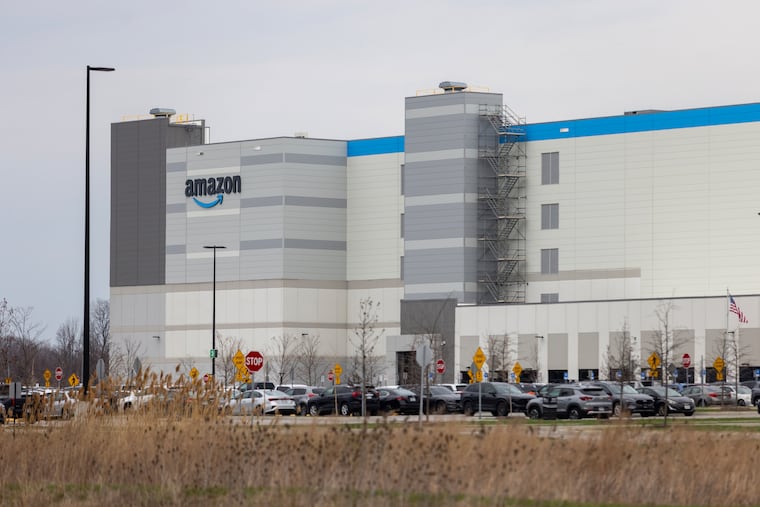
A study by researchers at the University of Wisconsin found that the 2022 law contributed to a nearly 10% decline in miscarriages. A Texas accountant won $376,000 in damages in a court decision this year concluding that her employer had violated the law in refusing to allow her to work remotely while pregnant. Warehouse workers have used the law as the basis of a class-action lawsuit claiming that Amazon denied accommodations to thousands of pregnant employees.
Abortion accommodations
The law gained significance after the Supreme Court struck down federal abortion rights in 2022. Abortion has since been banned or restricted in 13 states, leading more women to travel across state lines to terminate pregnancies. Current regulations require employers to accommodate workers’ leave for the procedure, including time off for travel.
The EEOC could cut the list of “related medical conditions,” putting the matter to employers and courts to decide, some of the people familiar with the matter said. They also said wider religious exemptions are under consideration that would allow employers to refuse accommodations to workers whose medical conditions are deemed incompatible with their beliefs, the people said.
“It’s social engineering disguised as bureaucratic rule making,” said Inimai Chettiar, president of A Better Balance, an organization that led the campaign for the law’s passage.
After the EEOC in 2024 required employers to make accommodations for employees seeking abortions, Tennessee and 16 other Republican-led states filed a lawsuit challenging it, saying that the rule requires states and other employers to “facilitate workers’ abortions” even in states where abortion is banned.
In 2025, a federal judge in Louisiana struck down the portion of the rule that required employers to make accommodations for what the judge called “purely elective abortions.”
The phrase is used by opponents of abortion, not medical professionals, said Allison A. Cowett, director of Family Planning Associates of Chicago. Cowett said removing abortion accommodations in the rule could hurt the roughly 5,000 women who travel from as far away as Texas and Florida to have abortions at her clinic each year. Her numbers of out-of-state patients have more than tripled since the Supreme Court removed federal abortion protections, she said. Cowett provides doctors’ notes to employers for women who travel to her clinic.
“The more people have to travel for an abortion, the more time off from work they need,” Cowett said.
Related medical conditions
While writing the rule to carry out the law, the EEOC took an expansive view of its requirement that employers “make reasonable accommodations” for workers limited by “pregnancy, childbirth, or related medical conditions.” That approach split the views of some lawmakers who passed the original legislation.
The EEOC listed dozens of conditions and procedures, including abortion, fertility treatments, endometriosis, menstruation, and plugged milk ducts. It included past pregnancy, potential or intended pregnancy and use of contraception.,
When lawmakers debated the legislation in the Senate, its principal Republican author, Sen. Bill Cassidy of Louisiana, a physician, said, “I reject the characterization that this would do anything to promote abortion.”
After the EEOC included abortion in the rules, Cassidy wrote to the regulators that its “decision to inject abortion politics” into the definition of pregnancy, childbirth, or related medical conditions had “ignored the statute and substituted its views on abortion for those of Congress.”
But Rep. Jerry Nadler (D., N.Y.), another author of the law, said protections for abortion and many conditions were intended.
“We wanted it to be very broad,” he said.
The commission said after Trump nominated Lucas last year that she planned “to reconsider portions of the Final Rule that she believes are unsupported by law.”
Whatever changes are made would likely push more decisions to courts, said Gillian Thomas, senior counsel with the American Civil Liberties Union’s Women’s Rights Project.
“It’s going to put employers in the position of making medical decisions about the reproductive health of their workers,” Thomas said.
This article originally appeared in the New York Times.